In the realm of industrial automation and control systems, proximity switch sensors stand as fundamental components for non-contact object detection. Among their various technical specifications, the current rating, particularly a 100mA output, is a critical parameter that defines their capability and integration potential. This article delves into the significance, operation, and application considerations of proximity sensors with a 100mA switching capacity.
A proximity sensor with a 100mA rating typically refers to the maximum load current its output circuit can safely handle when switched on. This specification is most commonly associated with DC 3-wire sensors featuring a transistor output, either PNP (sourcing) or NPN (sinking). The 100mA threshold places these sensors in a versatile category, capable of driving a substantial range of industrial loads directly without necessitating an intermediary amplification device.
The core function remains unchanged: the sensor generates an electromagnetic field or uses optical principles to detect the presence or absence of a metallic or non-metallic target. Upon detection, its solid-state output transistor switches, allowing the 100mA current to flow to the connected load. This direct drive capability is a key advantage. It means devices such as PLC (Programmable Logic Controller) digital input modules, control relays with lower coil currents, indicator lamps, small solenoids, and other sensing devices can be powered directly. This simplifies cabinet design, reduces component count, and enhances system reliability by minimizing points of failure.

Choosing a sensor with a 100mA output requires careful consideration of the connected load. It is paramount to ensure the load's steady-state current draw is less than 100mA, with a recommended safety margin. Designers must also account for inrush currents, which are typical for inductive loads like relay coils. A coil might have a holding current of 50mA but an inrush current several times higher during activation. If the inrush current exceeds the sensor's peak rating, it can cause premature failure or welded outputs. Consulting the sensor's datasheet for both continuous and peak pulse current ratings is non-negotiable. For loads with high inrush currents, protective circuits using resistors or suppressors may be required.
Another vital aspect is the voltage rating. A sensor rated for 100mA at 24V DC cannot necessarily handle 100mA at 120V AC. The voltage and current specifications are interdependent. Furthermore, the power dissipation of the output transistor, calculated as the product of the voltage across it and the current through it (P = V I), generates heat. Operating consistently near the 100mA maximum limit, especially in elevated ambient temperatures, can affect long-term reliability. Proper derating, as suggested by the manufacturer, is a standard engineering practice for ensuring longevity.
Wiring practices are equally important. Using conductors of adequate gauge to handle 100mA is essential, though voltage drop is rarely an issue at this current level for standard industrial wiring. Special attention must be paid to the wiring of the load's return path, especially for DC sensors. For an NPN sensor, the load must be connected between the sensor's output wire and the positive supply voltage; for a PNP sensor, the load connects between the output and ground. Incorrect wiring can prevent operation or damage the sensor. Shielding and proper separation from high-voltage power lines are also recommended to prevent electrical noise from causing false triggering.
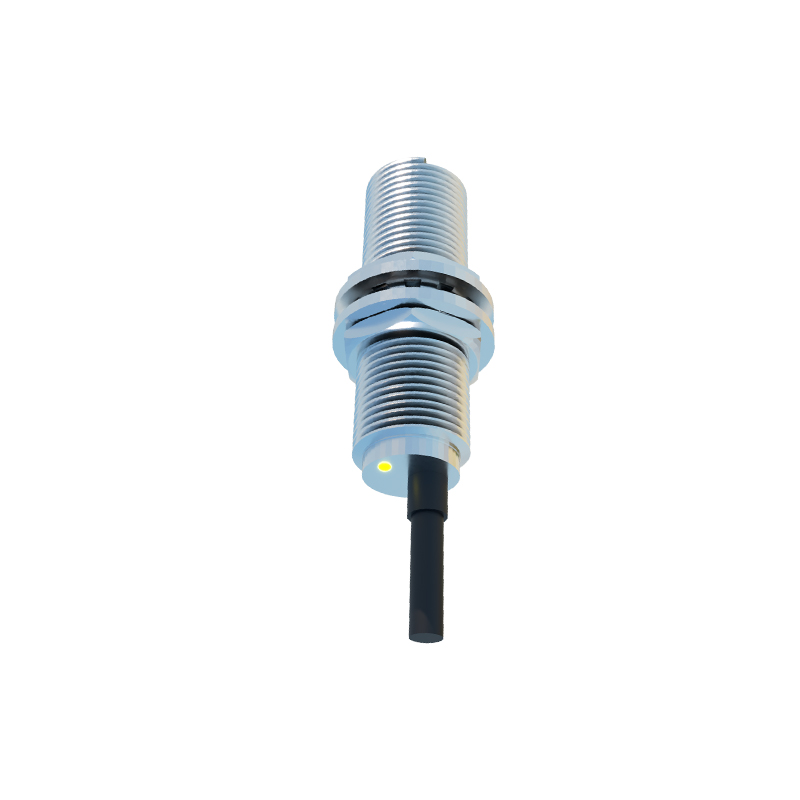
In application, these sensors are ubiquitous. On a conveyor line, a 100mA inductive proximity sensor might directly input a signal to a PLC, signaling the presence of a metal component. In packaging machinery, a capacitive version with the same rating could detect the level of liquid in a non-metallic container, directly activating a small warning lamp. Their robustness, fast response time, and lack of mechanical wear make them superior to mechanical limit switches in countless scenarios.
In summary, the 100mA proximity switch sensor represents a workhorse of industrial sensing. Its balanced output capacity offers a sweet spot between driving capability and practical, direct integration into control circuits. Success hinges on a thorough understanding of the load characteristics, adherence to electrical specifications, and implementation of sound engineering principles. By respecting these parameters, engineers can leverage these reliable devices to build efficient, robust, and maintainable automated systems.