In the realm of industrial automation and control systems, sensors act as the fundamental sensory organs, providing critical data on the presence, position, or condition of objects. Among the diverse sensor families, contact and proximity sensors represent two foundational categories, each with distinct operating principles and application domains. This article delves into their definitions, working mechanisms, types, and typical use cases to clarify their roles in modern electrical and automation engineering.
Contact Sensors: The Tactile Interface
As the name implies, contact sensors require physical touch or mechanical contact to detect an object or a specific condition. They operate on direct physical interaction, often involving a moving component that is actuated by the target. A quintessential example is the limit switch. A limit switch contains a mechanical actuator (like a lever, roller, or plunger) linked to a set of electrical contacts. When an object makes physical contact with the actuator, it moves, thereby changing the state of the contacts—opening or closing an electrical circuit. This simple action sends a definitive signal to a controller, such as a Programmable Logic Controller (PLC), indicating that the object has reached a specific positional limit.
Other common contact sensors include tactile buttons, membrane switches, and mechanical float switches for liquid level detection. Their operation is straightforward and generally offers high reliability in providing a clear on/off signal. However, the necessity for physical contact introduces considerations of mechanical wear, potential for contamination, and the need for the target object to withstand the contact force. They are also typically unsuitable for detecting fragile materials or high-speed objects where contact could cause damage or inaccuracies.
Proximity Sensors: The Non-Contact Detectives
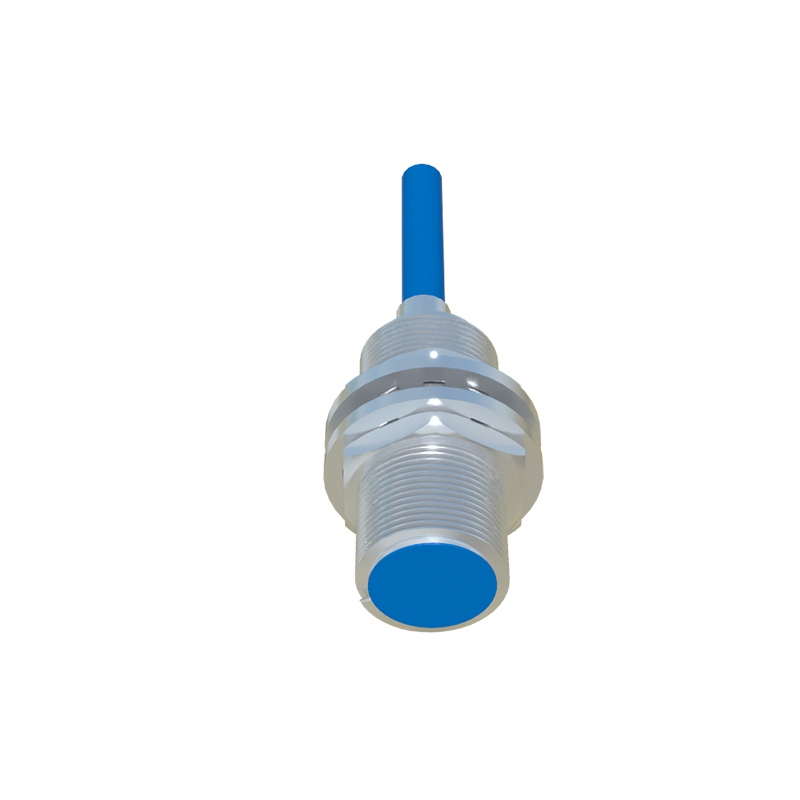
Proximity sensors, in contrast, detect the presence or absence of an object within a specified sensing range without any physical contact. They achieve this by emitting a field or beam and monitoring changes in that field caused by the target object. This non-contact nature offers significant advantages: no mechanical wear, higher operational speeds, minimal risk of damaging the target, and reliable operation in dirty or harsh environments where physical contact is undesirable.
There are several primary types of proximity sensors, classified by their underlying technology:
1. Inductive Proximity Sensors: These sensors generate an electromagnetic oscillating field. When a metallic object (ferrous or non-ferrous) enters this field, it induces eddy currents within the metal, causing a change in the oscillation amplitude. The sensor's circuitry detects this change and triggers a switching output. They are exclusively for detecting metals and are widely used in machine automation for counting, positioning, and speed monitoring of metal parts.
2. Capacitive Proximity Sensors: These sensors generate an electrostatic field. Any object—metal, plastic, wood, liquid, or granular material—that enters this field alters its capacitance. The sensor detects this change and activates its output. This makes capacitive sensors versatile for detecting a wide range of materials, including non-metals. Common applications include level detection for liquids or powders, and detecting non-metallic objects on conveyor lines.
3. Photoelectric Sensors: These sensors use light, typically infrared, visible red, or laser. They consist of an emitter (light source) and a receiver. Detection occurs when the target object interrupts (in a through-beam setup) or reflects (in a retro-reflective or diffuse setup) the light beam back to the receiver. They offer long sensing ranges and can detect virtually any material, making them ideal for packaging, material handling, and object counting.
4. Ultrasonic Sensors: These sensors emit high-frequency sound waves and evaluate the echo reflected back from a target. By calculating the time interval between sending the signal and receiving the echo, they can determine the distance to the object. They are excellent for precise distance measurement, level sensing of bulk materials, and detecting transparent or variably colored objects that may challenge photoelectric sensors.
Choosing the Right Sensor: A Comparative Perspective
The selection between a contact sensor (like a limit switch) and a proximity sensor hinges on the application requirements.
Choose a contact sensor when you need a simple, cost-effective solution for end-position detection, where physical contact is acceptable, mechanical wear is manageable, and the environment is not excessively contaminated.
Choose a proximity sensor when you require non-contact detection to prevent wear or damage, need high switching frequencies, operate in harsh/dirty conditions, or must detect non-metallic objects. The specific type of proximity sensor is then selected based on the target material, required sensing distance, environmental factors, and accuracy needs.
In sophisticated automation systems, it is common to see both technologies employed synergistically. A limit switch might provide a hard-wired safety "home" position for a machine axis, while an array of inductive proximity sensors provides real-time feedback on the position of a metal pallet on a