The global landscape for laser sensors in international trade is characterized by rapid technological evolution and expanding application horizons. As a cornerstone of modern industrial automation and precision measurement, laser sensors have transcended their traditional roles, becoming indispensable components across diverse sectors. The core principle remains the emission of a focused laser beam, with detection of reflected light to measure distance, displacement, presence, or profile with exceptional accuracy. However, the driving forces in today's export-import market are the advancements in key performance parameters: enhanced resolution, faster response times, improved signal-to-noise ratios, and robust designs for harsh environments.
A primary engine for international trade is the relentless demand from the manufacturing and automotive industries. In automated production lines, laser sensors facilitate precise positioning, dimensional gauging, and quality control. For instance, in automotive assembly, they ensure component alignment and weld seam inspection with micron-level precision. The logistics and warehousing sector represents another massive growth area. Laser scanners are pivotal for automated guided vehicles (AGVs) and robotic picking systems, enabling navigation and parcel dimensioning, thereby optimizing supply chain efficiency globally. Furthermore, the construction and civil engineering fields increasingly utilize laser distance sensors and leveling instruments for surveying, monitoring structural deformation, and machine control, creating a steady flow of high-value equipment across borders.
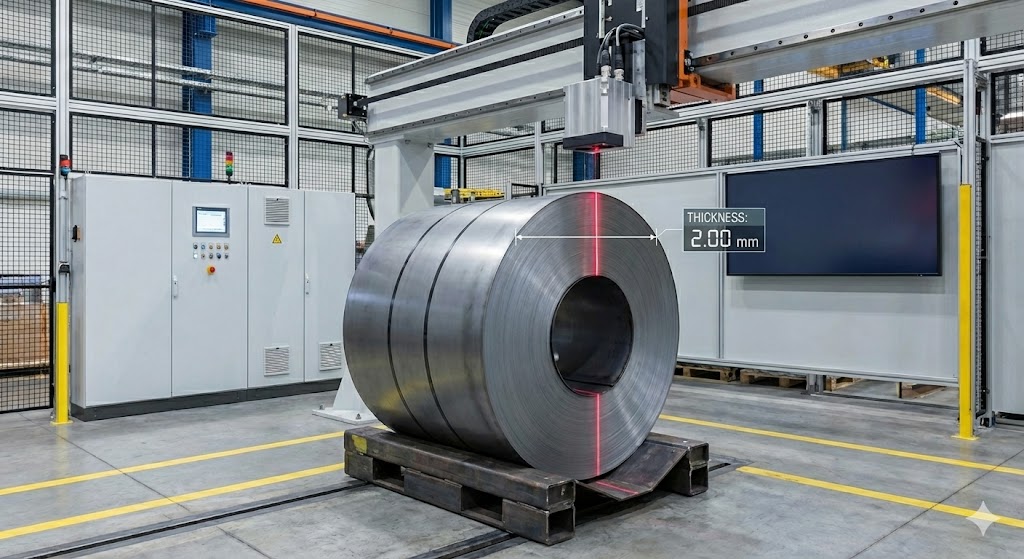
From a technical standpoint, several sensor types dominate trade flows. Laser triangulation sensors are widely exported for high-accuracy, short-range measurements of displacement and thickness. Time-of-Flight (ToF) sensors, capable of longer ranges, are heavily traded for applications like bulk material level monitoring and vehicle detection. Confocal chromatic sensors, offering superior performance on reflective or transparent surfaces, represent a premium niche in international markets. The integration of these sensors with Industrial Internet of Things (IIoT) platforms and Industry 4.0 architectures is now a critical differentiator. Sensors with embedded intelligence, Ethernet connectivity (e.g., EtherCAT, PROFINET), and advanced diagnostics are commanding higher value in trade, as they enable predictive maintenance and data-driven optimization.
The international trade environment for laser sensors is not without its challenges. Key considerations include navigating diverse regional regulatory frameworks and certification standards (e.g., CE, UL, FCC, RoHS). Compliance with laser safety classifications (IEC 60825-1) is non-negotiable for market access. Furthermore, geopolitical factors and trade policies can impact supply chains for critical components like laser diodes and photodetectors. Successful global suppliers must demonstrate not only technical excellence but also robust supply chain management and an understanding of local technical support requirements.
Looking forward, several trends will shape the future of laser sensor trade. The miniaturization of sensor packages facilitates their integration into smaller devices and robots, opening new export opportunities. The demand for 3D profiling sensors is surging, driven by applications in electronics inspection and bin picking. Additionally, the push for sustainable manufacturing is fostering trade in sensors that enable energy efficiency and waste reduction. For engineers and procurement specialists engaging in international sourcing, a deep understanding of application requirements, environmental specifications (IP ratings, operating temperature), and communication protocols is essential for selecting the optimal sensor from the global marketplace.
In conclusion, the international trade of laser sensors is a dynamic and technically sophisticated domain. It is propelled by the global adoption of automation, smart manufacturing, and precision measurement needs. Success in this arena hinges on technological innovation, adherence to international standards, and a strategic approach to navigating a complex global supply network. The continued evolution of laser sensing technology promises to further deepen its integration into the global industrial fabric, driving cross-border trade for years to come.