In the realm of industrial automation and control systems, proximity sensors are indispensable components for non-contact detection of objects. Among their key specifications, the output configuration—specifically whether the sensor is Normally Open (NO) or Normally Closed (NC)—is fundamental to system design and safety. This article delves into the concept of the Normally Closed (NC) configuration in proximity sensors, explaining its operation, contrasting it with NO, and providing guidance on its critical applications and selection criteria.
Fundamental Operation of a Normally Closed Proximity Sensor
A Normally Closed (NC) proximity sensor is defined by its electrical output state when no target is within its sensing range. In this "normal" or resting condition, the output circuit of an NC sensor is closed, allowing current to flow. When a target enters the detection field and activates the sensor, the output circuit opens, interrupting the current flow. This behavior is the inverse of a Normally Open (NO) sensor, which has an open circuit at rest and closes upon detection.
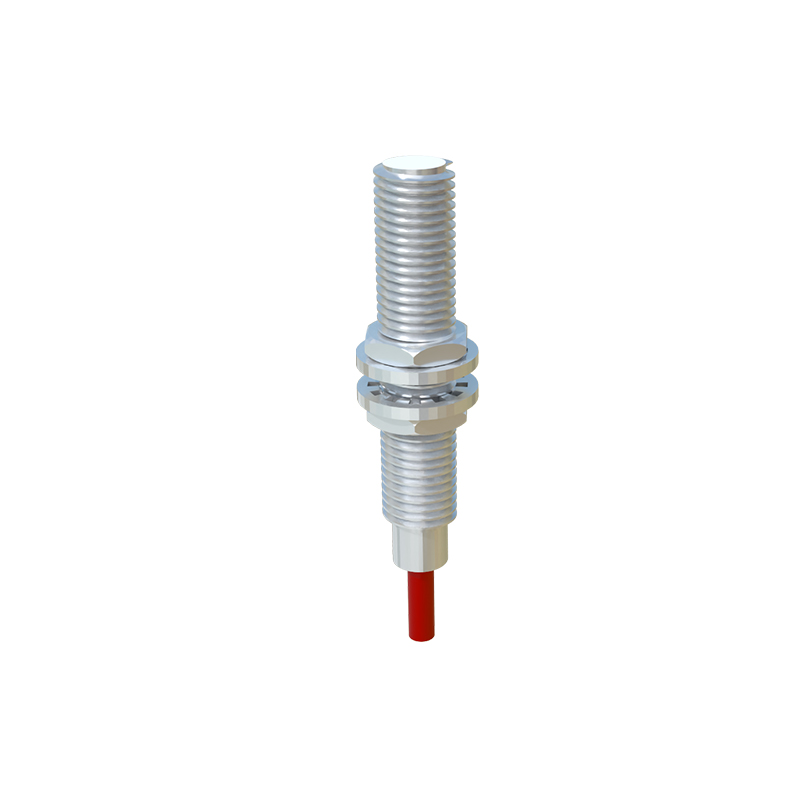
This operation is typically achieved through the internal switching mechanism, often a solid-state transistor or a relay contact. For a 3-wire DC sensor (common in industrial use with Brown/+, Blue/-, and Black output wires), the black output wire acts as the switching leg. In an NPN-sinking NC sensor, the black wire is internally connected to the positive supply voltage (+V) at rest, providing a high signal. Upon detection, it switches to a low signal (connected to 0V). Conversely, for a PNP-sourcing NC sensor, the black wire is connected to 0V at rest (low signal) and switches to +V (high signal) when activated. It is crucial to consult the datasheet, as the logic ("high" or "low") of the output signal depends on both the configuration (NC/NO) and the transistor type (PNP/NPN).
NC vs. NO: A Comparative Analysis
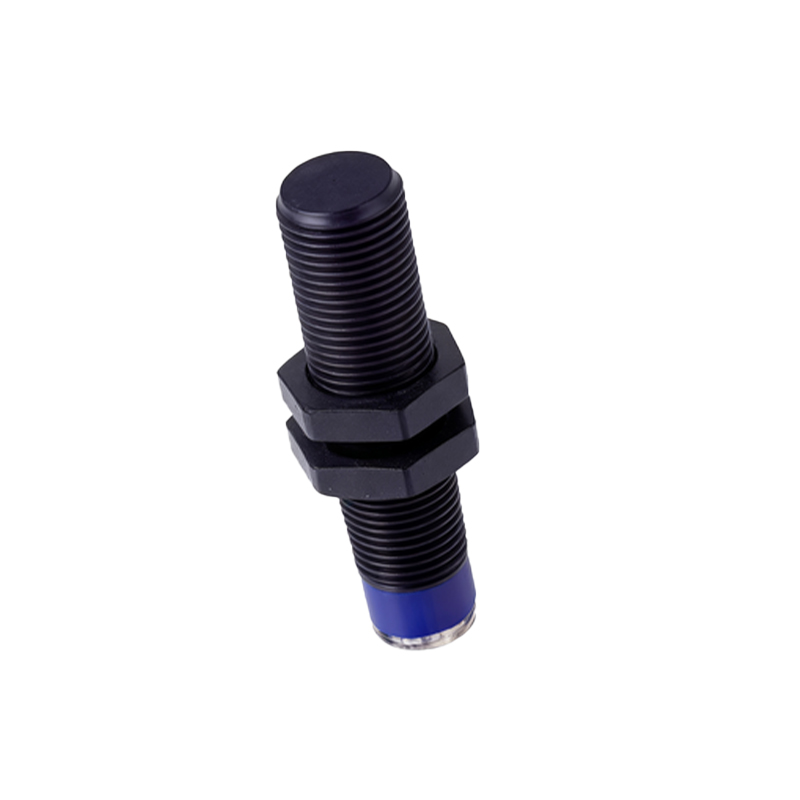
The choice between NC and NO is not merely technical but often philosophical, centered on safety and fail-safe design.
Normally Closed (NC): Favored in fail-safe or safety-critical applications. If a wire breaks, the power supply fails, or the sensor itself malfunctions (e.g., internal component failure), the circuit opens, mimicking the state of a target being detected. This "fail-to-open" characteristic can be used to trigger an alarm or safely halt a machine, preventing hazardous conditions. For instance, an NC sensor used as a safety gate monitor will stop the machine if the gate is opened or if the sensor's wiring is severed.
Normally Open (NO): More common in standard counting or process initiation applications. A failure such as a wire break typically results in no signal change, which may go unnoticed until the process fails. It does not inherently provide a fail-safe signal on fault.
Key Applications for Normally Closed Proximity Sensors
The inherent fail-safe nature of NC outputs makes them the preferred choice in several scenarios:
1. Safety Interlocks: On machine guards, doors, and enclosures. An NC sensor ensures the machine cannot operate if the guard is not securely in place.
2. Over-travel or End-of-Travel Limits: In linear actuators or conveyors, an NC limit sensor can signal an emergency stop if a mechanism moves beyond its intended range.
3. Presence Monitoring for Critical Components: Verifying the presence of a safety shield or a tool before a machining cycle begins. Absence (detection) opens the circuit and prevents cycle start.
4. Alarm Circuits: Monitoring for abnormal conditions, such as a coolant tank level being too low. The NC sensor holds the circuit closed during normal level; a low level (target moves away) opens the circuit to trigger an alarm.
5. Redundant Safety Systems: Used in conjunction with NO sensors in dual-channel safety systems to provide diversity and detect common-mode failures.
Selection and Implementation Considerations
When specifying an NC proximity sensor, engineers must consider several factors beyond just the output state:
Sensing Technology: Inductive (for metals), capacitive (for non-metals, liquids), or ultrasonic. The NC logic applies across these types.
Output Type: Solid-state (PNP/NPN) or relay contact. Relay contacts are inherently NO or NC in a mechanical sense and are easier to visualize.
Wiring and PLC Interface: Carefully match the sensor's PNP/NPN and NC/NO configuration with the PLC input card's expected logic. An NC sensor will provide the inverse signal of an NO sensor to the PLC program. The ladder logic must be written accordingly to interpret the correct state.
Environmental