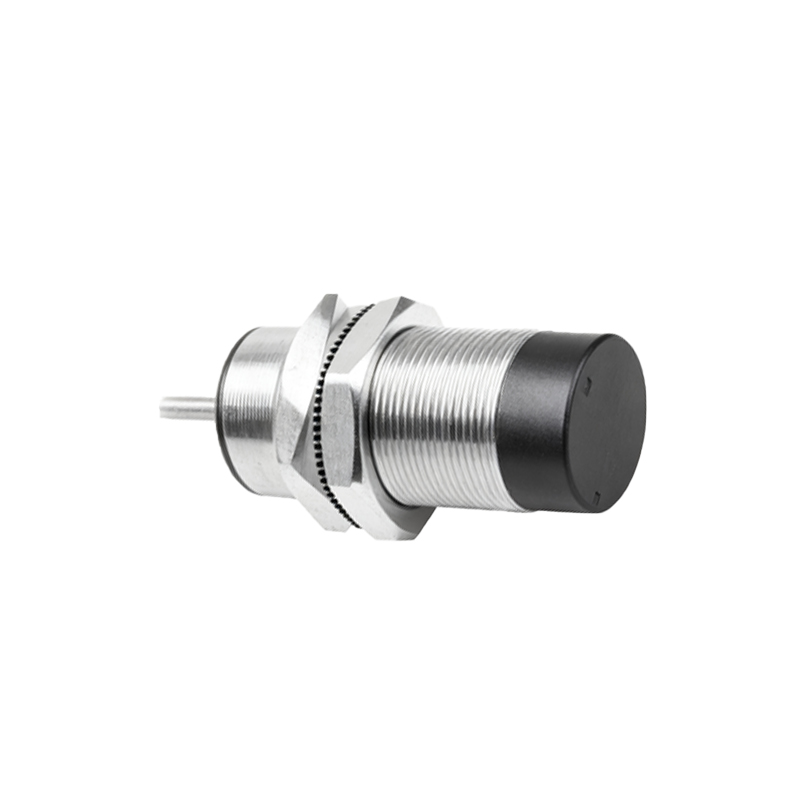
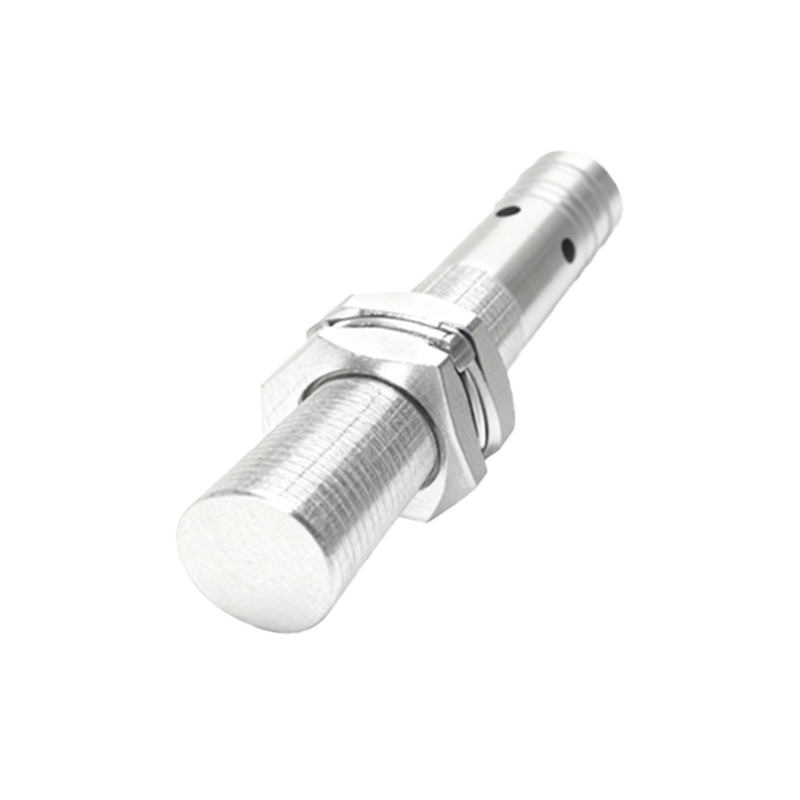
In the realm of industrial automation, the reliability and precision of sensing technology are paramount. The LS30-D1NK15 inductive proximity sensor stands as a robust and widely adopted component, engineered to meet the rigorous demands of modern manufacturing, packaging, and material handling systems. This article provides a comprehensive technical overview of the LS30-D1NK15, detailing its operating principles, key specifications, and typical application scenarios.
The LS30-D1NK15 is a cylindrical, non-contact inductive proximity sensor. Its core function is to detect the presence or absence of metallic objects without any physical contact. This is achieved through an electromagnetic principle. The sensor's face contains an oscillator coil that generates a high-frequency alternating magnetic field. When a metallic object, typically ferrous (like iron or steel) or non-ferrous (such as aluminum, copper, or brass), enters this field, eddy currents are induced on the surface of the target. This causes a change in the oscillation amplitude within the sensor. An integrated evaluation circuit detects this change and triggers a switching signal at the output.
Key specifications define the LS30-D1NK15's performance envelope. The "30" in its designation typically refers to its 30mm diameter cylindrical housing, often constructed from nickel-plated brass or stainless steel, offering good resistance to mechanical impact and industrial chemicals. The "D1" often indicates a DC 3-wire configuration. The "NK" commonly specifies a sensing distance, or nominal switching distance (Sn), of 15mm. It is crucial to note that this nominal distance is defined for a standard target of mild steel (Fe 360). For other metals, a correction factor must be applied; for instance, the effective sensing range for stainless steel is approximately 0.7 to 0.9 times Sn, and for aluminum or copper, it can be as low as 0.3 to 0.4 times Sn. The sensor typically operates on a DC supply voltage ranging from 10 to 30V DC. The output is usually an NPN normally-open (NO) transistor, providing a sinking output signal, though PNP versions may also be available in the series. Its switching frequency, or response time, is sufficiently high for high-speed counting or positioning tasks on production lines. Furthermore, it boasts a high degree of environmental robustness, with standard ingress protection ratings like IP67, making it resistant to dust and temporary immersion in water, which is essential for washdown environments in food and beverage processing.
The application landscape for the LS30-D1NK15 is vast. A primary use is in position detection. It can verify if a machine part, such as a cylinder piston, has fully extended or retracted. In conveyor systems, it is employed for part presence verification, ensuring a component is in the correct place before a subsequent operation like drilling, welding, or assembly begins. It serves as an effective end-of-travel limit switch for moving platforms or lifts, providing a reliable digital signal to the programmable logic controller (PLC). In packaging machinery, these sensors detect metal components on fixtures or count metallic products passing a point. They are also instrumental in rotary speed monitoring by detecting gear teeth or keyways on motor shafts.
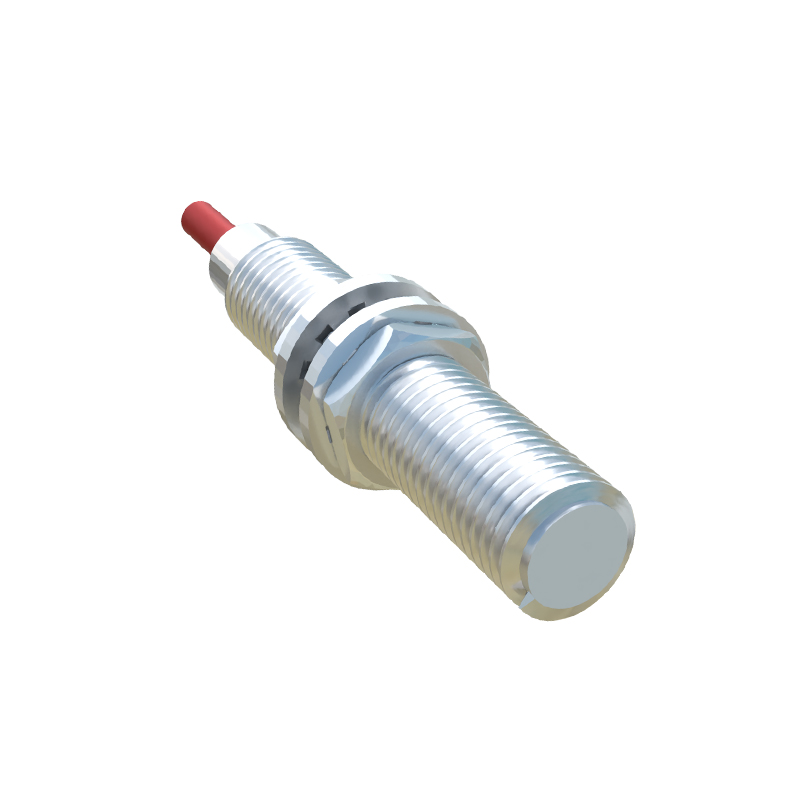
Installation and wiring require attention to detail for optimal performance. The sensor should be mounted securely, with consideration for its flush-mounting capability. Non-flush (unshielded) versions of similar sensors allow for a longer sensing range but are more susceptible to interference from adjacent metallic structures. Proper grounding and the use of shielded cables in electrically noisy environments are recommended to prevent false triggering. When wiring the 3-wire DC version, the brown wire is typically connected to the positive supply voltage (+V), the blue wire to the common negative (0V), and the black wire is the switched output load wire. A load, such as the input of a PLC, a relay coil, or an indicator lamp, is connected between the black wire and +V. Always consult the manufacturer's datasheet for the definitive wiring diagram and specifications.
In summary, the LS30-D1NK15 inductive proximity sensor is a workhorse in industrial sensing. Its contactless operation ensures long service life and minimal maintenance. The 15mm sensing distance offers a practical range for many medium-range detection tasks involving metallic objects. Understanding its technical parameters, correction factors for different metals, and proper installation practices is key to leveraging its full potential in creating reliable, efficient, and safe automated systems. For engineers and technicians, selecting the correct sensor variant for the specific metal target and environmental conditions remains the critical step in successful implementation.