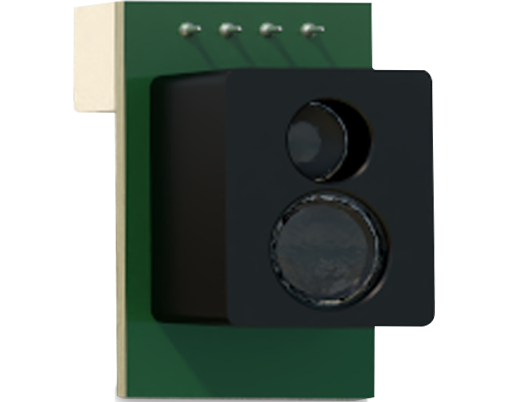
Laser magnetic field sensors represent a significant advancement in the field of electrical engineering, offering high precision and sensitivity for measuring magnetic fields. These sensors operate based on the principles of magneto-optical effects, primarily the Faraday effect, which involves the rotation of the polarization plane of light as it passes through a magneto-optical material under the influence of a magnetic field. In a typical setup, a laser source emits a coherent light beam that is directed through a polarizer to ensure a specific polarization state. This polarized light then travels through a sensing element made of materials like terbium-doped glass or yttrium iron garnet (YIG), which exhibit strong magneto-optical properties. When an external magnetic field is applied to the sensing element, it causes a rotation in the polarization plane of the light proportional to the magnetic field strength along the direction of propagation. This rotation is detected by an analyzer and photodetector system, which converts the optical signal into an electrical output for measurement and analysis.
The core mechanism relies on the interaction between the magnetic field and the electrons in the magneto-optical material. According to the Faraday effect, the rotation angle θ is given by θ = V * B * L, where V is the Verdet constant (a material-specific parameter), B is the magnetic flux density, and L is the path length of light through the material. This linear relationship allows for accurate quantification of magnetic fields, making laser sensors suitable for applications ranging from power grid monitoring to medical imaging and scientific research. One key advantage is their non-contact nature, enabling measurements without disturbing the magnetic field source, which is crucial in sensitive environments like laboratories or industrial settings. Additionally, these sensors provide high spatial resolution and fast response times, often in the nanosecond range, due to the speed of light propagation.
In electrical engineering, laser magnetic field sensors are increasingly used for fault detection in transformers, motors, and generators, where they can identify anomalies in magnetic fields that indicate potential failures. They also play a role in renewable energy systems, such as monitoring magnetic fields in wind turbines or solar inverters to optimize performance and safety. Compared to traditional sensors like Hall effect devices or fluxgate magnetometers, laser-based sensors offer superior accuracy and stability, especially in extreme conditions like high temperatures or strong electromagnetic interference. However, challenges remain, including the need for precise alignment of optical components and the cost of high-quality laser sources and materials. Ongoing research focuses on improving miniaturization, integrating fiber-optic technologies, and enhancing sensitivity through advanced materials like nanostructured composites.
Overall, laser magnetic field sensors leverage cutting-edge optical techniques to provide reliable and efficient magnetic field measurements. Their ability to operate in harsh environments and deliver real-time data makes them invaluable tools for modern electrical systems. As technology evolves, these sensors are expected to become more accessible and versatile, driving innovations in smart grids, automotive electronics, and beyond. Engineers and researchers continue to explore new applications, ensuring that laser magnetic field sensors remain at the forefront of measurement science in the electrical industry.