In the realm of industrial automation and machinery, precision, reliability, and durability are non-negotiable. Among the myriad of components that ensure seamless operation, proximity sensors stand as critical sentinels. The GX100 series of inductive proximity sensors has carved a significant niche, offering robust performance in demanding environments. This article delves into the technical specifications, operational principles, and diverse applications of the GX100 proximity sensor, providing a comprehensive overview for engineers and procurement specialists.
At its core, the GX100 is an inductive proximity sensor. It operates on the principle of electromagnetic induction. The sensor generates a high-frequency oscillating electromagnetic field from its active face. When a metallic target object enters this detection field, eddy currents are induced on the surface of the target. This causes a change in the oscillation amplitude within the sensor's coil. The sensor's internal circuitry detects this change and triggers a solid-state switching output, signaling the presence of the object. A key advantage of this technology is that it allows for non-contact detection, meaning there is no physical wear on the sensor or the target, leading to exceptionally long service life.
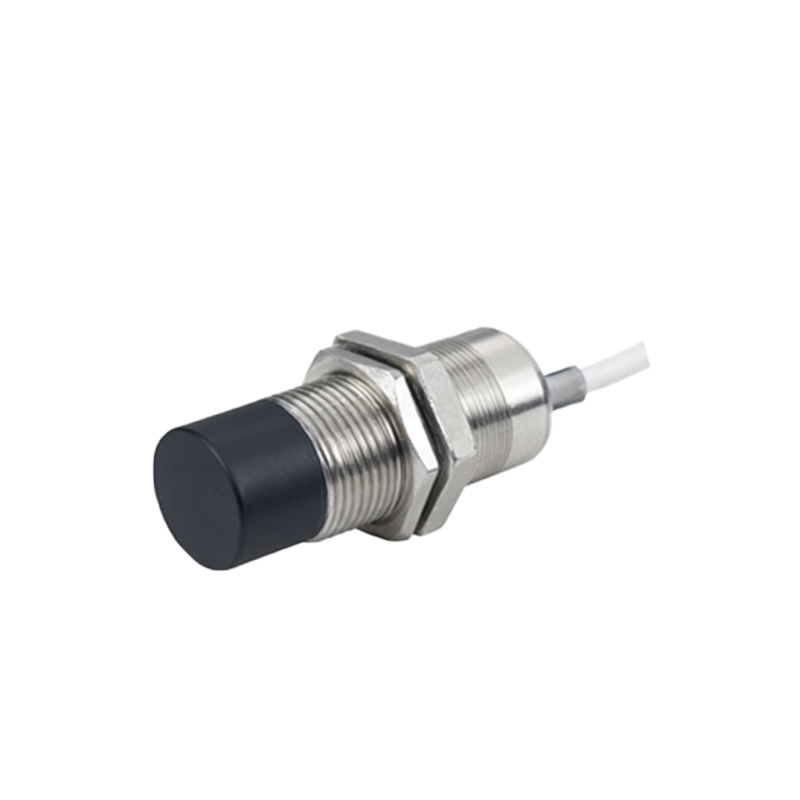
The GX100 series is renowned for its rugged construction. Typically housed in a nickel-plated brass or stainless-steel barrel, it offers high resistance to corrosion, oils, and coolants commonly found in industrial settings. Many models conform to IP67 or higher ingress protection ratings, making them suitable for use in washdown areas or environments with significant dust and moisture. The sensing distance, or "switching distance," is a critical parameter. For the standard GX100 models, this typically ranges from 1.5mm to 15mm, depending on the specific model and the target material (with standardized mild steel as a reference). It is crucial to note that the sensing distance can vary for different metals; for instance, it is reduced for non-ferrous metals like aluminum or copper.
Electrical characteristics are equally important. The GX100 is commonly available in both DC (10-30V DC) and AC variants, with 2-wire or 3-wire configurations. The 3-wire DC versions (NPN or PNP output) are particularly prevalent in modern PLC-controlled systems due to their straightforward integration. The output is typically a solid-state switch, capable of driving relays, PLC inputs, or other control circuitry directly. Its fast switching frequency allows it to detect objects at high speeds, which is essential in packaging, assembly, and material handling applications.
The applications for the GX100 proximity sensor are vast and span across numerous industries. In automotive manufacturing, they are used for part presence verification on conveyor lines, robotic arm positioning, and checking for open/closed states of fixtures and clamps. Within the packaging industry, these sensors count bottles, detect labels, and control the fill level of containers. On CNC machine tools, GX100 sensors serve as limit switches for axis movement, tool changer position verification, and chuck jaw detection. Their robustness also makes them ideal for harsh environments like metal stamping, wood processing, and agricultural machinery.
When selecting a GX100 sensor, several factors must be considered. First, the target material and required sensing distance must be matched to the sensor's specifications. Second, the housing size and style (threaded barrel, rectangular) must fit the mechanical mounting constraints. Third, the electrical requirements—voltage, output type (NPN sinking or PNP sourcing), and connection method (pre-wired cable or quick-disconnect)—must align with the existing control system. Finally, environmental conditions such as temperature extremes, potential for chemical exposure, and required ingress protection level will dictate the need for specialized models.
Installation and maintenance are straightforward but require attention to detail. The sensor should be mounted securely to prevent vibration from affecting its performance. It is also vital to maintain the recommended clearance around the sensor's sensing face to avoid false triggers from the surrounding metal mounting structure, a phenomenon known as "flush mounting" capability or lack thereof. Regular checks for physical damage, buildup of debris on the sensing face, and verification of output signals are part of a good preventative maintenance routine.
In conclusion, the GX100 proximity sensor represents a mature, reliable, and versatile solution for object detection in industrial automation. Its non-contact operation, rugged design, and wide range of available configurations make it a go-to component for engineers designing systems that demand high uptime and precision. By understanding its operating principles and carefully matching its specifications to the application requirements, professionals can leverage the GX100 to enhance machine safety, improve process efficiency, and reduce maintenance costs. As Industry 4.0 and smart manufacturing evolve, the role of dependable sensors like the GX100 remains fundamentally important in connecting the physical and digital worlds of production.