In the realm of precision engineering and industrial automation, laser sensors have emerged as a transformative tool for speed measurement, offering unparalleled accuracy, reliability, and versatility. Unlike traditional mechanical or optical methods, laser-based speed measurement leverages the principles of laser Doppler velocimetry (LDV) or time-of-flight (ToF) techniques to capture velocity data with minimal contact and high temporal resolution. This article delves into the operational mechanisms, key advantages, and diverse applications of laser sensors in measuring speed across various industries.
At its core, laser speed measurement relies on the interaction between laser light and moving objects. In LDV systems, a laser beam is directed at a target surface, and the reflected light undergoes a frequency shift due to the Doppler effect—proportional to the target's velocity. Sophisticated photodetectors and signal processors analyze this shift to calculate speed with precision often reaching 0.1% or better. Alternatively, ToF sensors measure the time delay between emitted and reflected laser pulses to determine distance changes over time, deriving speed from these differential readings. Both methods eliminate physical contact, reducing wear and tear while enabling measurements in harsh environments where conventional sensors might fail.
The advantages of laser sensors for speed measurement are manifold. First, their non-contact nature ensures no interference with the measured object's motion, making them ideal for delicate or high-speed applications such as semiconductor manufacturing or automotive testing. Second, laser sensors provide exceptional resolution and response times, capable of detecting minute velocity fluctuations in real-time—critical for quality control in processes like paper production or textile spinning. Third, they are highly adaptable, functioning effectively on diverse surfaces including metals, plastics, and liquids, and under extreme temperatures or vibrations. Additionally, modern laser sensors integrate seamlessly with digital systems, offering outputs compatible with PLCs, SCADA, and IoT platforms for automated monitoring and analytics.

Industries worldwide are harnessing laser sensor technology to enhance efficiency and safety. In automotive engineering, laser sensors calibrate wheel speeds for ABS systems and test engine component velocities during R&D. Aerospace applications include monitoring turbine blade speeds and airflow in wind tunnels. In logistics, conveyor belt speeds are optimized using laser measurements to prevent bottlenecks. Even in renewable energy, laser sensors track wind turbine rotor speeds to maximize power output. Case studies from manufacturing plants show that implementing laser-based speed measurement can reduce downtime by up to 30% and improve product consistency, underscoring their economic impact.
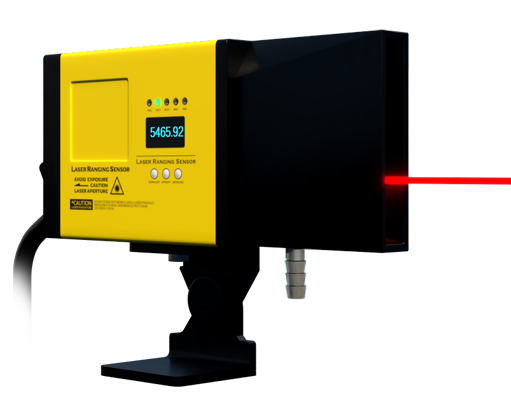
Despite their prowess, challenges persist. Laser sensors may be sensitive to ambient light interference or require precise alignment, and their initial cost can be higher than traditional alternatives. However, ongoing advancements in miniaturization, AI-driven calibration, and multi-sensor fusion are addressing these limitations. Future trends point toward smarter, wireless laser networks capable of 3D velocity mapping and predictive maintenance. As Industry 4.0 evolves, laser sensors will continue to be pivotal in achieving finer control over dynamic processes, from robotic assembly lines to smart infrastructure.
In conclusion, laser sensors represent a cornerstone of modern speed measurement, combining scientific innovation with practical utility. By delivering contactless, high-fidelity data, they empower engineers to push the boundaries of precision and productivity. Whether in factory floors or research labs, adopting laser-based solutions is not merely an upgrade—it is a strategic leap toward a more automated and data-driven industrial future.