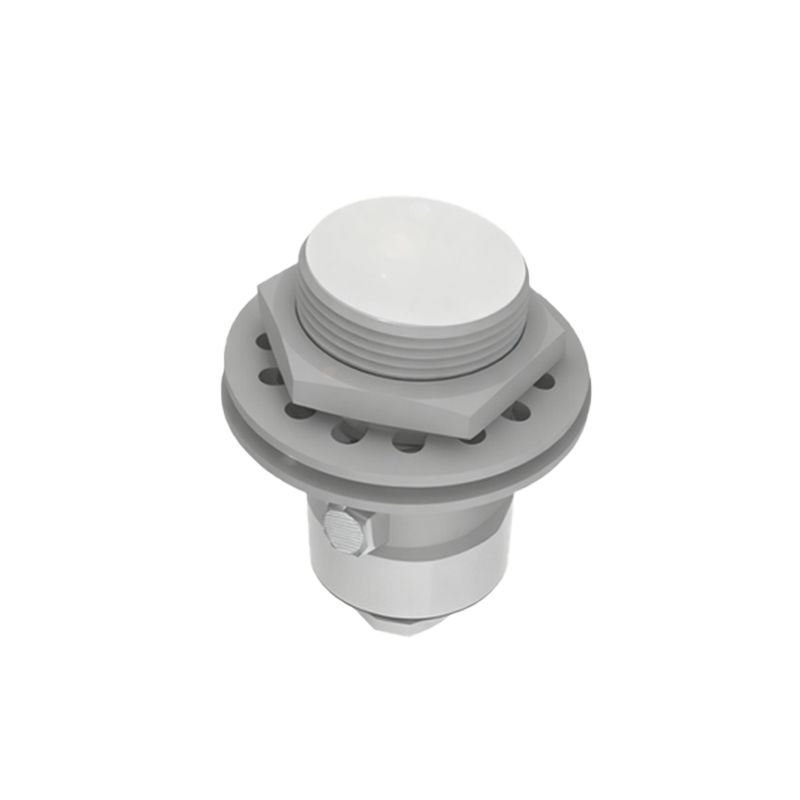
In the realm of industrial automation and machine control, proximity sensors are indispensable components for non-contact detection. Among the various configurations, the 3-wire embedded proximity switch stands out for its reliability, ease of installation, and integration capabilities. This article delves into the operational principles, wiring configurations, key advantages, and critical selection criteria for these essential sensors, providing a detailed technical overview for electrical engineers and system designers.
Fundamentally, a 3-wire embedded proximity switch is a solid-state electronic device designed to detect the presence or absence of a metallic target without physical contact. The term "embedded" typically refers to its flush-mounting capability, allowing it to be installed into a machined cavity without its sensing face protruding, thereby offering protection from mechanical damage. The "3-wire" designation indicates its power and output signal configuration, which is the most common setup for DC-powered sensors in industrial environments. These three wires are universally color-coded: brown for the positive supply voltage (V+), blue for the common negative or ground (0V), and black for the switched output signal.
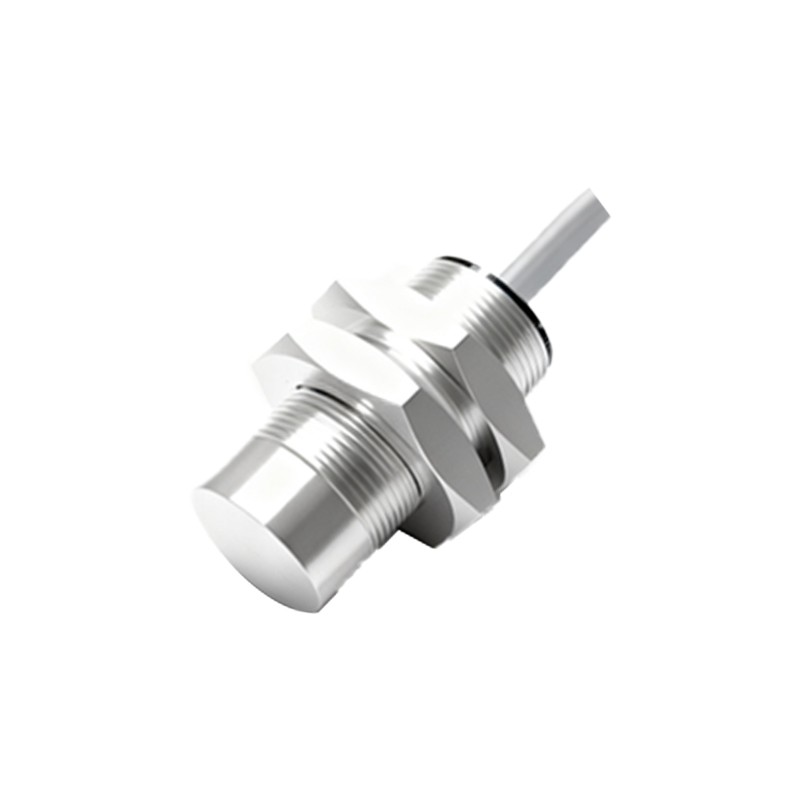
The core technology behind these sensors is based on electromagnetic induction. An internal oscillator generates a high-frequency electromagnetic field at the active face of the sensor. When a ferrous or non-ferrous metal target enters this field, eddy currents are induced in the target, causing a change in the oscillation amplitude. This change is detected by a threshold circuit, which subsequently triggers a change in the state of the output transistor. The output can be either Normally Open (NO) or Normally Closed (NC), and it is typically a solid-state switch, either a PNP (sourcing) or NPN (sinking) transistor configuration. PNP types switch the positive voltage to the load, while NPN types switch the ground path. This choice is crucial and must align with the control system's input card specifications.
Wiring a 3-wire sensor is straightforward. The brown wire connects to the positive terminal of the DC power supply (commonly 10-30V DC). The blue wire connects to the negative terminal (0V). The black output wire is connected to the load, which is usually the input of a Programmable Logic Controller (PLC), a relay coil, or an indicator lamp. The other side of this load is then connected to complete the circuit: for a PNP sensor, the load's other terminal goes to 0V; for an NPN sensor, it goes to V+. It is imperative to include a protective fuse in the supply line and to ensure proper grounding and shielding in electrically noisy environments to prevent false triggering.
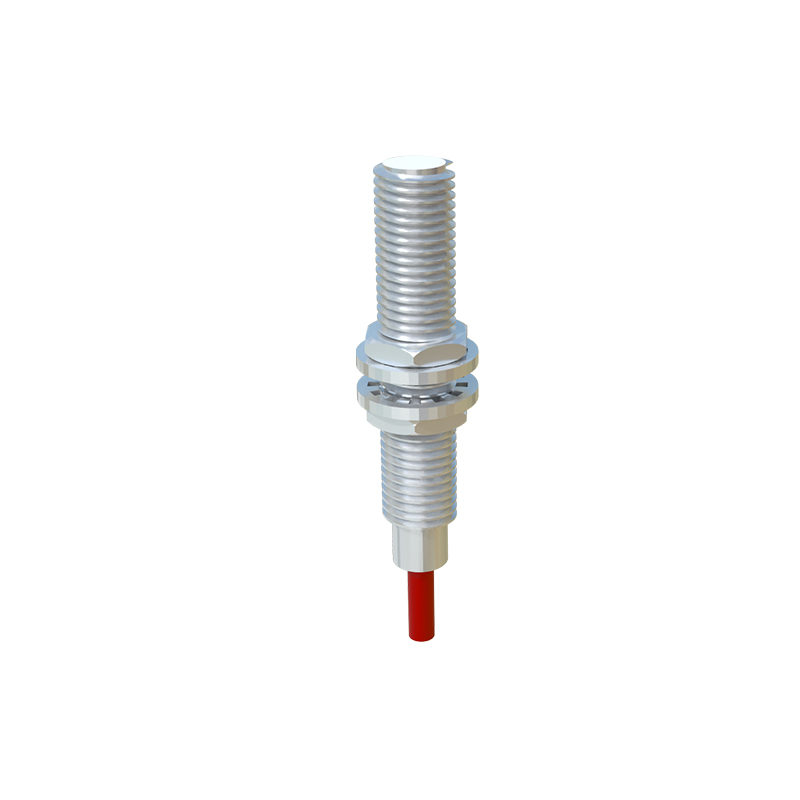
The advantages of using 3-wire embedded proximity switches are numerous. Their non-contact nature ensures virtually infinite mechanical life, as there are no moving parts to wear out. The embedded design enhances durability in harsh environments, protecting the sensing face from impacts, chips, and other physical obstructions. The 3-wire DC design offers fast switching speeds, often in the kilohertz range, making them suitable for high-speed counting and positioning applications. Furthermore, they provide stable operation with high repeatability and are generally immune to environmental factors like dust, oil, and non-metallic contaminants, unlike optical sensors.
When selecting a 3-wire embedded proximity switch for a specific application, several parameters must be carefully evaluated. The sensing distance, or rated operating distance (Sn), is specified for a standard target and must be derated for different metals (e.g., stainless steel, aluminum). The housing material, typically nickel-plated brass or stainless steel, must be chosen based on the environmental conditions (e.g., washdown, chemical exposure). The electrical specifications, including operating voltage range, current consumption, and output current capacity, must match the control system. Other critical factors include the switching frequency, temperature range, degree of protection (IP rating, e.g., IP67), and the output configuration (PNP/NPN, NO/NC). For embedding, the precise machining of the mounting hole per the sensor's datasheet is essential to guarantee correct sensing performance and mechanical stability.
In conclusion, the 3-wire embedded proximity switch is a robust, versatile, and highly reliable solution for object detection in automated systems. Its design balances performance with physical resilience, making it a cornerstone component in manufacturing, packaging, material handling, and automotive assembly lines. A thorough understanding of its wiring, operating principles, and selection criteria empowers engineers to design more efficient, reliable, and maintainable control systems. Always consult the manufacturer's datasheet for specific details and ensure compliance with all relevant electrical safety standards during installation and operation.