Line laser sensors have become indispensable tools in modern industrial automation, offering high-precision, non-contact measurement capabilities. Their design integrates principles from optics, electronics, and software engineering to deliver reliable performance in demanding environments. This article explores the core design considerations, implementation strategies, and practical applications of line laser sensors, providing insights for engineers and technical professionals.
The fundamental operation of a line laser sensor involves projecting a laser line onto a target surface and using a camera or photodetector array to capture the reflected pattern. Deformation in the line due to surface contours or height variations is analyzed through triangulation algorithms to extract precise dimensional data. Key design parameters include laser wavelength, power output, lens selection, and detector resolution. For instance, red lasers (e.g., 650 nm) are common for general-purpose use, while blue or infrared lasers may be chosen for specific materials or ambient light conditions. Power must be optimized to ensure sufficient illumination without damaging surfaces or violating safety standards like IEC 60825-1.

Optical design focuses on generating a uniform, sharp laser line. This typically involves using cylindrical lenses or diffractive optical elements (DOEs) to shape the beam. DOEs offer advantages in creating complex line profiles with minimal energy loss. The choice of imaging lens—such as telecentric lenses for reduced perspective error—depends on the required field of view and working distance. Sensor calibration is critical, involving procedures to correct for lens distortion, ambient light interference, and temperature effects. Advanced sensors incorporate real-time compensation algorithms to maintain accuracy.
Electronic components form the backbone of signal processing. A high-speed CMOS or CCD camera captures the laser line image, which is then digitized by an analog-to-digital converter (ADC). Processors, often FPGAs or dedicated DSPs, execute triangulation calculations and filter noise. Communication interfaces like Ethernet/IP, PROFINET, or IO-Link enable integration with industrial control systems. Robust housing with IP67 ratings is standard to protect against dust, moisture, and mechanical shocks, ensuring longevity in harsh settings like automotive assembly lines or metalworking shops.
Software algorithms play a pivotal role in data interpretation. Edge detection techniques, such as the Steger method or centroid calculation, locate the laser line with sub-pixel accuracy. For 3D profiling, point cloud generation and stitching algorithms reconstruct surface geometries. Machine learning integration is emerging for defect detection, allowing sensors to identify anomalies like scratches or dents autonomously. User-friendly configuration software simplifies setup, enabling parameter adjustments for different materials (e.g., reflective metals vs. absorbent plastics).
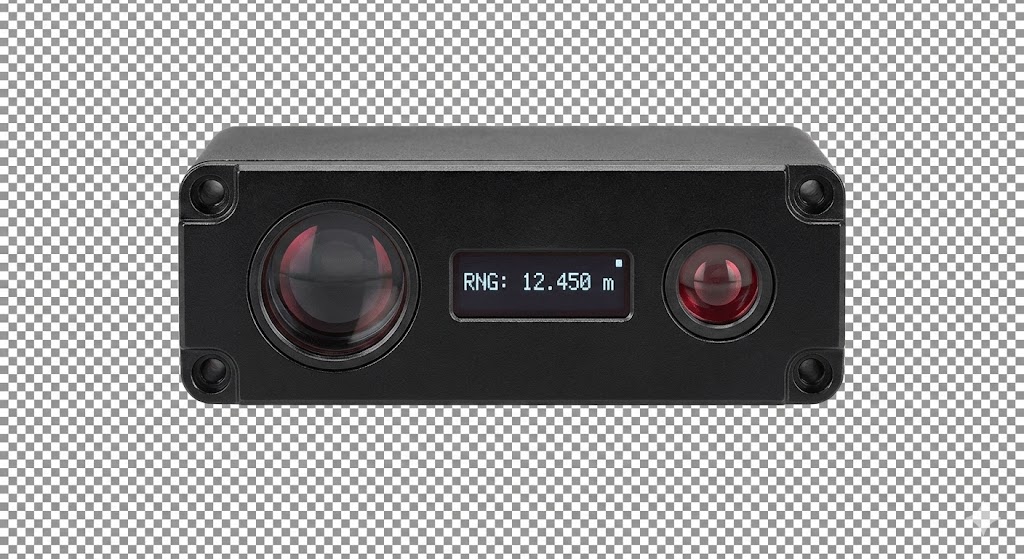
In practice, line laser sensors are deployed across diverse industries. In automotive manufacturing, they measure gap dimensions between body panels with micron-level precision. Electronics assembly lines use them for solder paste inspection and component placement verification. Logistics applications include parcel dimensioning and pallet profiling for warehouse automation. Each use case demands tailored design adaptations; for example, high-speed bottling lines require sensors with rapid scan rates exceeding 10 kHz, while outdoor applications may need enhanced ambient light rejection.
Future trends point toward miniaturization and enhanced intelligence. Compact sensors with integrated processing are enabling deployment in space-constrained robotics. Multi-line lasers, which project multiple parallel lines, allow for simultaneous measurement of complex geometries. Additionally, the integration with IoT platforms facilitates predictive maintenance by monitoring sensor health and performance trends. As industries advance toward smart factories, line laser sensors will continue to evolve, driven by demands for higher accuracy, faster speeds, and greater adaptability.
Designing an effective line laser sensor requires balancing technical specifications with cost and usability. Engineers must consider the entire system—from optical emission to data output—to achieve optimal results. By adhering to rigorous design principles and leveraging emerging technologies, these sensors can solve challenging measurement tasks, enhancing productivity and quality in industrial operations.