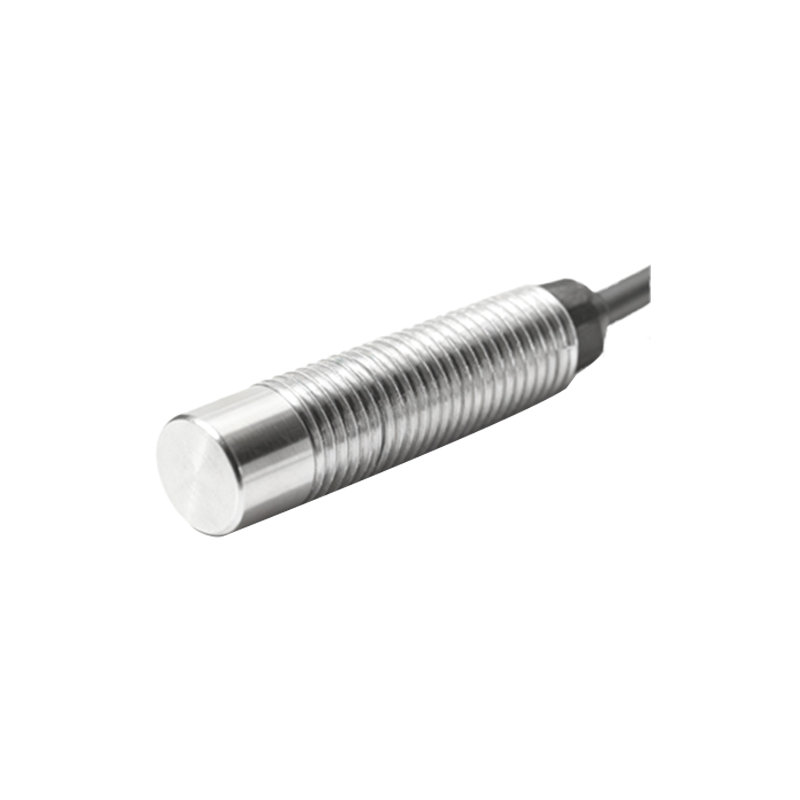
Proximity switch sensors are indispensable components in modern industrial automation, particularly within bracket-mounted systems where precise, non-contact detection of metallic objects is required. These sensors operate on the principle of electromagnetic induction, primarily for inductive-type proximity switches, which are most common in bracket setups for detecting ferrous metals. The core of an inductive proximity sensor consists of an oscillator circuit that generates a high-frequency electromagnetic field emanating from the sensor's active face. When a metallic target, such as a machine part mounted on a moving bracket, enters this field, eddy currents are induced on the target's surface. This causes a load on the oscillator, leading to a reduction in oscillation amplitude. The sensor's detection circuit monitors this amplitude change. Once the amplitude drops below a predetermined threshold—indicating the target is within the specified sensing range—the circuit triggers a solid-state output switch. This output typically changes state, signaling a PLC or control system that the target (e.g., a bracket, actuator, or workpiece) is in the correct position.
The key performance parameters for bracket-mounted applications include sensing distance, repeat accuracy, response frequency, and environmental robustness. The nominal sensing distance, often a few millimeters to tens of millimeters, must be carefully selected based on the bracket's travel and the required clearance. Factors like target material, size, and shape significantly influence the effective sensing range. For instance, a standard mild steel target provides the rated distance, while stainless steel or aluminum reduces it. Therefore, sensor selection for a bracket system necessitates considering the specific target material. The target size should generally be equal to or larger than the sensor's active face diameter to ensure reliable operation. Repeat accuracy, critical for precision positioning in automated bracket lines, refers to the sensor's ability to consistently detect the target at the same point in successive operations. High-quality sensors offer excellent repeatability, often within microns, ensuring bracket-mounted tools or stops are positioned identically every cycle.
Response frequency, measured in Hertz, dictates how quickly the sensor can detect targets passing by. In high-speed bracket indexing or sorting applications, a fast response (e.g., 1-5 kHz) is essential to keep pace with rapid machine cycles without missing a detection event. The output configuration is another vital consideration. Two-wire DC, three-wire DC (NPN or PNP), and AC variants are available. Three-wire DC sensors with PNP (sourcing) or NPN (sinking) outputs are prevalent in bracket control panels interfacing with programmable logic controllers. The choice depends on the control circuit's design. Furthermore, robust construction is paramount as bracket environments often expose sensors to mechanical vibrations, coolant splashes, metal chips, and temperature fluctuations. Sensors with IP67 or IP69K ratings provide protection against dust and water ingress, while housings made of stainless steel (e.g., V2A or V4A) offer superior resistance to corrosion and physical impact.
Beyond standard inductive sensors, other technologies like capacitive or magnetic proximity switches find niche uses in bracket systems. Capacitive sensors can detect non-metallic materials (e.g., plastic brackets or containers) by sensing changes in capacitance, but they are more susceptible to environmental interference. Magnetic proximity switches, often used with pneumatic cylinder brackets, detect the position of a permanent magnet embedded in the cylinder's piston. For inductive sensors, installation in a bracket requires precise alignment. The sensor should be mounted securely to minimize vibration effects, and the sensing face must be parallel to the target's approach path. Maintaining the recommended lateral and axial clearance from surrounding metal (the "flush-mountable" or "non-flush" installation guidelines) is crucial to prevent false triggering from the bracket structure itself. Regular maintenance involves checking for physical damage, buildup of contaminants on the sensing face, and verifying the electrical connections. In summary, understanding the operational principles, key specifications, and installation nuances of proximity switch sensors enables engineers to design reliable, efficient, and safe bracket-based automation systems, enhancing machine performance and productivity.