In the realm of industrial automation and control, the selection of an appropriate sensing technology is paramount for ensuring system reliability, efficiency, and safety. Two prominent categories of non-contact sensors widely employed are optical fiber sensors and proximity switches. While both serve the fundamental purpose of detecting the presence, absence, or position of an object without physical contact, their underlying principles, architectures, and ideal applications differ significantly. This article provides a technical comparison from an engineering perspective, delving into the operational mechanics, key characteristics, and practical deployment scenarios for each technology.
Optical Fiber Sensors: Principles and Characteristics
Optical fiber sensors (OFS) utilize light transmitted through a fiber optic cable to perform sensing functions. The core component is the optical fiber, typically made of glass or plastic, which guides light from a transmitter unit to a sensing head and back to a receiver. Detection is based on the modulation of light properties—such as intensity, phase, wavelength, or polarization—caused by the target object or the environmental parameter being measured. Common types include through-beam, retro-reflective, and diffuse reflective models.
The primary advantages of optical fiber sensors stem from their unique construction. First, they exhibit exceptional immunity to electromagnetic interference (EMI) and radio frequency interference (RFI), making them ideal for use in environments with high electrical noise, such as near welding equipment, large motors, or variable frequency drives. Second, the sensing head can be extremely small, allowing for installation in confined spaces where traditional sensors cannot fit. Third, the fiber cable can transmit signals over long distances—often hundreds of meters—with minimal signal degradation, enabling centralized processing units to be located far from harsh sensing points. Furthermore, they are inherently safe in explosive or flammable atmospheres as the sensing area contains no electrical components, reducing the risk of ignition.
However, OFS systems are generally more complex and costly than basic proximity switches. They require a separate amplifier or controller unit to process the optical signal. Their performance can also be susceptible to contamination on the lens or fiber end-face, such as dust, oil, or moisture, which may attenuate the light signal and require regular maintenance.
Proximity Switches: Principles and Characteristics
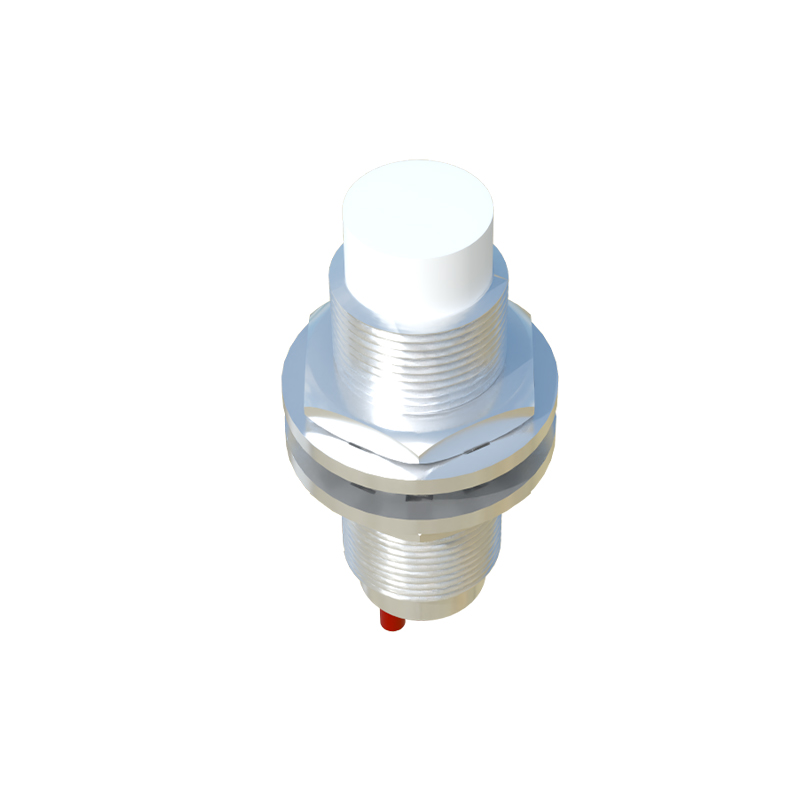
Proximity switches, often simply called proximity sensors, detect the presence of metallic or, in some cases, non-metallic objects through changes in an electromagnetic field. The most common types are inductive proximity sensors (for metallic targets) and capacitive proximity sensors (for both metallic and non-metallic targets, including liquids and powders). An inductive proximity sensor generates an oscillating electromagnetic field from its active face. When a conductive metal target enters this field, eddy currents are induced in the target, which dampens the oscillation amplitude. This change is detected by the sensor's circuitry, triggering a solid-state output switch.
The key strengths of proximity switches are their robustness, simplicity, and cost-effectiveness for standard applications. They are typically self-contained units housing the oscillator, detector, and output switching circuit in a single, rugged housing. This makes them easy to install and wire. They offer high switching rates and excellent repeatability for precise positioning tasks. Inductive sensors, in particular, are largely unaffected by common environmental factors like dust, dirt, oil mist, and splashing water (provided appropriate ingress protection ratings, e.g., IP67), making them workhorses on machine tools, conveyor systems, and robotic cells.
Their limitations are defined by their operating principle. Inductive sensors only detect metals, and their sensing range is relatively short and material-dependent (ferrous metals are detected at longer ranges than non-ferrous ones). They can be susceptible to interference from strong external magnetic fields. While capacitive sensors have broader material detection capabilities, they can be influenced by changes in humidity or the presence of non-target materials in their environment, requiring careful tuning.
Comparative Analysis and Application Guidance
Choosing between an optical fiber sensor and a proximity switch hinges on a detailed analysis of the application requirements.
Target Material: For detecting non-metallic objects (plastic, glass, wood, labels) or specific colors/contrasts, optical fiber sensors are the clear choice. For detecting metals, both can be used, but proximity switches are often simpler.
Environment: In environments with intense EMI/RFI, extreme temperatures at the sensing point, or explosion hazards, optical fiber sensors are superior. For dirty, oily, or wet industrial floors where physical robustness is key, a well-sealed proximity switch is typically more reliable and easier to maintain.
Space Constraints: When the mounting space is extremely limited, the tiny sensing head of a fiber optic system is advantageous.
Sensing Distance: For very long-range detection or when the processor must be remote, fiber optics excel. For short-range, high-speed detection of metals at close quarters, proximity switches are optimal