In the dynamic landscape of industrial automation, the demand for reliable and precise sensing solutions has never been higher. Proximity sensors, as the silent sentinels of modern machinery, play a pivotal role in object detection, positioning, and process control. However, the industrial environment is a symphony of electromagnetic noise, variable temperatures, and physical contaminants, all of which can severely compromise sensor performance. Standard, off-the-shelf proximity sensors often fall short when faced with these complex, site-specific challenges. This is where the paradigm of on-demand customization for interference-immune proximity sensors becomes not just an option, but a critical necessity for operational excellence and system integrity.
The core challenge lies in electromagnetic interference (EMI) and radio frequency interference (RFI). Industrial facilities are replete with sources such as variable frequency drives (VFDs), welding equipment, high-power motors, and communication systems. These can induce false triggering, signal degradation, or complete failure in standard inductive, capacitive, or photoelectric sensors. A customized approach begins with a thorough electromagnetic compatibility (EMC) analysis of the target environment. Engineers can then tailor the sensor's design at multiple levels. This includes selecting specialized ferrite cores and winding techniques for inductive sensors to optimize the magnetic field and reject common-mode noise. Shielding becomes paramount; custom-designed, multi-layer metallic housings with specific grounding schemes can be engineered to create a Faraday cage effect, effectively blocking external RFI. Furthermore, the internal electronics can be fitted with advanced filtering circuits, transient voltage suppressors, and optimized oscillator designs that are tuned to ignore specific frequency bands prevalent in the application area.
Beyond EMI, environmental factors necessitate bespoke solutions. For instance, in metal-laden environments like machining centers, the phenomenon of "metal dust adhesion" can cause drift in capacitive sensors. A custom-designed sensor might incorporate a unique electrode geometry and a proprietary coating that minimizes particle accumulation and includes a self-cleaning oscillation cycle. In high-temperature settings near furnaces or ovens, standard plastic housings and solder joints fail. Customization allows for the use of high-temperature thermosetting resins, ceramic components, and high-temp-rated ICs, ensuring stable operation and longevity. Conversely, in cryogenic applications, materials must be selected to withstand thermal contraction without cracking.
The physical form factor and sensing range are equally critical customization points. Standard sensor sizes may not fit into compact robotic end-effectors or specialized machinery. On-demand design enables the creation of ultra-slim, rectangular, or oddly-shaped sensors that integrate seamlessly into the mechanical design. Sensing distance requirements can vary dramatically; a custom solution can adjust the coil size, power output, and amplifier gain to achieve a very short-range, high-precision detection or an extended range for bulk material presence sensing, all while maintaining immunity to adjacent metal structures or other sensors—a common issue known as mutual interference.
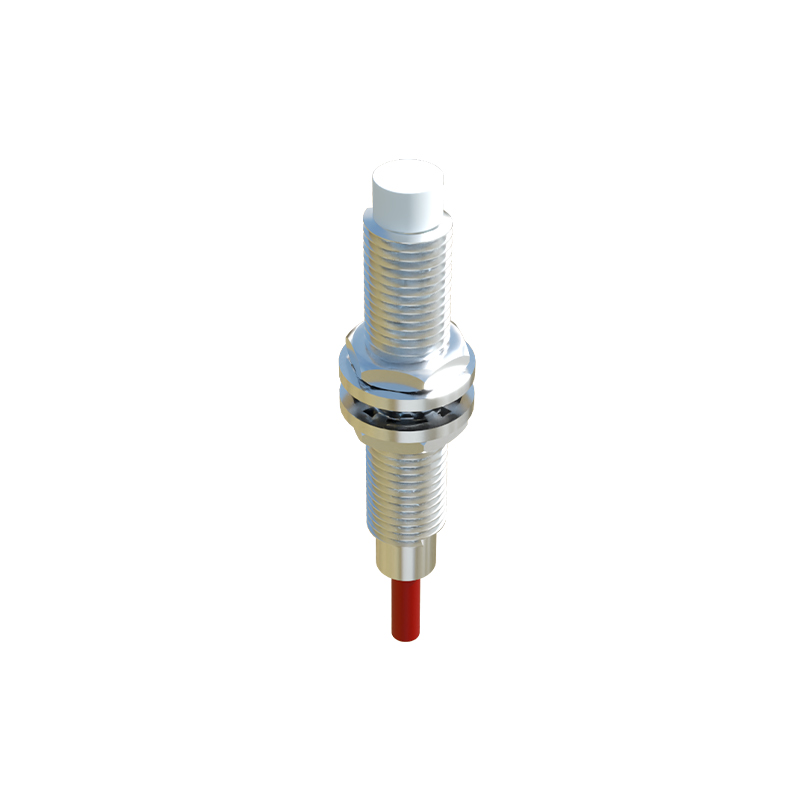
The output interface is another layer of customization. While standard PNP/NPN outputs are common, specific control systems may require analog current (4-20mA) or voltage (0-10V) outputs for proportional distance measurement, or digital protocols like IO-Link. IO-Link-enabled custom sensors offer a significant advantage, providing not just a switching signal but a wealth of diagnostic data (operating temperature, signal strength, contamination level) that can be used for predictive maintenance. The connector type, cable length, and ingress protection (IP) rating (e.g., IP67, IP69K for high-pressure washdown) are all specified to match the exact installation conditions, eliminating the need for external junction boxes or adapters that can become failure points.
The process of creating such a sensor is collaborative. It starts with a deep consultation between the sensor manufacturer's engineering team and the client's application engineers. Detailed parameters are defined: the nature of the target material (steel, aluminum, plastic, liquid), the required switching frequency, the available power supply voltage and its stability, the ambient temperature range, and the specific sources of interference. Prototypes are then developed and subjected to rigorous testing in simulated and real-world conditions. This iterative process ensures the final product is not merely a sensor, but a robust, application-engineered component.
In conclusion, the era of accepting performance compromises from standard sensors is fading. For mission-critical applications in automotive manufacturing, food and beverage processing, metalworking, and logistics, a customized, interference-immune proximity sensor is a strategic investment. It enhances system reliability, reduces false downtime, improves product quality, and lowers the total cost of ownership by eliminating external filters, shields, and frequent replacements. By tailoring the electromagnetic, mechanical, and electrical characteristics to the precise demands of the environment, engineers can create sensing solutions that operate with unwavering accuracy and durability, forming the resilient backbone of intelligent and efficient industrial operations.