In the realm of industrial automation and machine control, the reliable detection of object presence is paramount. Among the various sensing technologies available, the 3-wire proximity sensor stands as a cornerstone, offering robust and precise non-contact detection. This article delves into the operational principles, wiring configurations, key specifications, and practical application considerations for these ubiquitous devices.
Fundamentally, a 3-wire proximity sensor is an electronic device that detects the presence or absence of a metallic target without physical contact. It operates on the principle of electromagnetic induction or, in the case of capacitive versions, changes in capacitance. The most common type for metal detection is the inductive proximity sensor. It contains an oscillator circuit that generates a high-frequency electromagnetic field at its active face. When a metallic object enters this field, eddy currents are induced on the target's surface. This causes a load on the oscillator, leading to a change in its amplitude. This change is detected by a threshold circuit, which subsequently switches the state of the sensor's output.
The "3-wire" designation is crucial and refers to its power and output configuration. Unlike 2-wire sensors that are wired in series with the load, a 3-wire sensor has separate lines for power supply, ground, and the switched output signal. This architecture offers significant advantages. Typically, the three wires are color-coded: brown for positive DC supply (often +10 to +30 VDC), blue for the common ground (0V), and black (or sometimes white) for the output signal. This standardized coloring simplifies installation and troubleshooting globally.
There are two primary output types for 3-wire DC sensors: NPN (sinking) and PNP (sourcing). This distinction is critical for proper integration with controllers like PLCs (Programmable Logic Controllers). A PNP sensor switches the positive voltage to the load; when active, the black wire provides the positive supply voltage. Conversely, an NPN sensor switches the ground path; when active, it connects the black output wire to ground (0V). The choice between PNP and NPN often depends on the input circuit of the controlling device and regional conventions.
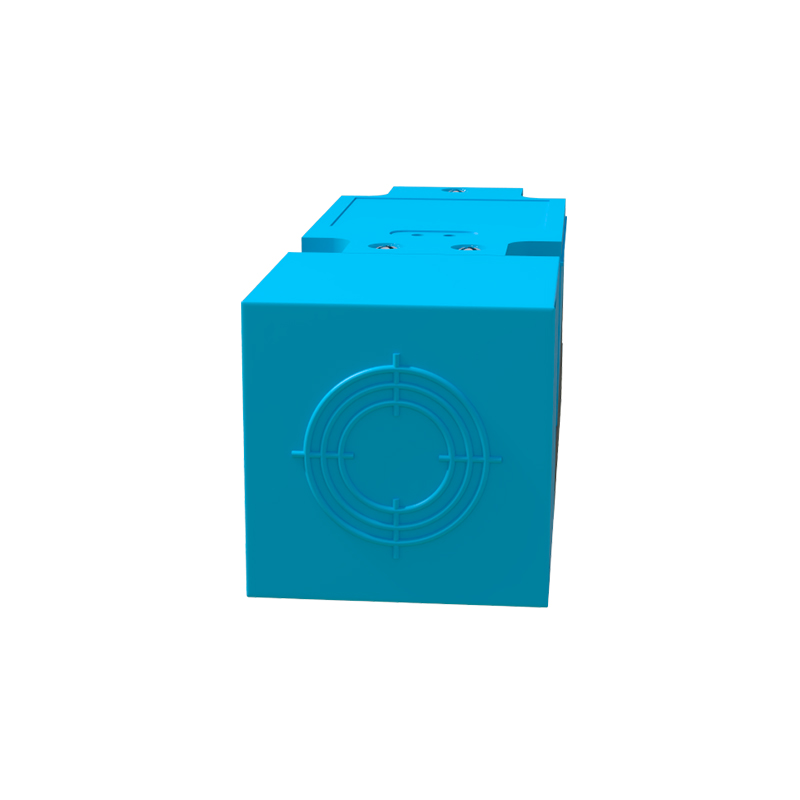
Key performance specifications define a sensor's suitability for an application. Sensing distance, or nominal range, is specified for a standard target (usually mild steel). It is critical to note that this range varies with target material (e.g., stainless steel and aluminum have reduction factors). Repeat accuracy, the consistency of the switch point, is vital for precision applications. Switching frequency defines how quickly the sensor can detect objects passing by. Environmental factors are addressed by specifications like IP (Ingress Protection) ratings for dust and water resistance, temperature range, and resistance to chemicals or welding spatter. Furthermore, many modern 3-wire sensors feature built-in protection against short-circuits, overloads, and reverse polarity, enhancing their durability.
Selecting and applying a 3-wire proximity sensor requires careful consideration. First, identify the target material and required sensing distance. Choose the correct output type (PNP/NPN) to match the control system's input module. The physical housing (cylindrical, rectangular, etc.) and size must fit the mechanical constraints. In wiring, always ensure the power supply voltage matches the sensor's rating. For long cable runs or electrically noisy environments (near variable frequency drives or welding equipment), using shielded cables and proper grounding is essential to prevent false triggering. For DC sensors, it is common practice to connect the blue wire to the DC common (0V) and the brown wire to the positive terminal. The load (e.g., a PLC input) is then connected between the black output wire and the opposite power rail: to +V for an NPN sensor, or to 0V for a PNP sensor.
In practice, these sensors are indispensable for tasks such as counting parts on a conveyor, verifying the position of a cylinder, detecting the end of a roll of material, or ensuring safety interlocking. Their solid-state design, absence of moving parts, and high-speed operation make them far superior to mechanical limit switches in most industrial environments.
In conclusion, the 3-wire proximity sensor is a fundamental component in electrical control systems. Its reliability, simplicity, and versatility stem from a clear separation of power and signal lines. A solid understanding of its operating principles, the critical difference between PNP and NPN outputs, and proper installation practices ensures optimal performance and longevity in demanding industrial settings, minimizing downtime and maximizing operational efficiency.