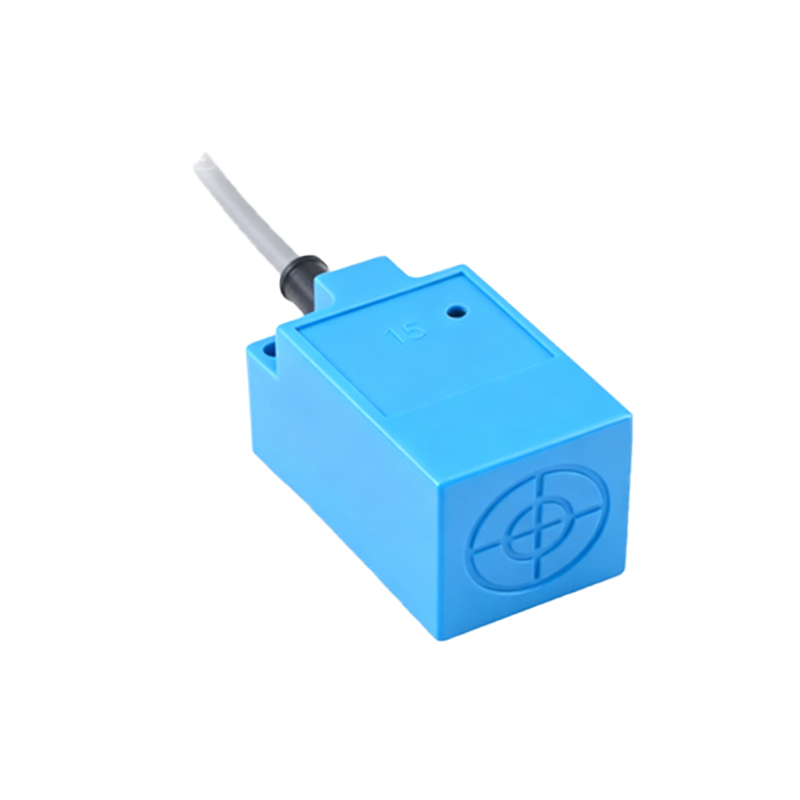
Proximity sensors are ubiquitous in modern industrial automation, robotics, and countless electronic devices. Their primary function is to detect the presence or absence of an object within a specified range without any physical contact. This non-contact operation is their defining characteristic, leading to high reliability, long operational life, and the ability to function in harsh environments. The core principle behind all proximity sensors is the disturbance or change in a field or beam caused by a target object. This change is then converted into an electrical signal that triggers an output, such as switching a load or sending data to a controller. The sensing mechanism varies significantly depending on the technology employed, each with its own advantages and ideal applications.
The most common types include inductive, capacitive, photoelectric, and ultrasonic proximity sensors. Inductive proximity sensors are the workhorses of metal detection in industrial settings. They operate on the principle of electromagnetic induction. The sensor contains a coil that is part of an oscillator circuit, generating a high-frequency electromagnetic field at its active face. When a metallic target enters this field, eddy currents are induced on the surface of the metal. This causes a load on the oscillator, leading to a reduction in its oscillation amplitude. This change is detected by a threshold circuit, which subsequently switches the sensor's solid-state output. Inductive sensors are robust, immune to environmental factors like dust or oil (as long as they are not conductive), and are excellent for detecting ferrous and non-ferrous metals, though with varying sensing distances.
Capacitive proximity sensors, in contrast, can detect both metallic and non-metallic materials, including liquids, powders, plastics, and wood. Their operation is based on the principle of capacitance change. The sensor face acts as one plate of a capacitor, with the target object acting as the other plate, and the air gap as the dielectric. The sensor's internal oscillator is tuned to a specific capacitance level. As a target approaches, the capacitance between the sensor and the target increases. When this capacitance reaches a preset threshold, it alters the oscillator's state, triggering the output switch. Their ability to sense through certain non-metallic containers makes them ideal for level detection of liquids or granular materials.
Photoelectric sensors utilize light beams to detect objects. They consist of a light emitter (usually an LED producing visible red, infrared, or laser light) and a receiver. There are three main configurations: through-beam, retro-reflective, and diffuse reflective. In through-beam mode, the emitter and receiver are separate units; an object is detected when it interrupts the beam. This offers the longest sensing range and highest reliability. Retro-reflective sensors house both elements in one unit, using a reflector to bounce the beam back; detection occurs when the beam is blocked. Diffuse reflective sensors also have a single housing, but they detect light reflected directly off the target itself. Photoelectric sensors are highly versatile, capable of sensing a vast array of materials over long distances, but they can be affected by ambient light, color, and surface reflectivity.
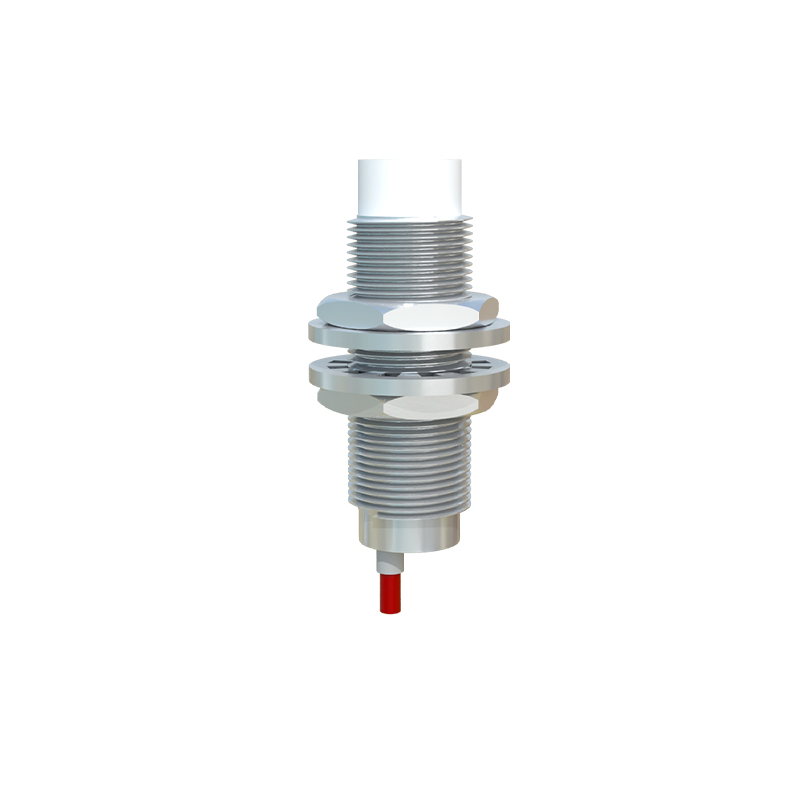
Ultrasonic proximity sensors use sound waves beyond the human hearing range. They contain a transducer that emits high-frequency ultrasonic pulses and then listens for the echo. The sensor measures the time interval between emitting the pulse and receiving the echo. The presence of an object within the sensing field shortens this time-of-flight, which the sensor's electronics interpret to determine distance or simple presence. Ultrasonic sensors are excellent for detecting objects regardless of color, transparency, or material, and they are effective in challenging environments with dust, smoke, or mist. However, they can be influenced by temperature variations and air turbulence, and soft materials may absorb some sound energy.
The output from these sensors is typically a discrete on/off signal from a solid-state switch (PNP or NPN for DC models) or a relay contact. Increasingly, sensors also provide analog outputs (e.g., 4-20 mA, 0-10V) proportional to distance, or digital communication via IO-Link, enabling detailed parameter setting and diagnostic data retrieval. Selection of the appropriate sensor depends on multiple factors: the target material, required sensing distance, environmental conditions (temperature, contaminants), electrical requirements, mounting constraints, and needed output type. Understanding the fundamental principles of electromagnetic induction, capacitance, light propagation, and sound wave reflection is key to deploying proximity sensors effectively, ensuring reliable and efficient operation in any automated system.