In the realm of industrial automation and control systems, the ability to detect the presence or absence of an object without physical contact is paramount. Among the various non-contact sensing technologies, electromagnetic (EM) proximity sensors stand out for their reliability, robustness, and versatility. This article delves into the operational principles, key characteristics, diverse applications, and critical selection criteria for these essential components.
At its core, an electromagnetic proximity sensor operates on the principle of electromagnetic induction. The sensor typically contains a coil that is part of an oscillator circuit. When an alternating current passes through this coil, it generates a high-frequency electromagnetic field around the active face of the sensor. When a conductive target, typically a metal object, enters this oscillating field, eddy currents are induced on the surface of the target. These eddy currents draw energy from the sensor's oscillator circuit, causing a change in its oscillation amplitude or frequency. The sensor's internal detection circuit monitors this change and triggers a switching action—either opening or closing an output circuit—when the change exceeds a predefined threshold. This switching signal is then used to control machinery, indicate status, or trigger subsequent processes.
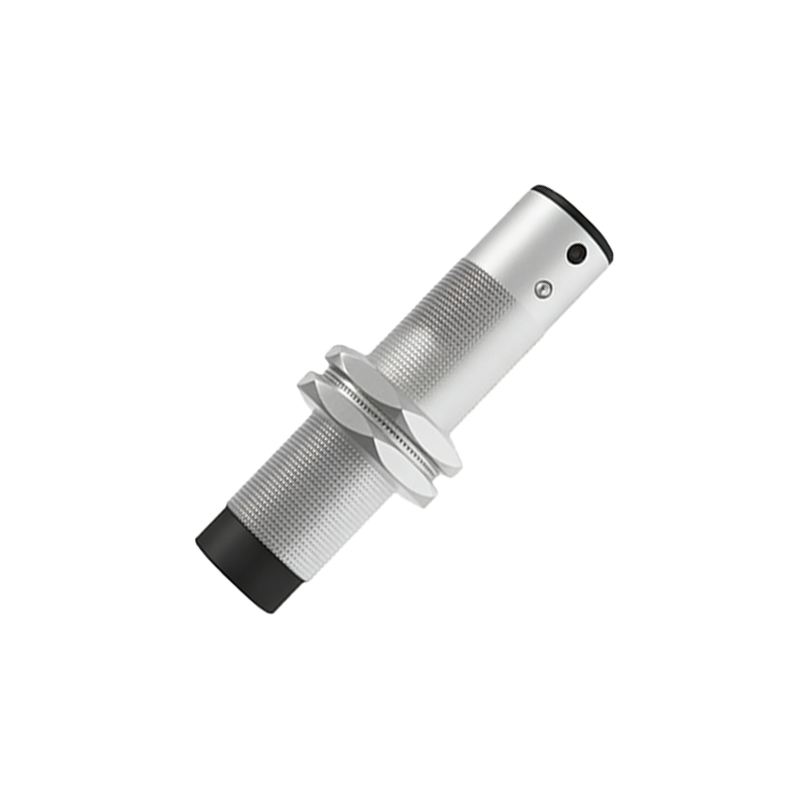
A key distinction of EM proximity sensors is their exclusive sensitivity to conductive materials, primarily metals. The sensing distance, or nominal range, is influenced by the target's material properties, specifically its electrical conductivity and magnetic permeability. For instance, ferrous metals like mild steel are typically detected at the sensor's rated nominal range. Non-ferrous metals such as aluminum, brass, or copper have a reduced effective sensing distance, often requiring a correction factor (e.g., 0.3 to 0.8 times the nominal range for steel). Non-conductive materials like plastic, wood, or glass do not trigger a standard EM proximity sensor, making them ideal for applications requiring selective detection.
The advantages of using EM proximity sensors are numerous. Their non-contact nature eliminates mechanical wear and tear, ensuring a long operational life and high reliability. They are capable of high-speed switching, making them suitable for fast-moving production lines and counting applications. They are inherently resistant to environmental factors such as dust, oil, moisture, and vibration when properly housed, often boasting high Ingress Protection (IP) ratings. Furthermore, they are not affected by the color or surface finish of the target object, focusing solely on its conductive properties.
These sensors find applications across virtually every industry. In manufacturing, they are used for part presence verification on assembly lines, end-of-travel limit sensing on robotic arms, and precise positioning in CNC machines. In material handling, they monitor the position of pallets, detect metal objects on conveyor belts, and ensure proper sequencing in automated storage systems. The automotive industry relies on them for robotic welding cell safety and component positioning. They are also integral to packaging machinery for cap detection on bottles and level sensing in metal silos.
Selecting the right EM proximity sensor requires careful consideration of several parameters. First, define the application requirements: the target material (steel, aluminum, etc.), the required sensing distance (with a safety margin), and the physical space constraints, which determine the sensor's housing style (e.g., cylindrical, rectangular, or ring-shaped). The electrical output type is crucial; options include DC 2-wire, DC 3-wire (NPN sinking or PNP sourcing), or AC models, which must be compatible with the control system's input module (PLC, relay). The operating voltage range (e.g., 10-30V DC) must be matched to the available power supply. Environmental conditions dictate the needed housing material (often nickel-plated brass or stainless steel) and IP rating (e.g., IP67 for washdown areas). For specialized needs, factors like high-temperature tolerance, weld-field immunity (for welding environments), or analog output for distance-proportional signals may be necessary.
Installation and maintenance are straightforward but vital for optimal performance. Ensure adequate clearance around the sensor's active face to prevent interference from adjacent metal structures (mounting in non-metallic housings is recommended). Avoid mounting sensors directly opposite each other to prevent mutual interference. Regular checks should include verifying the sensing distance with the actual target material and ensuring connections are secure and protected from corrosion.
In conclusion, electromagnetic proximity sensors are a foundational technology in modern industrial automation. Their simple yet effective operating principle, combined with durability and precision, makes them indispensable for tasks ranging from basic object detection to complex positional control. A thorough understanding of their characteristics and a methodical approach to selection and installation are key to leveraging their full potential, ensuring efficient, safe, and reliable operation in demanding industrial environments.