In the dynamic and demanding world of industrial automation, conveyor systems form the backbone of material handling. Ensuring their reliable, efficient, and safe operation is paramount. Among the myriad of components that achieve this, proximity sensors stand out as silent, yet indispensable, guardians. These non-contact detection devices are critical for monitoring position, controlling movement, and preventing costly downtime in conveyor applications.
Unlike mechanical limit switches that require physical contact, proximity sensors detect the presence or absence of a target object without touching it. This fundamental characteristic eliminates mechanical wear, reduces maintenance, and enables high-speed operation—key advantages for continuous conveyor processes. They operate by emitting an electromagnetic field or a beam of electromagnetic radiation (infrared, for instance) and looking for changes in the field or return signal. The primary types used in conveyor systems are inductive, capacitive, and photoelectric sensors.
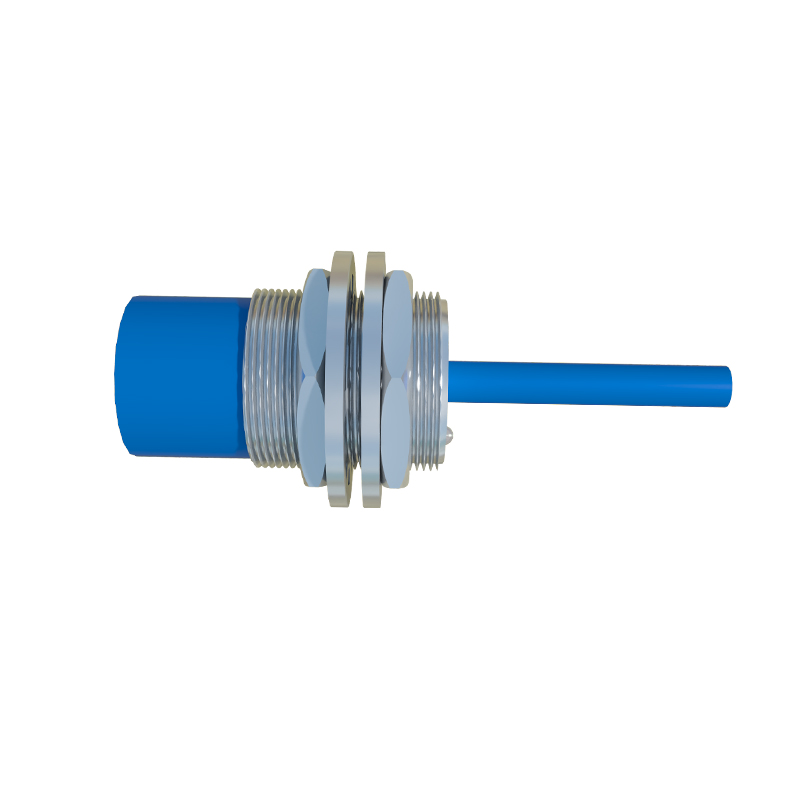
Inductive proximity sensors are the workhorses for detecting metallic objects. They generate an oscillating electromagnetic field. When a ferrous or non-ferrous metal target enters this field, it induces eddy currents, causing a change in the sensor's oscillation amplitude. This change triggers the sensor's output switch. In conveyor systems, they are extensively used for counting metal parts, detecting the position of pallets or carriers, and as end-of-travel limit switches for automated guided vehicles (AGVs) on guided paths. Their robustness against dust, oil, and moisture makes them ideal for harsh industrial environments.
For non-metallic materials—such as plastic totes, glass bottles, wood, or cardboard boxes—capacitive proximity sensors are the solution. These sensors can detect virtually any material by measuring changes in capacitance. They generate an electrostatic field. When any object with a dielectric constant different from air enters this field, it alters the capacitance, triggering the output. On packaging or bottling lines, capacitive sensors reliably detect the presence of filled containers, monitor levels of liquids or granules in hoppers feeding onto conveyors, and ensure proper positioning of materials.
Photoelectric sensors, particularly through-beam and retro-reflective types, offer the longest sensing ranges and are excellent for clear object detection. A through-beam sensor consists of separate emitter and receiver units; detection occurs when the target interrupts the light beam. This is perfect for detecting small or transparent items on high-speed conveyors. Retro-reflective models use a single unit and a reflector, detecting objects that break the beam. They are commonly used for presence verification at transfer points, jam detection, and in automated sorting systems where precise timing is crucial.
The integration of these sensors into a conveyor control system is a discipline in itself. Sensors provide critical input to Programmable Logic Controllers (PLCs). For instance, a sensor detecting a box at a specific point can trigger a pneumatic pusher to divert it to another line. A series of sensors can track parcel position for robotic pick-and-place operations. Furthermore, sensors are vital for safety: preventing conveyor start-up when maintenance personnel are in a hazardous zone (using safety-rated capacitive or photoelectric mats/beams) and ensuring emergency stop functions are activated if an obstruction is detected.
Selecting the right proximity sensor requires careful consideration of several factors. The target material is the first determinant (metal, plastic, liquid). Sensing distance, or "standoff," must be chosen with a safety margin, considering potential mechanical tolerances and vibration. Environmental conditions are critical; sensors may need specific Ingress Protection (IP) ratings for washdown areas (e.g., food & beverage) or resistance to chemicals. The output type (PNP/NPN analog or discrete) must be compatible with the control system's input module. Finally, the housing style—barrel, rectangular, or slot-shaped—must suit the mounting constraints on the conveyor frame.
Installation and alignment are often the difference between reliable operation and persistent nuisance faults. Sensors must be securely mounted to avoid vibration-induced misalignment. For photoelectric sensors, keeping lenses clean from dust and grime is essential. Electrical noise from motor drives can interfere with sensor signals; therefore, proper shielding, grounding, and the use of twisted-pair cables are recommended best practices. Regular preventive maintenance, including functional checks and cleaning, should be part of the operational routine.
Modern advancements continue to enhance proximity sensor capabilities. IO-Link communication enables sensors to transmit not just a simple on/off signal, but detailed diagnostic data like operating hours, temperature, and signal strength to higher-level systems, enabling predictive maintenance. Furthermore, sensors with background suppression technology in photoelectrics can reliably detect objects regardless of color or reflectivity, while ruggedized designs push the limits of temperature and pressure resistance.
In conclusion, proximity sensors are far more than simple switches. They are the sensory organs of the modern conveyor system, providing the essential data that drives automation, ensures product flow, and protects both equipment and personnel. A deep understanding of their operating