High precision proximity sensors represent a critical advancement in industrial automation, offering unparalleled accuracy in non-contact detection and measurement. These sensors operate on various principles, including inductive, capacitive, and magnetic technologies, each tailored to specific material types and environmental conditions. Inductive sensors excel in detecting metallic objects, utilizing electromagnetic fields to sense ferrous and non-ferrous metals with resolutions down to micrometers. Capacitive variants detect both metallic and non-metallic materials by measuring changes in capacitance, making them ideal for liquid level sensing or plastic object detection. Magnetic proximity sensors rely on Hall effect or magnetoresistive elements for precise position tracking of permanent magnets, commonly used in high-speed rotary encoders.
The core advantage of high precision proximity sensors lies in their repeatability and minimal hysteresis. Industrial-grade models achieve measurement tolerances within ±0.1% of full scale, maintaining stability across temperature fluctuations from -25°C to 85°C. Advanced designs incorporate embedded microprocessors for real-time compensation of environmental variables like humidity and electromagnetic interference. IP67 and IP69K rated housings ensure reliable operation in harsh conditions involving dust, moisture, or chemical exposure.
In manufacturing applications, these sensors enable micron-level positioning in CNC machining centers, robotic arm trajectory control, and automated assembly line verification. The automotive industry utilizes them for precise gap detection in body panel alignment, while semiconductor fabrication plants rely on sub-micron resolution sensors for wafer handling robotics. Integration with industrial networks (IO-Link, PROFINET, EtherCAT) allows for predictive maintenance through continuous monitoring of sensor health parameters.
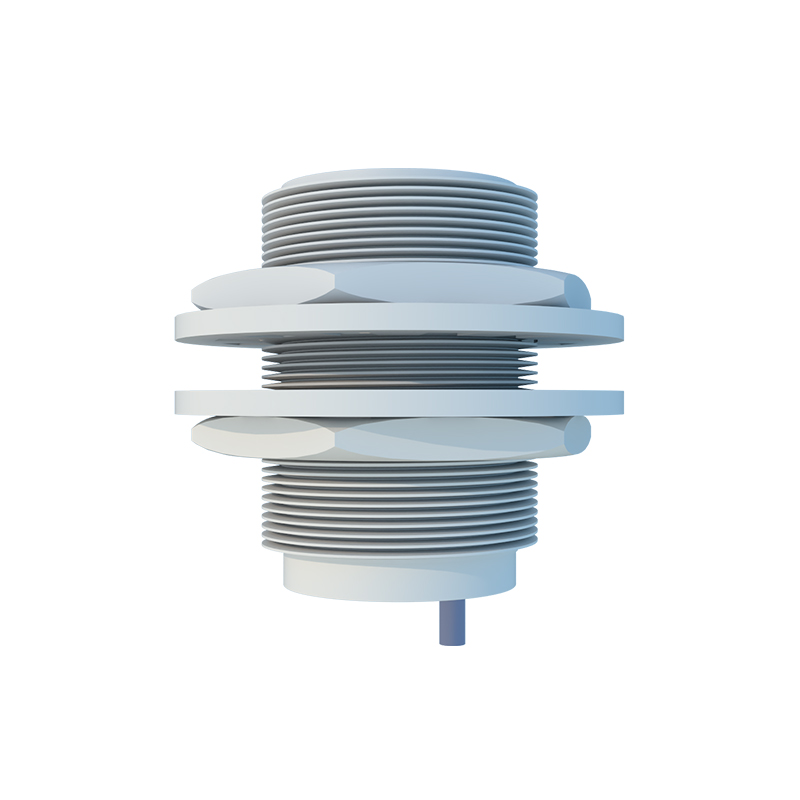
Future developments focus on multi-parameter sensing capabilities, combining proximity detection with temperature, pressure, or vibration measurements in single compact units. Miniaturization trends have produced sensors smaller than 3mm in diameter for micro-assembly applications, while smart sensors with AI-driven adaptive calibration are emerging for Industry 4.0 environments. When selecting high precision proximity sensors, engineers must consider target material, required sensing distance (typically 0.1-30mm), response frequency (up to 10kHz), and output signal type (analog 4-20mA, digital PNP/NPN, or PWM). Proper shielding and installation geometry are crucial to minimizing interference from adjacent machinery, ensuring sustained measurement fidelity throughout operational lifespans exceeding 100 million actuations.