In the realm of industrial automation and electrical control systems, proximity sensors are indispensable components for non-contact detection of objects. Among their key operational characteristics, the distinction between Normally Open (NO) and Normally Closed (NC) configurations is fundamental. This article delves into the technical nuances, application considerations, and selection criteria for these two primary output types, providing clarity for engineers and technicians in the field.
At its core, the terminology "Normally Open" and "Normally Closed" refers to the default electrical state of the sensor's output circuit when no target is within its sensing range. This "normal" state is defined under conditions of power being supplied to the sensor but without the presence of the actuating object.
A Normally Open (NO) proximity sensor has an output circuit that is open (non-conducting) in its default, non-actuated state. When a target enters the sensor's detection field, the internal switching element (often a solid-state transistor or a relay contact) closes the circuit, allowing current to flow. In simpler terms, the output signal becomes active (e.g., switches to a HIGH or "ON" state) only when an object is detected. This behavior is intuitive for initiating an action upon detection, such as starting a conveyor motor, activating a counter, or turning on a warning light when a part is present.
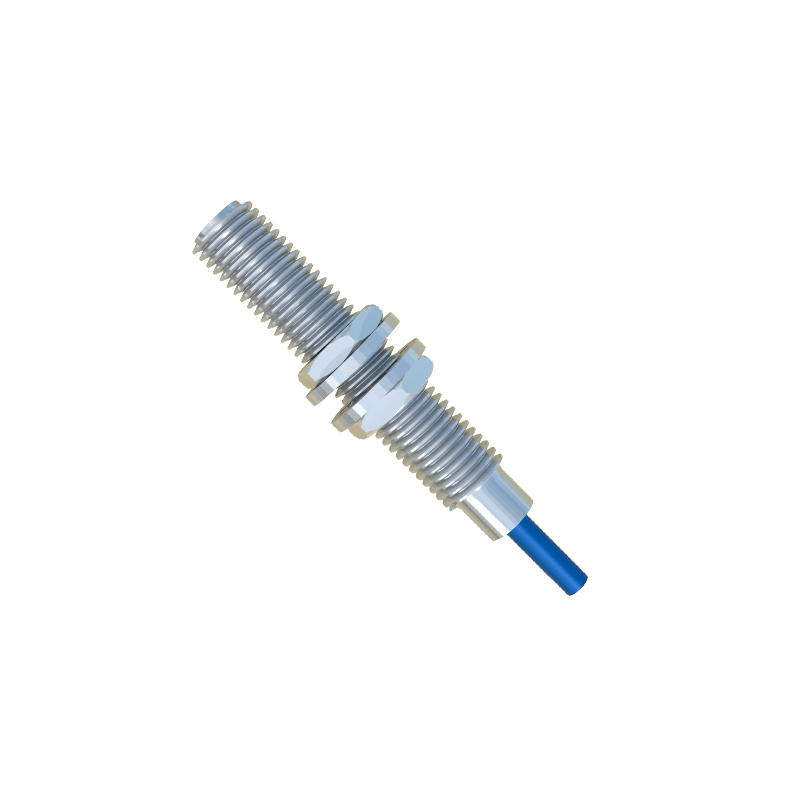
Conversely, a Normally Closed (NC) proximity sensor operates in the opposite manner. Its output circuit is closed (conducting) in the default, non-actuated state. When a target is detected, the internal switch opens the circuit, interrupting the current flow. Thus, the output signal is active (e.g., a LOW or "ON" state might be maintained) when no object is present, and it deactivates upon detection. This configuration is inherently suited for safety-oriented and monitoring functions. A classic application is in guard door monitoring: the NC sensor provides a continuous "run" signal to a machine controller as long as the safety door is closed (no target = sensor actuated). If the door opens (target enters sensing range), the circuit opens, signaling the controller to halt the machine immediately.
The choice between NO and NC is not merely a matter of preference but is dictated by system logic, safety requirements, and fail-safe design principles.
Safety and Fail-Safe Considerations: NC configurations are often mandated in safety-critical circuits. The rationale is rooted in fail-safe design. Consider a wire break or a loss of power to the sensor. In an NO configuration, a wire break would mimic the "no object detected" state (open circuit), potentially failing to trigger a necessary alarm or stop command. In an NC circuit used for a safety stop, a wire break or power loss would open the circuit, actively generating a "stop" or "fault" signal, thereby bringing the system to a safe state. This principle is a cornerstone in safety relay and emergency stop circuitry.
Wiring and PLC Logic: The selection also impacts control logic programming, particularly with Programmable Logic Controllers (PLCs). An NO sensor's input to a PLC will typically be "OFF" when idle and "ON" when activated. An NC sensor's input will be "ON" when idle and "OFF" when activated. Engineers must account for this inverse logic when writing ladder logic or function block diagrams. Using NC contacts can sometimes simplify ladder logic for stop circuits or alarm conditions.
Application-Specific Selection:
Use Normally Open (NO) for: Standard sequencing, part presence verification for process initiation, counting objects, and general automation tasks where an action starts upon detection.
Use Normally Closed (NC) for: Safety interlocks, emergency stop monitoring, alarm conditions (e.g., low-level detection where absence of material triggers an alarm), and any system where a fault (broken wire, sensor failure) must default to a safe, "off" condition.
It is crucial to consult the sensor's datasheet, as symbols and labeling are standardized. NO outputs are frequently denoted by a switch symbol that is open, while NC outputs show a closed switch. The terms "PNP" and "NPN" describe the sourcing or sinking nature of the solid-state output transistor, which is a separate characteristic from the NO/NC function. A sensor can be PNP-NO, PNP-NC, NPN-NO, or NPN-NC.
In summary, understanding the difference between Normally Open and Normally Closed proximity sensors is essential for designing robust, safe, and efficient control systems. The decision hinges on the desired default state, fail-safe requirements, and the logical sequence of the automated process. By carefully evaluating these factors, engineers can specify the correct sensor type, ensuring optimal performance and enhanced operational safety.