The LJ12A3-4-Z is a widely utilized inductive proximity switch sensor in industrial automation. Its operation is grounded in the fundamental principles of electromagnetic induction, offering a non-contact solution for precise position detection of metallic objects. This article delves into the working mechanism, key specifications, and typical application scenarios of this robust sensor.
At the heart of the LJ12A3-4-Z sensor lies an oscillator circuit that generates a high-frequency electromagnetic field. This field radiates from the active face of the sensor. In the absence of a conductive metallic target within its sensing range, the oscillator maintains a steady state, and the sensor's output remains in its normal condition (typically open or closed, depending on the wiring). The critical event occurs when a ferrous or non-ferrous metal object enters the detection zone. The alternating electromagnetic field induces eddy currents on the surface of the target metal. These eddy currents represent a power loss from the oscillator circuit. This loss increases the oscillation amplitude's damping, effectively reducing the energy of the oscillation. A dedicated threshold circuit within the sensor continuously monitors this amplitude. Once the damping surpasses a predefined threshold—indicating the target is within the nominal sensing distance of 4mm—the sensor's solid-state output switch changes state. This change can be from open to closed (NO) or closed to open (NC), providing a clear electrical signal to the connected control system, such as a Programmable Logic Controller (PLC).
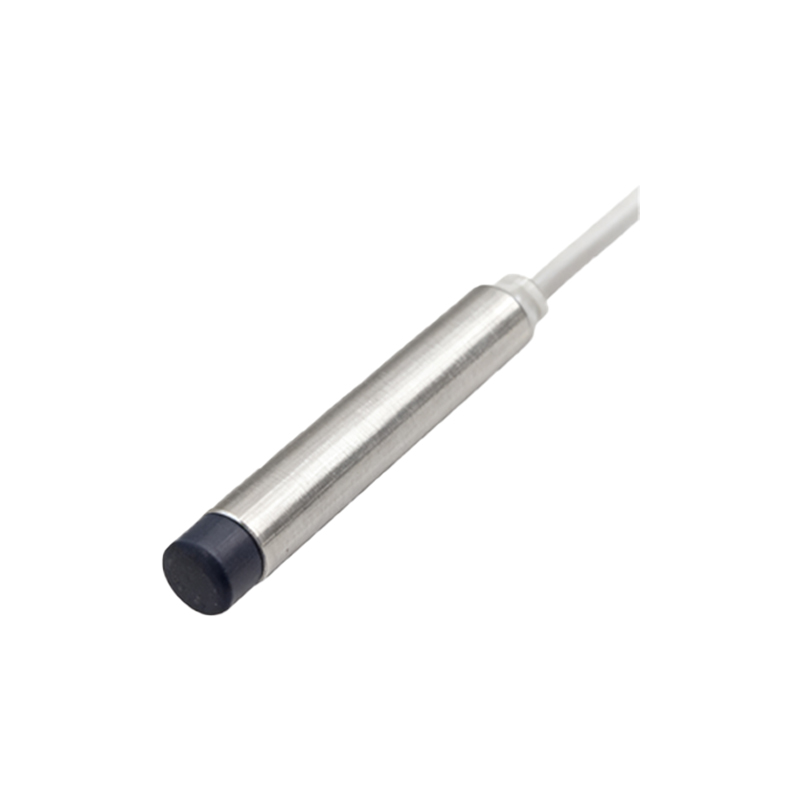
The designation "LJ12A3-4-Z" encodes its key features. 'LJ' often denotes a cylindrical inductive sensor. '12' indicates the 12mm diameter of the threaded barrel. 'A3' typically refers to the flush-mountable design, allowing installation without a lateral clearance zone. '4' specifies the nominal sensing distance of 4mm for a standard steel target. The 'Z' suffix commonly signifies a DC 3-wire configuration (brown wire for V+, blue for V-, black for signal output) with NPN normally open output logic. This sensor usually operates on a 6-36V DC supply, making it compatible with standard industrial control voltages. Its robust construction, often featuring a nickel-plated brass or stainless-steel housing and epoxy-potted electronics, ensures reliable performance in harsh environments with resistance to dust, moisture, and mechanical vibration.
Understanding its principle clarifies its advantages over mechanical limit switches. The non-contact nature eliminates physical wear and tear, leading to a dramatically longer operational lifespan. It enables high-speed detection as there is no mechanical bounce, and it can function reliably in dirty or wet conditions where physical contact might fail. A key operational parameter is the "hysteresis" or differential travel. This is the distance difference between the switch-on point (as the target approaches) and the switch-off point (as the target recedes). Hysteresis prevents output chattering when a target is positioned at the very edge of the sensing range due to vibration or minor positional fluctuations, ensuring a stable output signal.
In practical applications, the LJ12A3-4-Z is ubiquitous on factory floors. It is frequently employed for end-position detection of cylinders or slides in pneumatic and hydraulic systems, verifying if a moving part has fully retracted or extended. On conveyor lines, it counts metallic parts or products, controls sorting gates, and checks for the presence of components. In machine tools, it serves as a safety interlock to confirm guard doors are closed or as a tool position reference point. Its flush-mount design is particularly valuable in space-constrained installations where the sensor head can be mounted flush with a metal bracket without the sensor being triggered by that bracket itself.
When integrating the LJ12A3-4-Z, several considerations are paramount. First, the sensing distance can vary with different metals. For instance, the detection range for aluminum or copper is less than that for mild steel due to differences in electrical conductivity and permeability. Manufacturers provide reduction factors to calculate the effective sensing distance for non-ferrous targets. Second, environmental factors like extreme temperatures, strong adjacent electromagnetic fields, or conductive dust can influence performance. Proper shielding and adherence to specified temperature ranges are necessary. Finally, correct wiring is essential: connecting the load (e.g., a PLC input) between the output wire and the positive supply for an NPN sensor, and ensuring an adequate power supply with reverse polarity protection.
In conclusion, the LJ12A3-4-Z proximity sensor exemplifies a mature and reliable technology for industrial sensing. Its operation, based on the damping of an electromagnetic oscillator by eddy currents, provides a fast, wear-free, and robust method for detecting metallic objects. Its standardized design, clear operating parameters, and versatility make it a fundamental component in countless automation systems, from simple material handling to complex robotic assembly cells. A thorough grasp of its working principle empowers engineers to