In the realm of industrial automation and precision measurement, the 20-meter laser sensor stands as a pivotal technology, enabling accurate, non-contact detection and measurement across significant distances. This capability is transformative for applications where traditional sensors fall short due to range, environmental interference, or the need for high-speed, non-invasive data acquisition. A 20-meter operational range places these sensors in a category designed for medium to large-scale industrial settings, such as warehouse logistics, large machinery alignment, outdoor vehicle detection, and extensive conveyor system monitoring.
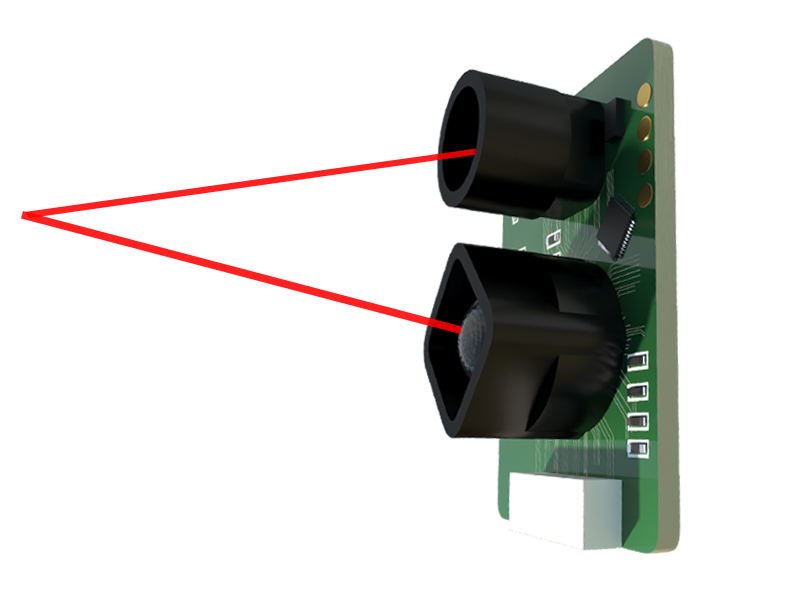
The core principle behind these long-range laser sensors typically involves time-of-flight (ToF) or phase-shift measurement techniques. In ToF systems, the sensor emits a laser pulse and precisely calculates the time taken for the reflected light to return. Given the speed of light is a known constant, the distance to the target can be determined with remarkable accuracy, often within millimeters even at the full 20-meter span. This method is highly effective for dynamic measurements and varying surface conditions. Advanced models incorporate background suppression algorithms and filters to minimize interference from ambient light or other infrared sources, ensuring reliable performance in challenging environments like brightly lit warehouses or partially outdoor applications.
Key performance parameters for a 20-meter laser sensor extend beyond just range. Resolution, or the smallest detectable change in distance, is critical for applications like positioning or fill-level monitoring. Repeatability defines the sensor's consistency in returning the same measurement under unchanged conditions. The response time, often in the millisecond range, determines how quickly the sensor can update its reading, which is vital for high-speed automation lines. Furthermore, the laser spot size at 20 meters is a crucial consideration; a smaller, more focused spot allows for precise targeting of small objects or edges, while a larger spot may average over surface irregularities. Most industrial-grade sensors in this range use Class 1 or Class 2 laser products, which are eye-safe under normal operating conditions, a non-negotiable safety standard in populated work areas.
The application spectrum for 20-meter laser sensors is vast and growing. In automated storage and retrieval systems (AS/RS), they are indispensable for pallet positioning, rack detection, and vehicle guidance, ensuring robots and cranes operate within precise spatial coordinates. In the automotive industry, they facilitate vehicle dimensioning, gap and flush measurement on assembly lines, and the guidance of autonomous mobile robots (AMRs) transporting materials across large factory floors. In construction and agriculture, they assist in machine control and leveling for large equipment. Another prominent use is in logistics for parcel dimensioning and volume calculation, where speed and accuracy directly impact throughput and shipping costs. Their non-contact nature also makes them ideal for measuring hot, moving, or delicate surfaces that would damage or be damaged by physical probes.
Selecting the right 20-meter laser sensor requires a careful analysis of the application's specific demands. Environmental factors are paramount: sensors may need specific Ingress Protection (IP) ratings for dust and water resistance, robust housing to withstand vibration and shock, and a wide operating temperature range. The target's properties—its color, material, surface texture (matte vs. glossy)—can significantly affect the reflectivity and the strength of the returned signal. Dark, matte, or absorbent surfaces may require a sensor with higher output power or specialized teaching modes to compensate. Interface options are also key; common outputs include analog (4-20 mA, 0-10 V), digital (PNP/NPN), and serial communications (RS-232, RS-485) or industrial Ethernet (EtherNet/IP, PROFINET) for seamless integration into a PLC or control network.
Looking ahead, the integration of 20-meter laser sensors with Industrial Internet of Things (IIoT) platforms is a clear trend. Smart sensors with embedded diagnostics, predictive maintenance alerts, and direct cloud connectivity are becoming more prevalent. This allows for not only real-time monitoring but also the aggregation of data for process optimization and analytics. Furthermore, advancements in multi-echo technology enable sensors to ignore foreground obstructions like dust, steam, or plastic film, capturing only the signal from the primary target—a feature invaluable in messy industrial environments.
In conclusion, the 20-meter laser sensor is far more than a simple distance-measuring device. It is a sophisticated, adaptable component that solves complex spatial awareness challenges in modern industry. By offering a blend of long range, high precision, and robustness, it empowers engineers to design smarter, safer, and more efficient automated systems. A thorough understanding of its operating principles, specifications, and application fit is essential for harnessing its full potential to drive innovation and operational excellence on the factory floor and beyond.