In the realm of industrial automation, security systems, and smart appliances, the reliable detection of human presence is a fundamental requirement. Among the various sensing technologies available, Hall Effect sensors have carved out a significant niche, particularly for non-contact proximity detection. Their operation, based on a fundamental physical principle, offers robustness, longevity, and precision that are highly valued in engineering applications.
The core principle behind a Hall Effect sensor is the Hall Effect, discovered by Edwin Hall in 1879. When a current-carrying conductor or semiconductor is placed in a perpendicular magnetic field, a voltage difference, known as the Hall voltage, is generated across the conductor. This voltage is perpendicular to both the current direction and the magnetic field. In a practical Hall sensor, this sensitive element is integrated with signal conditioning circuitry—such as amplifiers, Schmitt triggers, and voltage regulators—onto a single chip. This integration produces a clean, digital or analog output signal that responds to the presence and strength of a magnetic field.
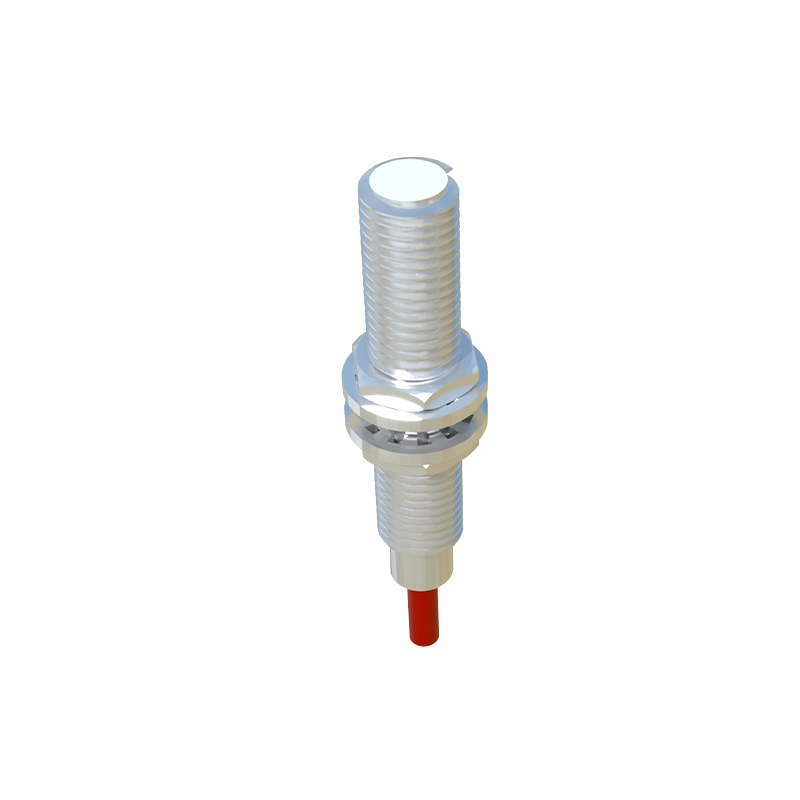
For human proximity detection, this principle is applied indirectly. A Hall Effect sensor itself does not detect flesh, body heat, or capacitance. Instead, it detects the presence of a magnet that is attached to or part of a moving object. Therefore, in a system designed to sense human approach, the human interaction must be mechanically linked to the movement of a magnet. A common implementation is in door and lid safety switches. A small permanent magnet is embedded in a door or a protective cover. A Hall Effect sensor is fixed in the corresponding frame or main body. When the door is closed, the magnet is in close proximity to the sensor, causing it to activate (often outputting a LOW signal). When a person opens the door, the magnet moves away, the magnetic field at the sensor drops below a threshold, and the sensor's output state switches (to HIGH). This signal is then fed into a control system to halt machinery, activate an alarm, or enable an interlock.
Another application is in non-contact push buttons or touchless interfaces. Here, a button cap may have a magnet embedded in its base. When a user presses the button, the magnet moves toward a Hall sensor mounted on the printed circuit board underneath. The sensor detects the increasing magnetic field and registers a "press" event. This design is highly reliable, sealed against dust and moisture as there is no need for a physical electrical contact, and offers a long operational life with millions of actuations.
The advantages of using Hall Effect sensors for such proximity tasks are substantial. They are solid-state devices with no moving parts, leading to exceptional reliability and resistance to wear. They are immune to environmental factors like dust, oil, moisture, and vibrations that often plague optical or mechanical switches. Their operation is not affected by ambient light or acoustic noise. They can function over a wide temperature range and offer consistent performance. The output is typically a clean, bounce-free digital signal, simplifying interface with microcontrollers or PLCs.
However, the limitations must also be considered for proper system design. The primary constraint is the requirement for a magnet to be attached to the moving target. This makes pure, passive human detection at a distance impossible without a wearable magnet. The sensing range is also limited, typically from a few millimeters to several centimeters, depending on the magnet's strength and the sensor's sensitivity. Very strong external magnetic fields can interfere with operation. Furthermore, the detection is binary (near/far) in digital sensors, though analog Hall sensors can provide distance-proportional output, which is less common for simple proximity tasks.
When selecting a Hall sensor for a human proximity application, key parameters include the operating point (the magnetic field strength at which it switches), the release point (the field strength at which it switches back), and the resulting hysteresis which prevents chatter. Engineers must also consider the supply voltage, output type (open-collector, push-pull, analog), and packaging for the environment.
In conclusion, the Hall Effect sensor provides an elegant and highly reliable solution for detecting human presence through mechanical actuation. Its principle of magnetic field detection, when cleverly integrated into product design—linking human action to magnet movement—results in robust safety switches, durable human-machine interfaces, and reliable position sensing. While not a direct "body heat" sensor, its role in the ecosystem of human proximity detection is critical, offering unmatched durability in harsh industrial and consumer environments where the dependable translation of a physical action into an electrical signal is paramount.