In the rapidly evolving landscape of smartphone technology, laser sensors have emerged as a pivotal component, enhancing functionalities ranging from autofocus in cameras to proximity detection and 3D sensing. This article delves into the underlying principles of mobile phone laser sensors, exploring their operational mechanisms, types, and real-world applications.
At its core, a laser sensor operates by emitting a focused beam of light—typically from a laser diode—and measuring the time it takes for the light to reflect off an object and return to a detector. This principle, known as Time-of-Flight (ToF), allows for precise distance calculations. In smartphones, ToF sensors are commonly used for improving camera autofocus speed and accuracy. By emitting an infrared laser pulse and analyzing the reflected signal, the sensor can determine the distance to the subject almost instantaneously, even in low-light conditions where traditional contrast-detection autofocus systems struggle.
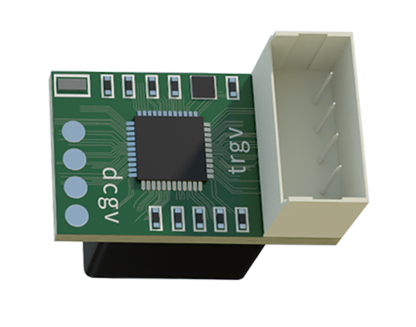
Another prevalent type is the laser autofocus sensor, which utilizes a triangulation method. Here, a laser projects a pattern or dot onto a surface, and a dedicated sensor captures the reflection angle. By calculating the displacement of the dot, the system infers the distance. This method is often integrated into rear cameras for swift focusing, particularly in portrait mode or augmented reality (AR) applications.

Beyond imaging, laser sensors contribute to proximity sensing, preventing accidental screen touches during calls by detecting when the phone is near the user's ear. They also enable gesture recognition and environmental mapping for advanced AR experiences. For instance, in devices like the iPhone's LiDAR scanner, short-wavelength lasers create detailed depth maps by measuring millions of data points, facilitating immersive gaming and interior design apps.
The hardware typically comprises a vertical-cavity surface-emitting laser (VCSEL) for efficient, low-power emission, paired with a single-photon avalanche diode (SPAD) or a complementary metal-oxide-semiconductor (CMOS) sensor for detection. Advanced signal processing algorithms filter noise and enhance accuracy, ensuring reliable performance across varying conditions.
Despite their advantages, challenges persist, such as interference from ambient light or reflective surfaces. Manufacturers address these through modulation techniques and software corrections. Looking ahead, innovations in miniaturization and power efficiency promise broader adoption in foldable phones and IoT devices.
In summary, mobile phone laser sensors leverage optical physics to deliver enhanced user experiences, from photography to interactive technologies. As research progresses, their role in enabling smarter, more responsive devices will only expand, underscoring their importance in modern electronics.