In the realm of modern industrial automation and quality control, precision laser measurement sensors have emerged as indispensable tools, driving unprecedented levels of accuracy, speed, and reliability. These sophisticated devices utilize laser technology to perform non-contact measurements of distance, displacement, thickness, profile, and even surface characteristics with micron-level precision. Their applications span a vast array of sectors, from automotive manufacturing and aerospace to electronics production and semiconductor fabrication.
The core principle behind these sensors often involves triangulation or time-of-flight (ToF) methods. In laser triangulation sensors, a laser diode projects a focused spot onto the target surface. The reflected light is captured by a receiving lens at a specific angle and focused onto a position-sensitive detector, such as a CCD or CMOS array. Any change in the target's distance causes a proportional shift in the position of the light spot on the detector, which is then calculated to determine the exact measurement. This method excels in high-resolution, short-range applications. Conversely, ToF sensors measure the time it takes for a laser pulse to travel to the target and back, calculating distance based on the speed of light. This technology is ideal for longer-range measurements, though often with slightly lower resolution compared to triangulation.
The advantages of deploying precision laser sensors are manifold. First and foremost is their non-contact nature, which eliminates the risk of damaging delicate surfaces or causing wear on the sensor itself. This is critical when measuring soft, hot, fast-moving, or otherwise inaccessible objects. Secondly, they offer extremely high measurement speed, capable of capturing thousands of data points per second. This enables real-time process monitoring and 100% inline inspection, which is impossible with traditional contact probes or manual methods. Furthermore, their high accuracy and repeatability ensure consistent product quality, reduce waste from defects, and facilitate tighter tolerances in manufacturing processes.
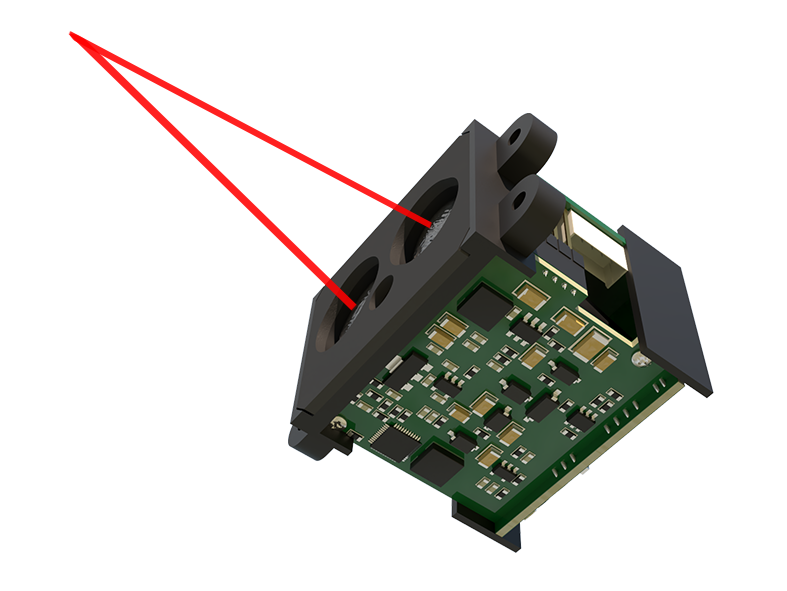
Key performance specifications to consider when selecting a laser measurement sensor include measurement range, resolution, linearity, spot size, and response speed. Environmental factors such as ambient light, temperature fluctuations, and the target's surface color, material, and reflectivity (e.g., shiny vs. matte) can significantly impact performance. Modern sensors incorporate advanced features to mitigate these challenges, such as automatic exposure control, background suppression algorithms, and integrated temperature compensation.
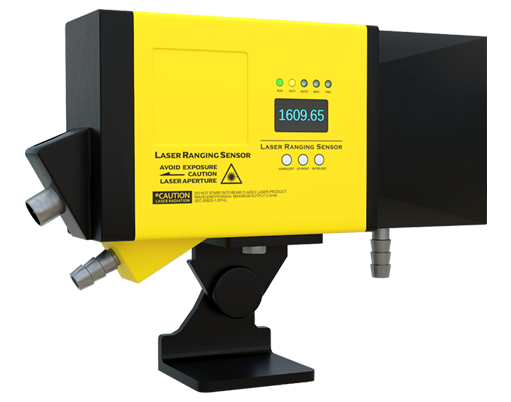
In practical industrial settings, these sensors are the workhorses of precision. They are deployed for tasks like gap and flush measurement in automotive body assembly, precise thickness control of rolled metals or films, vibration analysis in machinery, wafer warpage inspection in semiconductor plants, and robot guidance for accurate pick-and-place operations. Their integration with PLCs (Programmable Logic Controllers) and industrial networks allows for seamless data acquisition and closed-loop process control.
The future of precision laser measurement is intertwined with Industry 4.0 and smart factory concepts. The next generation of sensors is becoming more intelligent, compact, and networked. We are seeing the integration of embedded processors for edge computing, allowing for preliminary data analysis directly at the sensor level. Enhanced connectivity via IO-Link, Ethernet/IP, or OPC UA facilitates easier integration into digital twin systems and cloud platforms for predictive maintenance and big data analytics. Furthermore, developments in blue laser technology offer improved performance on challenging surfaces like copper or transparent materials, which traditionally scatter or absorb standard red laser light.
In conclusion, precision laser measurement sensors are far more than simple distance meters. They are critical enablers of quality, efficiency, and innovation in high-tech manufacturing. By providing fast, accurate, and reliable data without physical contact, they form the sensory foundation for automated, intelligent production systems. As technology advances, these sensors will continue to push the boundaries of what is measurable, empowering industries to achieve new heights of precision and operational excellence. Engineers and system integrators must stay abreast of these developments to fully leverage their potential in solving complex measurement challenges.