In the realm of industrial automation and machine safety, cylindrical proximity sensors stand as fundamental components for non-contact detection. A critical, yet sometimes overlooked, element within the assembly of many such sensors is the contact plate. This article delves into the specifics of cylindrical proximity sensor contact plates, exploring their design principles, functional roles, material considerations, and key application scenarios.
Fundamentally, a contact plate in a cylindrical proximity sensor serves as the interface between the sensor's internal electronics and the external mounting fixture or the metallic target itself in certain configurations. Unlike the sensor's active sensing face, the contact plate is a passive conductive element. Its primary function is to ensure a reliable electrical connection for the sensor's housing or shield to ground (earth) or to a specific reference potential. This connection is vital for mitigating electromagnetic interference (EMI) and radio frequency interference (RFI), which can cause erratic sensor behavior, false triggering, or reduced sensing ranges. By providing a low-impedance path to ground, the contact plate helps stabilize the sensor's operation in electrically noisy industrial environments typical of facilities with motor drives, welding equipment, or large solenoids.
The design of a cylindrical proximity sensor contact plate is deceptively simple. Typically, it is a stamped or machined metal ring or washer, often made from spring-tempered stainless steel, beryllium copper, or phosphor bronze. These materials are chosen for their excellent conductivity, corrosion resistance, and, crucially, their spring properties. The plate is usually integrated into the sensor's housing near the threaded barrel or at the rear connector end. Its design incorporates features that allow it to bite into the mounting nut or the panel surface, scraping away non-conductive coatings like paint, rust, or anodization to establish a solid metal-to-metal contact. This "biting" action is essential for maintaining a consistent ground connection despite vibration, thermal cycling, or minor shifts in installation.
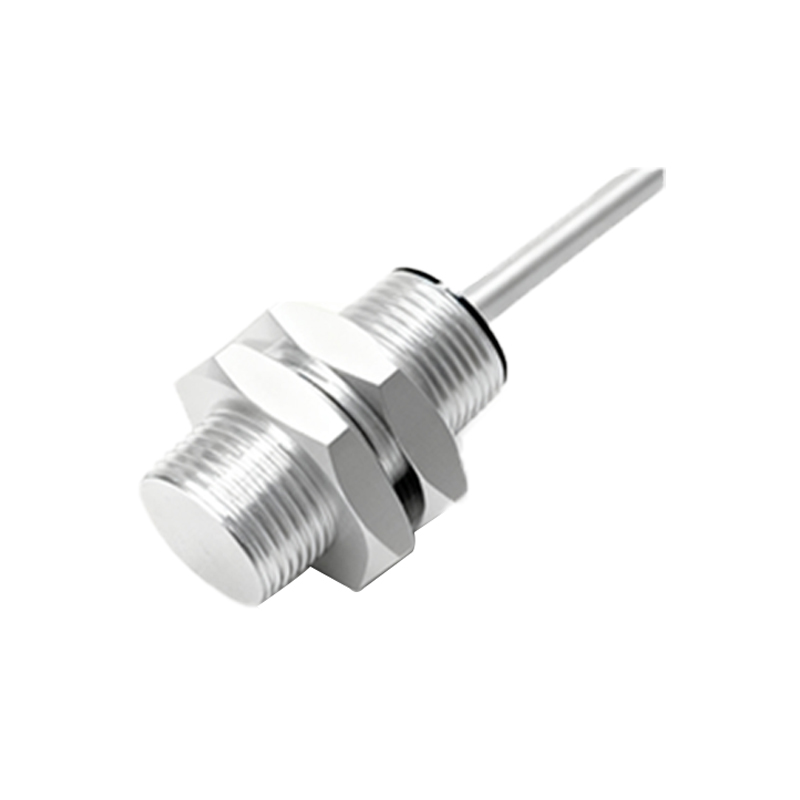
There are several common configurations. In many standard inductive proximity sensors, the contact plate is a toothed lock washer integrated behind the mounting nut. When the sensor is tightened into its mounting hole in a metal panel, this plate ensures electrical continuity between the sensor's metallic body and the grounded machine frame. In some high-frequency or capacitive sensors, an additional internal contact plate might connect the sensor's shielding directly to a designated pin on the connector, requiring a dedicated wire to be run to the control system's ground point. The choice of configuration depends on the sensor's technology, its required noise immunity level (often specified by EMC standards like IEC 60947-5-2), and the application's electrical environment.
Material selection is a key engineering decision. For general factory automation, zinc-plated or stainless steel plates offer a good balance of cost and performance. In highly corrosive environments—such as food and beverage processing, chemical plants, or marine applications—sensors equipped with contact plates made from high-grade stainless steel (e.g., 316L) or nickel-plated brass are mandatory to prevent degradation and loss of conductivity. The spring force of the material must also be calibrated; too weak, and the contact becomes unreliable under vibration; too strong, and it makes sensor installation or adjustment unnecessarily difficult.
From an application perspective, proper utilization of the contact plate is a best practice for robust system design. It is not merely an optional mounting accessory. Technicians should ensure the sensor is mounted in a clean, unpainted hole in a grounded metal bracket whenever possible. The mounting nut should be tightened to the manufacturer's specified torque to allow the contact plate to properly engage. In situations where the sensor must be mounted on a non-metallic surface or an isolated part of a machine, an alternative grounding method must be provided, often via a separate grounding wire connected to the sensor's ground terminal or shield connection, if available. Ignoring this grounding path can lead to intermittent failures that are notoriously difficult to diagnose.
In summary, the cylindrical proximity sensor contact plate is a small component with a significant responsibility. It is the cornerstone of effective EMI/RFI shielding and operational stability. Understanding its function—ensuring a reliable ground connection for the sensor housing—empowers engineers and maintenance personnel to make informed installation choices. By specifying sensors with appropriate contact plate materials for the environment and adhering to correct mounting procedures, the longevity, reliability, and accuracy of the entire sensing system are greatly enhanced, contributing to reduced downtime and improved safety in automated industrial processes.