In the rapidly evolving landscape of industrial automation and robotics, the development of URG (Ubiquitous Range-Gate) laser sensors represents a significant leap forward in precision measurement and environmental perception. As a senior electrical engineer with extensive experience in sensor integration, I have witnessed firsthand the transformative impact of these devices. This article delves into the core technological advancements, application challenges, and future trends shaping the next generation of URG laser sensors.
The fundamental principle of a URG laser sensor is based on time-of-flight (ToF) or phase-shift measurement of a laser beam. A laser diode emits a pulsed or modulated continuous-wave (CW) light towards a target. The sensor's photodetector then captures the reflected signal. By calculating the time delay or phase difference between the emitted and received light, the sensor determines the distance to the object with remarkable accuracy. Modern URG sensors have refined this process through advanced signal processing algorithms, enabling them to filter out ambient noise and operate reliably in diverse lighting conditions, from complete darkness to direct sunlight.
Recent breakthroughs in semiconductor technology have been pivotal. The miniaturization of high-power, eye-safe laser diodes operating in the near-infrared spectrum (typically 905nm) has allowed for more compact sensor designs without compromising on range or performance. Concurrently, advancements in CMOS and SPAD (Single-Photon Avalanche Diode) array detectors have dramatically increased detection sensitivity and resolution. This enables modern URG sensors not only to measure distance but also to generate high-density point clouds, effectively functioning as compact 2D or even low-resolution 3D LiDAR units.
From an engineering standpoint, the development focus has shifted towards enhancing key performance parameters. Maximum measurement range has extended beyond 30 meters for standard diffuse reflectors, with some models achieving 60 meters or more. Measurement accuracy, now often in the sub-centimeter range, is crucial for applications like robotic bin-picking or autonomous guided vehicle (AGV) navigation. Furthermore, scan speed and angular resolution have seen substantial improvements. High-speed models can perform thousands of scans per second, providing real-time data for dynamic obstacle avoidance in fast-moving robotic systems.
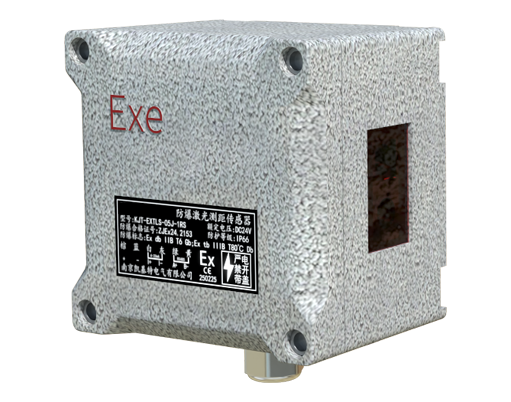
However, the path of development is not without its challenges. Environmental robustness remains a primary concern. Engineers must design sensors that can withstand industrial extremes: temperature fluctuations, humidity, vibration, and exposure to dust or oil mist. IP67-rated enclosures are now standard, but internal component selection and thermal management are critical for long-term reliability. Another significant hurdle is interference immunity. In facilities where multiple laser sensors operate simultaneously, sophisticated coding of laser pulses and advanced filtering techniques are employed to prevent crosstalk, ensuring each sensor receives only its own signal.

Software and data integration constitute the other half of the innovation story. Modern URG sensors are no longer simple data output devices; they are intelligent nodes. Embedded processors run complex algorithms for edge computing, such as object recognition, contour extraction, and even basic classification. The adoption of standardized communication protocols like Ethernet/IP, PROFINET, and MQTT has simplified integration into larger Industrial Internet of Things (IIoT) ecosystems. This allows for seamless data flow to PLCs, robotic controllers, and cloud analytics platforms, enabling predictive maintenance and system-wide optimization.

Looking ahead, the future of URG laser sensor development is incredibly promising. We are moving towards even greater integration. The convergence of laser scanning, high-resolution vision cameras, and inertial measurement units (IMUs) into multi-modal sensing packages will provide richer contextual data for autonomous systems. Research into solid-state LiDAR, which eliminates moving mechanical parts, is directly influencing URG designs, promising sensors with longer lifespans and higher resistance to mechanical shock. Furthermore, the application of artificial intelligence directly at the sensor level for adaptive scanning and anomaly detection is on the horizon, which will further reduce the computational load on central systems.
In conclusion, the development of URG laser sensors is a testament to interdisciplinary engineering, combining optics, electronics, software, and mechanical design. The relentless pursuit of higher performance, robustness, and intelligence is what makes these sensors indispensable for the smart factories and autonomous systems of today and tomorrow. For engineers and integrators, staying abreast of these developments is not just beneficial—it is essential for designing competitive, efficient, and safe automated solutions.