Laser mirror sensors represent a critical component in modern industrial automation, offering unparalleled precision for object detection, positioning, and measurement. When evaluating their price, it's essential to move beyond a simple sticker figure and understand the multifaceted cost structure. The final price of a laser mirror sensor is not arbitrary; it is a direct reflection of its underlying technology, performance specifications, build quality, and the value it delivers within a system.
At the core of the cost are the performance specifications. Key parameters such as sensing range, spot size, resolution, and response time significantly influence the price. A sensor with a sub-micron resolution and a 50-meter range, capable of detecting minute objects at high speeds, will inherently command a higher price than a standard unit designed for close-range, less critical applications. The laser class also plays a role; Class 1 or Class 2 lasers, which are inherently safe, often incorporate more sophisticated safety enclosures and circuitry, adding to the manufacturing cost compared to higher-power Class 3B or 4 lasers used in specialized, controlled environments.
The type of sensing technology employed is another major determinant. Standard diffuse reflection sensors are generally the most economical. However, retro-reflective and through-beam models, which offer superior reliability in challenging conditions (like detecting transparent objects or operating in environments with high ambient light), involve more complex optics and alignment mechanisms, increasing their cost. Furthermore, specialized variants like background suppression sensors or color recognition sensors integrate advanced optical filters and evaluation algorithms, placing them at a higher price point.
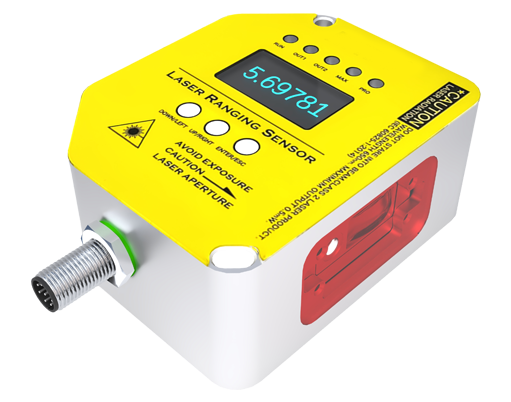
Construction and durability are non-negotiable factors in industrial pricing. A sensor housed in a ruggedized stainless steel or brass casing with an IP67, IP68, or IP69K rating for resistance to dust, water jets, and high-pressure washdowns will cost more than a plastic-housed unit for light duty. Components rated for extended temperature ranges (-40°C to +70°C), high shock/vibration resistance, and immunity to electromagnetic interference (EMI) involve superior materials and engineering, directly impacting the unit price.
The electronics and output capabilities further differentiate cost tiers. Analog output sensors (0-10V, 4-20mA) for precise distance measurement are more complex than simple digital (PNP/NPN) switches. Sensors with integrated IO-Link, PROFINET, or EtherNet/IP connectivity for Industry 4.0 applications, offering digital parameter setting, condition monitoring, and diagnostic data, carry a premium due to the added communication chipsets and software development. Features like teach-in functions (programmable via a button or remote), adjustable sensing windows, and high-speed outputs for counting applications also add layers of functionality and cost.

Beyond the sensor unit itself, the total cost of ownership (TCO) must be considered. This includes integration costs (mounting hardware, cabling, controller programming), maintenance (cleaning optics, recalibration), and potential downtime. A higher-precision, more reliable sensor from a reputable manufacturer may have a higher initial purchase price but can drastically reduce costly production errors and unplanned stoppages. Availability of technical support, comprehensive documentation, and a global supply chain for replacements also contribute to the long-term value proposition.
Brand reputation and market positioning are intangible yet real cost factors. Established manufacturers with decades of experience in photoelectric sensing invest heavily in research and development, quality control, and testing. Their products often undergo rigorous certification processes (UL, CE, ATEX for hazardous areas). This legacy of reliability and performance justifies a price premium over generic or lesser-known brands, where long-term performance and support may be uncertain.

In conclusion, the price of a laser mirror sensor is a synthesis of its technical prowess, mechanical robustness, and intelligent features. For engineers and procurement specialists, the goal should not be to find the cheapest sensor but to identify the sensor that offers the optimal balance of performance, durability, and smart features for the specific application, thereby minimizing the total cost of ownership and maximizing system uptime and productivity. A thorough evaluation based on technical datasheets, application notes, and lifecycle cost analysis is far more valuable than a simple price comparison.