Proximity sensors are indispensable components in modern industrial automation, offering non-contact detection of objects with high reliability and precision. Selecting the appropriate sensor requires a thorough understanding of key specifications and model designations, which define performance, compatibility, and application suitability. This article delves into the critical parameters and common model classifications to guide engineers and technicians in making informed decisions.
The core specifications of a proximity sensor begin with its sensing principle. Inductive sensors detect metallic objects, typically ferrous metals like steel and iron, using an electromagnetic field. Their sensing range varies by model, often from 1mm to 60mm, and is specified as the nominal sensing distance (Sn). Capacitive sensors can detect both metallic and non-metallic materials (plastics, wood, liquids) by measuring changes in capacitance. Ultrasonic sensors use sound waves for longer-range detection and can sense various materials, while photoelectric sensors utilize light beams. The choice of principle directly dictates the target material and environmental constraints.
Output configuration is another vital specification. Common outputs include NPN (sinking) and PNP (sourcing) transistor outputs for DC sensors, and AC two-wire or DC three-wire configurations. Relay outputs are used for higher current switching. The output state, normally open (NO) or normally closed (NC), defines the circuit behavior when a target is detected. Load current, leakage current, and switching frequency (response time) are critical for ensuring compatibility with controllers like PLCs. A sensor with a 100Hz switching frequency can detect up to 100 objects per second, suitable for high-speed counting applications.
Environmental ratings are paramount for industrial durability. The Ingress Protection (IP) rating, such as IP67 or IP69K, indicates resistance to dust and water. Operating temperature range, typically from -25°C to +70°C for standard models, ensures functionality in harsh conditions. Housing material, often nickel-plated brass, stainless steel, or PBT plastic, provides resistance to chemicals, oils, and physical impact. Voltage supply range (e.g., 10-30V DC or 90-250V AC) must match the plant's power system.
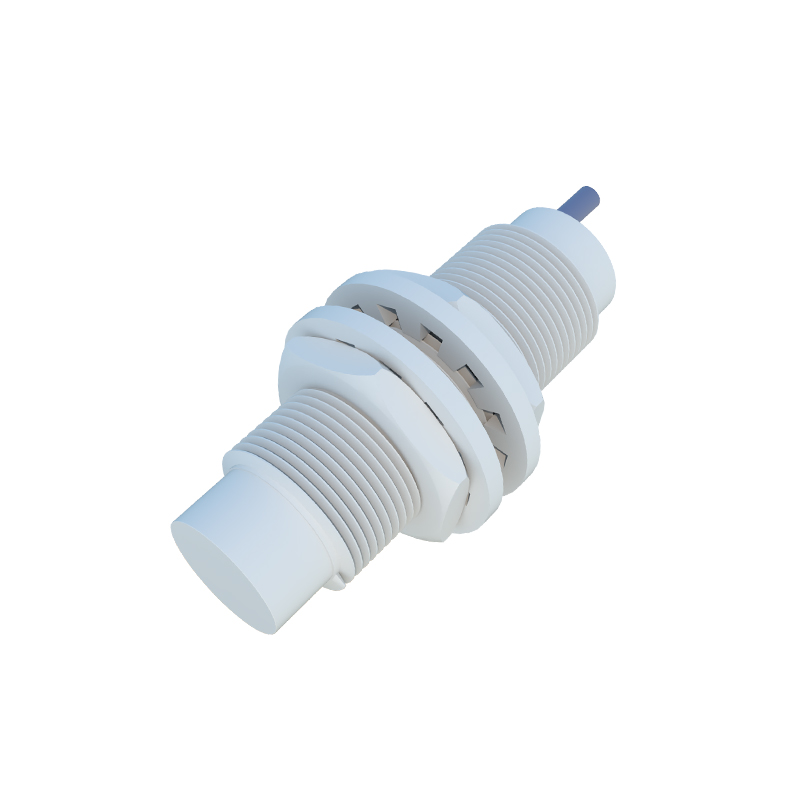
Model numbers encode these specifications. A typical model string like "E2A-S08KS02-WP-B1" from a major manufacturer deciphers as follows: "E2A" denotes a cylindrical inductive sensor, "S08" indicates an 8mm diameter, "K" specifies a shielded (flush-mountable) design, "S02" might refer to a 2mm sensing range, "WP" often means washdown-proof, and "B1" could signify a PNP NO output. Understanding this nomenclature allows for quick cross-referencing and replacement.
Key performance nuances include repeatability, the sensor's ability to consistently detect a target at the same distance, and hysteresis, a built-in difference between the switch-on and switch-off points to prevent chatter. Temperature drift and short-circuit protection are also essential for stable operation. For specialized applications, factors like weld-field immunity (for robotic welding), noise resistance, and FDA-compliant materials (for food processing) become selection criteria.
In conclusion, a meticulous review of proximity sensor specifications—sensing principle, range, output type, environmental ratings, and model code details—is crucial for optimal system integration. Engineers must align these parameters with application requirements such as target material, required sensing distance, speed, and environmental challenges to ensure longevity, accuracy, and cost-effectiveness in automated processes. Always consult the manufacturer's datasheet for precise values and application notes.