In the realm of modern industrial manufacturing, hydraulic presses are indispensable for shaping and forming materials with immense force. However, achieving consistent precision in these high-pressure environments has long been a challenge. This is where advanced laser sensor technology steps in, revolutionizing the control and safety of hydraulic press operations. Laser sensors, specifically designed for integration with hydraulic presses, provide non-contact, high-accuracy measurement and positioning capabilities that traditional mechanical or proximity sensors cannot match.
The core function of a hydraulic press laser sensor is to monitor critical parameters such as die alignment, workpiece positioning, ram displacement, and material thickness in real-time. By emitting a focused laser beam towards a target—be it a die, a workpiece, or the press ram itself—the sensor calculates distance or position based on the reflected light. This data is instantly relayed to the press's programmable logic controller (PLC), enabling micro-adjustments to the hydraulic system. For instance, in a stamping operation, even a minor misalignment can lead to costly part defects or tool damage. A laser sensor continuously verifies the position of the metal sheet relative to the die, ensuring perfect alignment before each press cycle commences. This not only enhances product quality but also significantly reduces scrap rates and downtime for tooling adjustments.
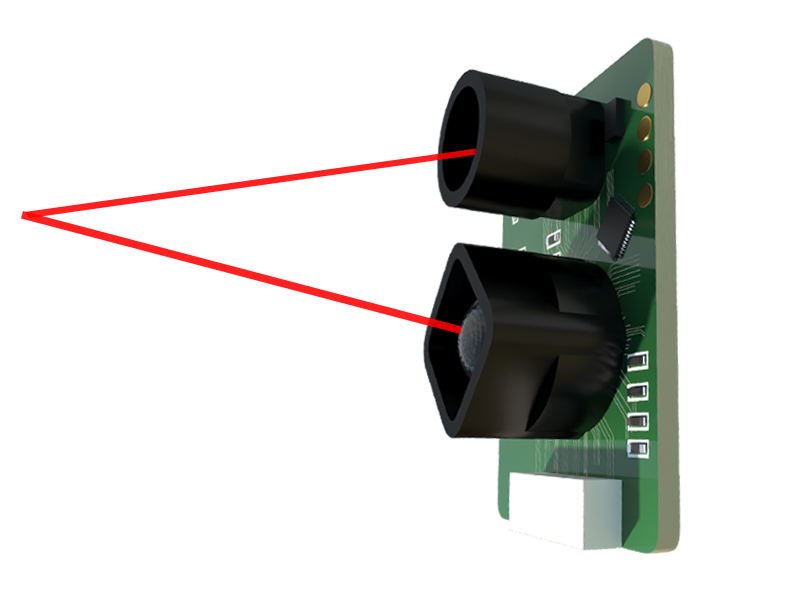
Beyond precision, laser sensors are pivotal for operational safety and predictive maintenance. Hydraulic presses exert tremendous force, and any unexpected obstruction or over-travel can be catastrophic. Laser-based safety light curtains or single-beam sensors can create an invisible protective zone around the hazard area. If the beam is interrupted by an operator's hand or an errant object, the system triggers an immediate emergency stop, preventing accidents. Furthermore, by monitoring the vibration patterns and positional repeatability of the press ram, laser sensors can detect early signs of wear in hydraulic cylinders, misalignment in guideways, or pressure inconsistencies. This data facilitates predictive maintenance schedules, allowing engineers to address potential failures before they cause unplanned production halts.
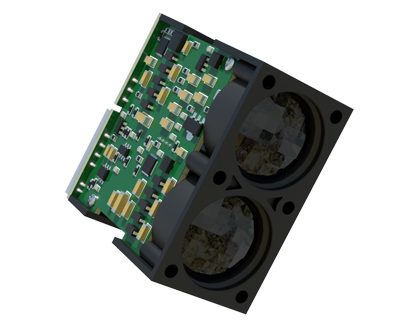
The integration of these sensors aligns with the broader Industry 4.0 trend of smart manufacturing. Modern laser sensors come equipped with industrial communication protocols like IO-Link, PROFINET, or EtherNet/IP. This allows for seamless data integration into factory-wide supervisory control and data acquisition (SCADA) systems or manufacturing execution systems (MES). Operators can monitor the health and performance of multiple presses from a central dashboard, analyzing trends and optimizing processes for overall equipment effectiveness (OEE). The real-time feedback loop created by laser sensors enables adaptive control, where press parameters like speed and force can be automatically fine-tuned based on the sensor's input regarding material properties or environmental conditions.

Selecting the right laser sensor for a hydraulic press application requires careful consideration. Key specifications include measuring range, resolution, repeatability, and response time. For harsh industrial environments typical of press shops, sensors must have robust housings with high ingress protection (IP) ratings against oil, coolant, and metal particulate. Resistance to electromagnetic interference (EMI) from nearby motors and welders is also crucial. Common types deployed are time-of-flight (ToF) sensors for longer ranges and triangulation-based sensors for extremely high precision at shorter distances. Proper installation and calibration are paramount; the sensor must be mounted securely to avoid vibration-induced errors, and its measurement path must be kept clear of obstructions like smoke or flying debris.
In conclusion, the adoption of laser sensor technology in hydraulic press systems marks a significant leap forward in manufacturing capability. By delivering unparalleled accuracy, enhancing worker safety, and enabling data-driven predictive maintenance, these sensors are transforming hydraulic presses from powerful brute-force machines into intelligent, precise, and reliable pillars of advanced production lines. As sensor technology continues to evolve with features like embedded artificial intelligence for anomaly detection, their role in ensuring efficient and flawless manufacturing will only become more profound.