In the world of industrial automation, machine safety, and smart devices, proximity sensors are the silent sentinels. A fundamental and frequently asked question by engineers and designers is: "How far can a proximity sensor detect?" The answer, as is often the case in engineering, is not a single number but a nuanced discussion dependent on several variables. The nominal sensing range, typically specified in datasheets, is just the starting point.
At its core, a proximity sensor detects the presence or absence of an object without physical contact. The maximum distance at which it can reliably perform this task is its sensing range. This range varies dramatically by sensor technology. Inductive sensors, which detect metallic objects, typically have ranges from a few millimeters up to about 60-70 mm for specialized models. The range is influenced by the target metal type; mild steel provides the standard reference, while non-ferrous metals like aluminum or copper reduce the effective range, often requiring a correction factor (e.g., 0.4x for aluminum).
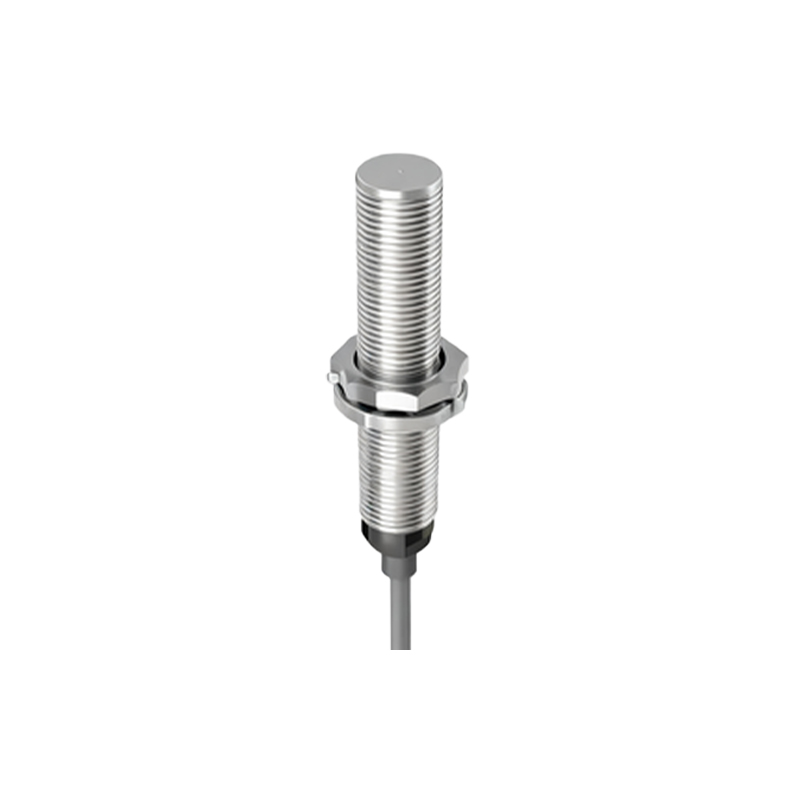
Capacitive sensors, capable of detecting both metallic and non-metallic materials (liquids, plastics, wood), generally offer shorter ranges than inductive types, commonly from a few mm to 25 mm. Their effective range is highly sensitive to the target material's dielectric constant and can be affected by environmental factors like humidity or contamination on the sensor face.
Photoelectric sensors, which use light beams, offer the longest ranges of common proximity types. Diffuse (proximity-mode) sensors, where the emitter and receiver are in one housing and rely on light reflected from the target, can sense from a few centimeters up to 2 meters. Through-beam sensors, with separate emitter and receiver units, can achieve ranges of tens of meters. Retro-reflective sensors, using a reflector, fall somewhere in between. Their range is significantly impacted by target color, reflectivity, surface finish, and ambient light conditions.
Ultrasonic sensors, which measure the time-of-flight of sound waves, provide impressive ranges, from a few centimeters to several meters (e.g., 6-8 meters is common). They are excellent for detecting objects of varying color or transparency but are sensitive to factors like temperature (which affects sound speed), air turbulence, and the target's sound absorption characteristics.
The "nominal" or "rated" sensing range (Sn) listed in catalogs is defined under specific ISO standards using a standard target under ideal laboratory conditions (e.g., a square of mild steel for inductive sensors). This is not the operational range. For reliable operation, a crucial concept is the "usable" or "assured" operating range. This is typically 0 to 81% of the nominal range for many sensors, accounting for variables like supply voltage tolerance, temperature drift, and component aging. The last 19% to 100% of Sn is often considered the "excess gain" or buffer zone to compensate for real-world imperfections.
Several key factors directly shrink or extend the practical sensing distance in an application:
1. Target Characteristics: Size, shape, material, and orientation. A smaller target than the standard reduces range. For inductive sensors, the target should generally be as large as or larger than the sensor's active face.
2. Installation Environment: Metal surrounding an inductive sensor (flush mounting vs. non-flush) can affect its field. For photoelectrics, ambient light, dust, fog, or steam can attenuate the signal. Electrical noise can interfere with sensor electronics.
3. Temperature: Extreme temperatures can affect the performance of oscillator circuits in inductive/capacitive sensors and the emission of LEDs in photoelectrics.
4. Supply Voltage: Operating outside the specified voltage range can reduce the sensor's output drive and sensing performance.
Therefore, selecting the right sensor involves more than comparing datasheet range numbers. Best practice is to derate the nominal range. A common rule of thumb is to design the application so the target passes within 50-70% of the sensor's published Sn. This provides a healthy safety margin for all the influencing factors. Furthermore, consider the sensor's hysteresis—the difference between the switch-on and switch-off points—which prevents chatter as a target lingers near the detection threshold.
In conclusion, asking "how far" a proximity sensor can measure is akin to asking how far a car can travel. It depends on the type of car, the road conditions, the load, and the desired reliability. For an inductive sensor, expect reliable detection up to ~60mm under ideal conditions for steel. For a diffuse photoelectric, a meter for a white reflective target is plausible. For an ultrasonic sensor, several meters for most solid objects. The engineer's task is to understand the technology, thoroughly analyze the application's target and environment, apply prudent derating