Laser fiber optic sensors represent a cornerstone technology in modern industrial automation, offering unparalleled precision, reliability, and versatility. These sensors operate by transmitting laser light through optical fibers to a target, where the reflected or transmitted light is analyzed to measure parameters such as distance, displacement, vibration, temperature, and even chemical composition. The core principle hinges on modulating light properties—intensity, phase, wavelength, or polarization—within the fiber due to external influences, which are then precisely detected and interpreted.
The architecture of a typical laser fiber optic sensor system comprises three primary components: a laser light source, the optical fiber medium, and a photodetector with associated signal processing electronics. The laser provides a coherent, high-intensity light beam, essential for maintaining signal integrity over long distances. Optical fibers, usually made from silica glass or specialized plastics, act as both the transmission path and, in many configurations, the sensing element itself. Intrinsic sensors utilize the fiber's core to detect changes along its entire length, ideal for distributed sensing applications like pipeline monitoring. Extrinsic sensors, conversely, employ the fiber merely as a light guide to an external sensing head, where the actual measurement occurs, commonly used for precise point measurements in harsh environments.
Key advantages drive their widespread adoption across sectors such as manufacturing, aerospace, energy, and biomedical engineering. Their immunity to electromagnetic interference (EMI) is paramount in electrically noisy industrial settings where traditional electronic sensors falter. The inherent safety of using light signals makes them ideal for hazardous locations with explosive atmospheres or high voltages. Furthermore, their small size, lightweight, and flexibility allow for installation in confined or geometrically complex spaces inaccessible to bulkier sensors. The capability for multiplexing—where multiple sensing points along a single fiber strand are monitored—significantly reduces system complexity and cost for large-scale monitoring.

Several prominent operational types dominate industrial applications. Fiber Bragg Grating (FBG) sensors are particularly notable. They involve creating periodic variations in the refractive index of the fiber core, which reflect a specific wavelength of light. Strain, temperature, or pressure changes alter this reflected wavelength, allowing for highly accurate and multiplexed measurements. They are extensively used for structural health monitoring in bridges, wind turbine blades, and aircraft. Interferometric sensors, such as Fabry-Perot or Mach-Zehnder types, measure the phase difference between light waves traveling along reference and sensing paths, providing exceptional sensitivity to minute displacements or vibrations, crucial in precision machining and acoustic detection.
Another critical category is distributed sensing, primarily using Optical Time-Domain Reflectometry (OTDR) or Rayleigh/Brillouin scattering techniques. These systems can measure temperature or strain continuously along tens of kilometers of fiber, transforming the cable into a continuous sensor. This is invaluable for monitoring power cables, perimeter security, and oil and gas pipelines for leaks or ground movement.
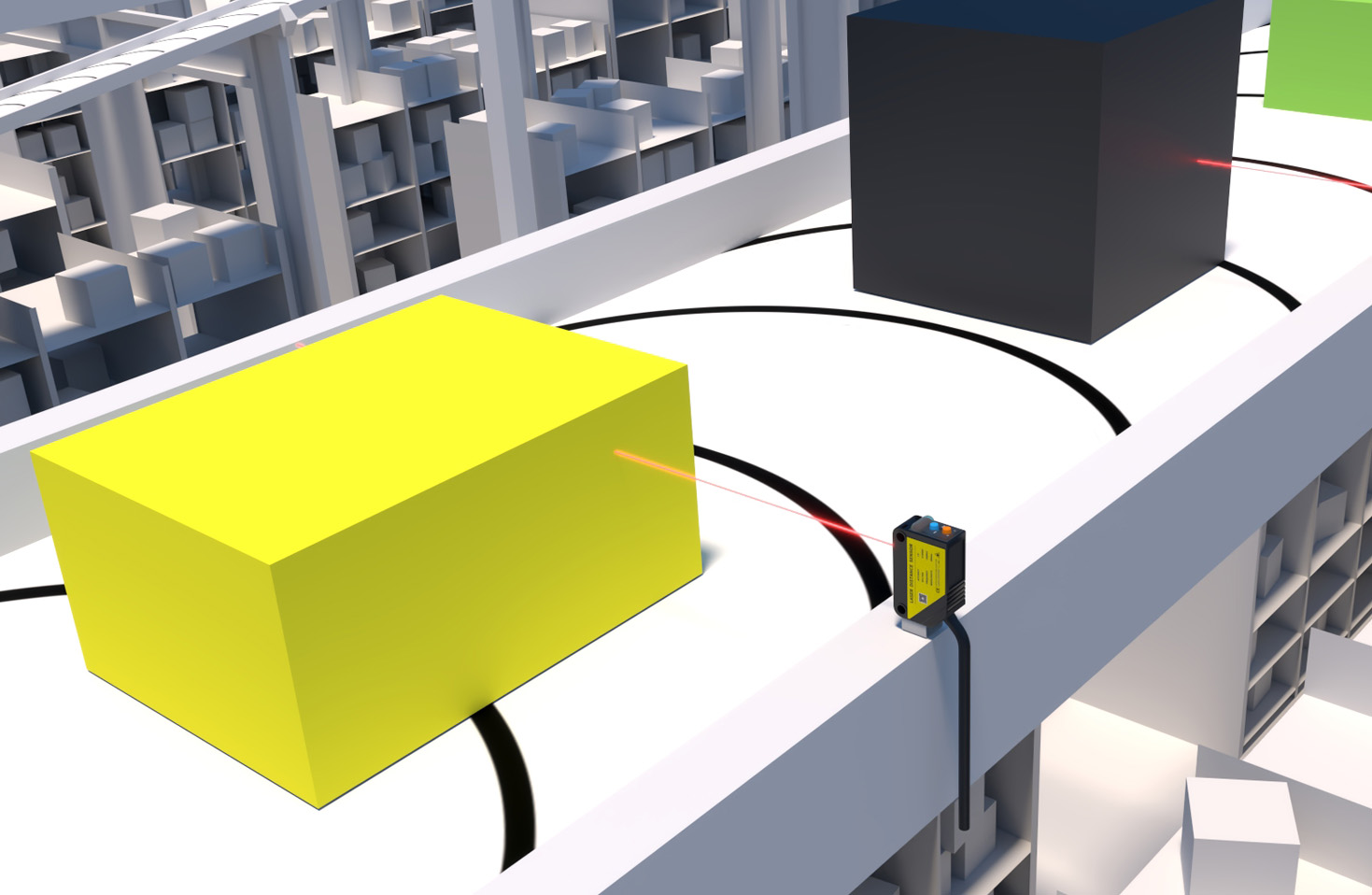
In practical industrial scenarios, laser fiber optic sensors are indispensable. On production lines, they perform non-contact dimensional gauging and surface defect inspection with micron-level accuracy. In robotics, they provide precise feedback for arm positioning and object recognition. Within energy infrastructure, they monitor turbine blade health, transformer hot spots, and downhole parameters in oil wells. The biomedical field leverages their miniaturization for in-vivo pressure sensing and endoscopic imaging.
Despite their strengths, implementation considerations exist. Initial system costs can be higher than conventional sensors, though total cost of ownership is often lower due to durability and reduced maintenance. Proper handling and installation are required to avoid excessive bending losses or physical damage to the fibers. Additionally, expertise in optical signal interpretation is necessary for system design and troubleshooting.
The future trajectory of laser fiber optic sensor technology points toward increased integration with the Industrial Internet of Things (IIoT) and Industry 4.0 frameworks. Advances in photonic integrated circuits (PICs) are leading to smaller, more cost-effective interrogator units. The development of novel fiber materials and grating techniques promises enhanced sensitivity and new sensing modalities, such as for specific biochemical agents. As smart manufacturing and predictive maintenance become standard, the role of these robust, precise, and intelligent sensing networks will only expand, solidifying their position as a critical enabling technology for the automated industrial landscape.