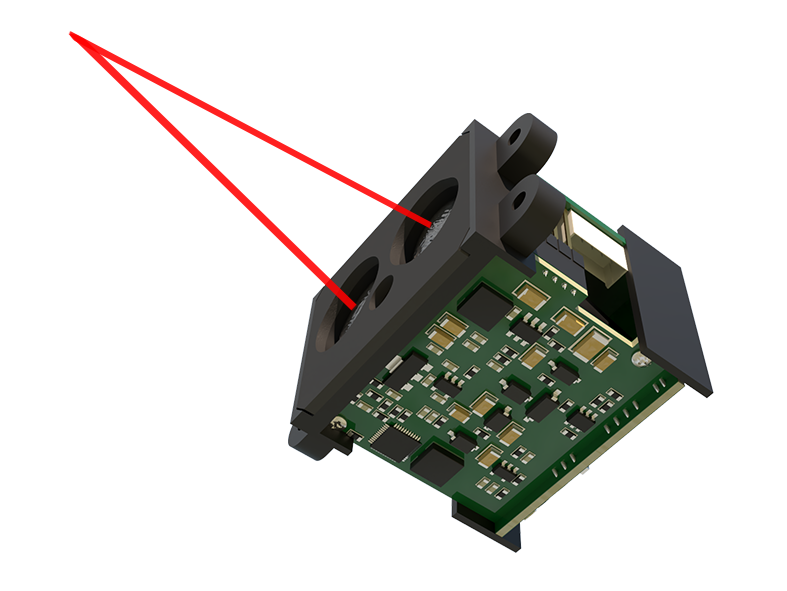
In the realm of modern industrial automation, robotics, and quality control, the demand for accurate, reliable, and non-contact measurement has never been greater. High precision laser sensors have emerged as a cornerstone technology, enabling feats of engineering and manufacturing that were once considered impossible. These sophisticated devices project a focused beam of light onto a target surface and analyze the reflected signal to determine parameters such as distance, displacement, thickness, and profile with extraordinary accuracy, often down to the sub-micron level.
The core principle behind most high precision laser sensors is triangulation. A laser diode emits a concentrated beam that forms a small spot on the target object. The light reflected from this spot is focused onto a position-sensitive detector, such as a CCD or CMOS array. As the distance to the target changes, the position of the reflected spot on the detector shifts. By precisely calculating this shift, the sensor's internal processor can determine the exact distance to the target with high speed and repeatability. Alternative technologies, like time-of-flight or confocal chromatic sensing, are employed for different measurement ranges and surface types, offering solutions for even the most challenging applications.
The advantages of utilizing high precision laser sensors are manifold. Their non-contact nature eliminates the risk of damaging delicate surfaces or influencing the measurement through physical force. They offer exceptionally high sampling speeds, capable of taking thousands of measurements per second, which is essential for inspecting fast-moving production lines. Furthermore, their accuracy and stability are largely unaffected by environmental factors like electromagnetic interference, making them robust solutions for harsh industrial environments. This combination allows for 100% inline inspection, replacing slower, sample-based manual checks and dramatically improving overall product quality.
Applications for these sensors span a vast array of industries. In automotive manufacturing, they are used to measure critical gap dimensions between body panels, inspect weld seams, and ensure the precise positioning of components. In the electronics sector, they verify the coplanarity of chip leads, measure solder paste thickness on PCBs, and inspect micro-components. The semiconductor industry relies on them for wafer mapping and thin-film thickness measurement. Beyond manufacturing, they play crucial roles in aerospace for profiling turbine blades, in metrology labs as calibration standards, and even in medical devices for precise dimensional analysis.

Selecting the right high precision laser sensor requires careful consideration of several key specifications. Resolution, the smallest detectable change in measurement, is paramount for ultra-fine tasks. Repeatability, the sensor's ability to consistently return the same value for a static target, ensures reliable process control. The measuring range defines the minimum and maximum distances over which the sensor operates accurately. Spot size is critical when measuring small features or structured surfaces. Finally, factors like the target's material, color, and surface finish (e.g., shiny, dark, or transparent) must be evaluated, as they can affect the laser's reflection and require sensors with specialized designs or filters.
The integration of these sensors into larger systems is facilitated by advanced digital interfaces such as EtherCAT, PROFINET, and IO-Link. These protocols enable real-time data transmission, remote configuration, and seamless communication with PLCs and industrial computers, forming the backbone of Industry 4.0 smart factories. The data collected can be used not only for pass/fail judgments but also for statistical process control (SPC), predictive maintenance, and continuous process optimization.

Looking ahead, the evolution of high precision laser sensors continues. Trends include miniaturization for integration into tighter spaces, enhanced capabilities for measuring challenging surfaces like hot metals or transparent glass, and the incorporation of AI-driven data analysis for anomaly detection and smarter decision-making. As the push for greater automation, efficiency, and quality intensifies across global industries, the role of the high precision laser sensor as an indispensable tool for measurement and control is set to become even more pronounced, driving innovation and precision in the connected industrial landscape.