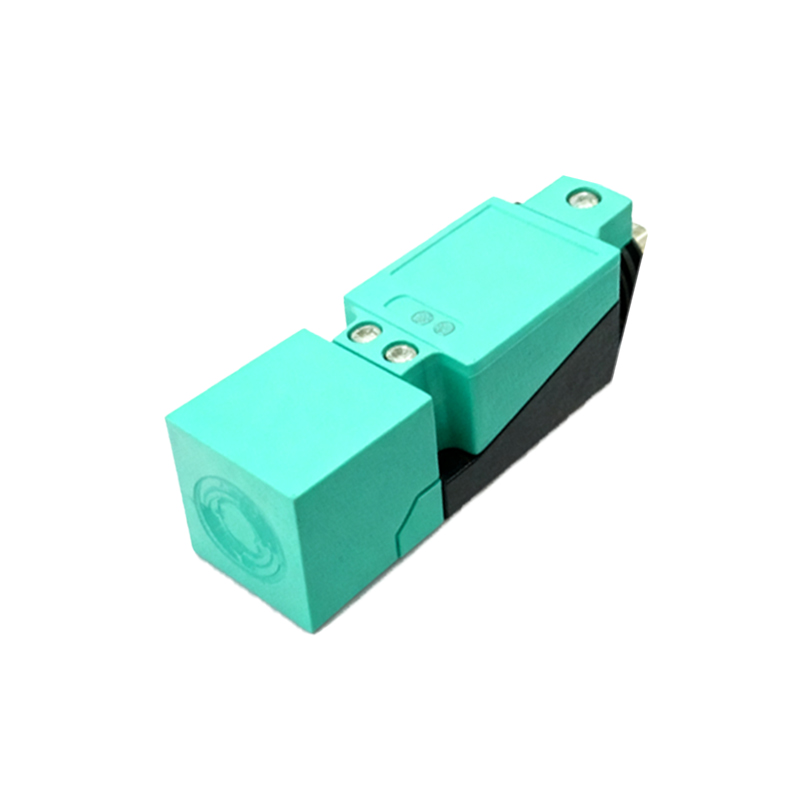
Proximity sensors are indispensable components in modern industrial automation, playing a critical role in object detection, positioning, and control without physical contact. Understanding the model number symbols printed on these devices is essential for proper selection, integration, and maintenance. This guide deciphers the common alphanumeric codes used by major manufacturers, providing engineers with a clear framework for interpretation.
A typical proximity sensor model number is not a random string; it is a structured code conveying key specifications. While formats vary by brand, most follow a logical sequence describing the sensor's type, sensing characteristics, electrical outputs, physical form, and connection method. The first segment often indicates the sensor family or series. For instance, prefixes like "IN" or "IM" might denote inductive sensors, while "CP" could refer to capacitive types. Some manufacturers use codes like "E2E" for a standard cylindrical inductive sensor series.
Following the series code, numerals or letters usually specify the sensing distance. This is a crucial parameter. A code like "5" may indicate a 5mm sensing range, while "8" signifies 8mm. For longer ranges, you might see "15" or "20". Some part numbers embed this value directly, others use a code key. Always cross-reference with the datasheet. The next part frequently describes the housing size and shape. Codes like "M8", "M12", "M18", or "M30" are universal, referring to the cylindrical housing's metric thread diameter. Rectangular or block-style sensors might use codes like "C" or "F".
The output configuration is another vital element encoded in the model. This defines the electrical switching mechanism. Common symbols include "N" or "PNP" for a current-sourcing (PNP) transistor output, and "P" or "NPN" for a current-sinking (NPN) output. The number of wires is also implied: a three-wire device has separate power, ground, and signal lines, while a two-wire device functions as a switch in series with the load. You might also see codes for relay or analog (4-20mA, 0-10V) outputs. The output state is indicated by "NO" (Normally Open) or "NC" (Normally Closed).

Further symbols detail the housing material and connector type. "S" often stands for stainless steel housing, beneficial in corrosive environments, while "B" might indicate brass. "P" can designate a plastic body. For connections, "-M" or no suffix might mean pre-wired leads, whereas "-C" or "-Q" often specify a quick-disconnect (connector) style, such as an M12 connector. Some models include codes for specific functionalities like short-circuit protection (SC), overload protection (OL), or a built-in LED indicator (L).
Let's analyze an example: IM12-08NPS-C. Breaking it down: "IM12" likely indicates an Inductive, M12 threaded cylindrical sensor. "08" suggests an 8mm nominal sensing distance. "N" points to an NPN (current-sinking) transistor output. "P" could mean a plastic face or housing. "S" might denote a shielded design (allowing flush mounting). "-C" confirms it uses a connector-style cable connection. Another example: E2A-M12KS08-M1-B1. Here, "E2A" is the series, "M12" is the housing thread, "K" often means a DC 3-wire setup, "S" could be shielded, "08" is 8mm range, "M1" may be a specific output configuration, and "B1" a connector variant.
Always consult the manufacturer's official catalog or datasheet for the definitive decoding key, as conventions are not fully standardized across the industry. Misinterpretation can lead to incorrect voltage compatibility, insufficient sensing range, or improper physical installation. A thorough understanding of these symbolic codes empowers engineers to efficiently navigate catalogs, specify the correct sensor for the application's electrical requirements (sourcing vs. sinking, AC vs. DC), environmental conditions (material, IP rating), and mechanical constraints (size, mounting), ensuring robust and reliable system performance.