In the rapidly evolving landscape of industrial automation and measurement technology, multimode laser sensors have emerged as a cornerstone for achieving unparalleled precision, adaptability, and reliability. Unlike traditional single-mode sensors, which operate on a fixed principle such as triangulation or time-of-flight, multimode laser sensors integrate multiple sensing methodologies into a single, compact device. This fusion enables them to dynamically select or combine modes based on the target object's properties, environmental conditions, and specific application requirements, thereby offering a versatile solution for complex industrial challenges.
The core advantage of multimode laser sensors lies in their intelligent operational flexibility. For instance, a single sensor might incorporate time-of-flight (ToF) for long-distance ranging, laser triangulation for high-resolution profile measurement, and confocal displacement for ultra-precise surface inspection. Advanced onboard processors and algorithms allow real-time mode switching or data fusion from these different techniques. This capability is particularly valuable in environments where measurement conditions are not static—such as on a production line handling diverse materials (metallic, plastic, translucent) or objects with varying surface textures (glossy, matte, rough). By automatically adjusting to optimal measurement modes, these sensors minimize errors caused by surface reflectivity, color, or ambient light interference, which are common pain points with conventional sensors.
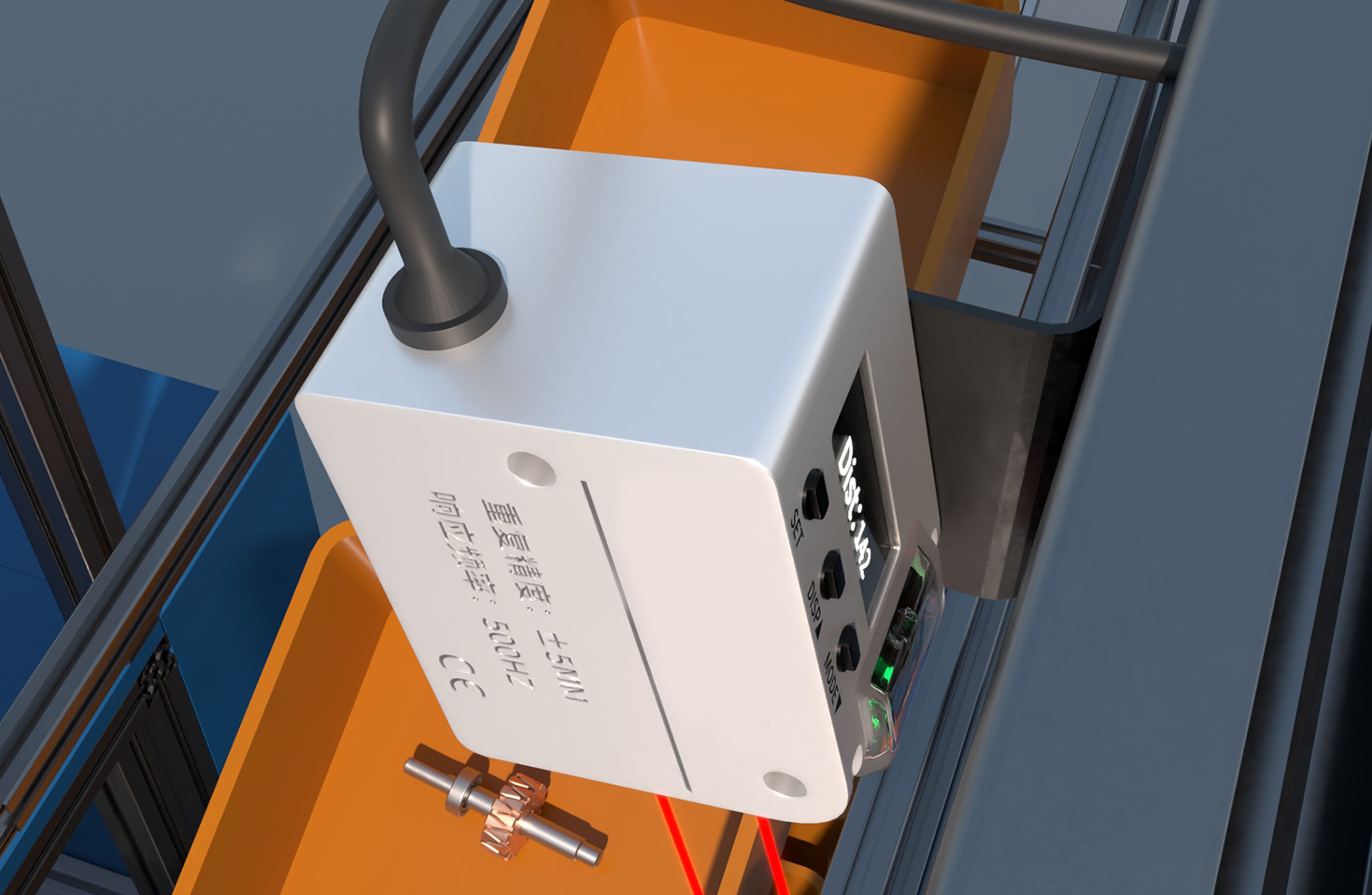
From a technical perspective, the architecture of a multimode laser sensor is a marvel of integrated engineering. It typically features a high-quality laser diode emitting a focused beam, a sophisticated optical system that may include adjustable lenses or diffractive elements, and a multi-element photodetector array (like a CMOS or CCD). The processing unit employs sophisticated digital signal processing (DSP) to interpret the raw data from different measurement channels. Key performance parameters include measurement range (from sub-millimeter to several meters), resolution (often down to the micrometer level), sampling rate (reaching tens of kilohertz for high-speed applications), and robustness against industrial contaminants like dust, oil, or coolant mist, often ensured by IP67 or higher ingress protection ratings.
Applications span across critical sectors. In automotive manufacturing, multimode sensors are deployed for precise 3D body-in-white inspection, weld seam tracking, and gap-and-flush measurement, where both long-range positioning and micron-level detail are required. In electronics assembly, they ensure the accurate placement of micro-components on printed circuit boards by overcoming challenges posed by shiny solder pads and dark substrates. The logistics and warehousing industry leverages them for palletizing, dimensioning, and robotic guidance, where objects of vastly different sizes and surfaces must be handled swiftly. Furthermore, in renewable energy, such sensors aid in the quality control of solar panel surfaces and wind turbine blade profiling.
The integration of these sensors with Industry 4.0 frameworks is another significant trend. Equipped with industrial communication protocols like IO-Link, PROFINET, or EtherNet/IP, multimode laser sensors can transmit rich diagnostic data—such as internal temperature, signal strength, or calibration status—to higher-level control systems or the cloud. This facilitates predictive maintenance, remote configuration, and seamless data integration into digital twin models, enhancing overall equipment effectiveness (OEE) and reducing unplanned downtime.
Despite their advanced capabilities, selecting and implementing multimode laser sensors requires careful consideration. Engineers must evaluate factors such as the required measurement precision versus speed trade-off, the specific environmental hazards, the necessary field-of-view, and the compatibility with existing control architectures. Proper installation, alignment, and periodic calibration remain crucial to sustain performance. Looking ahead, ongoing research in areas like ultrafast laser pulses, advanced machine learning for sensor data interpretation, and miniaturization promises to further expand the boundaries of what these multifunctional sensors can achieve, driving smarter and more autonomous industrial systems.
In conclusion, multimode laser sensors represent a significant leap forward in sensing technology. By consolidating multiple measurement principles into one robust package, they provide a future-proof solution that enhances accuracy, reduces sensor footprint and complexity on the factory floor, and ultimately contributes to higher quality, efficiency, and innovation in modern industrial operations.