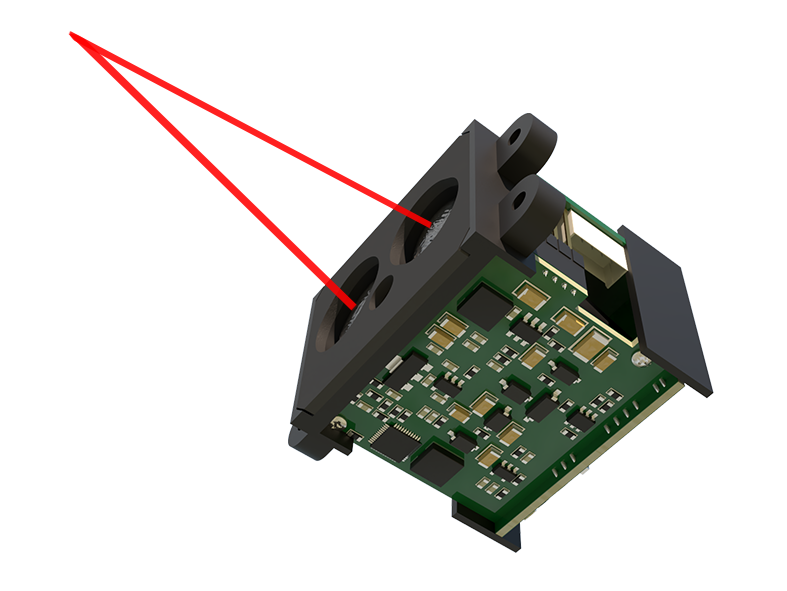
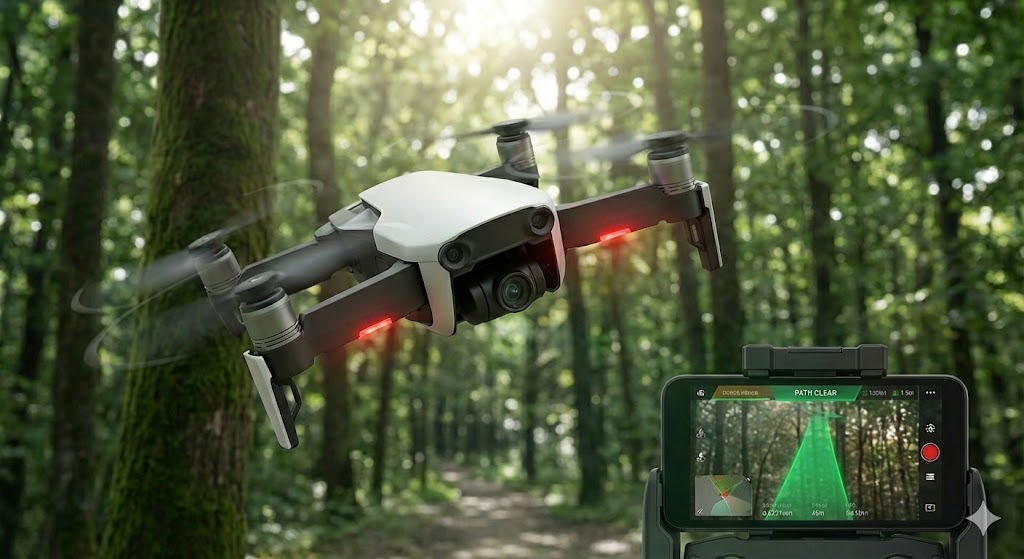
In the realm of industrial automation and precision engineering, accurate distance measurement is a cornerstone of efficiency, safety, and quality control. Among the various technologies available, laser distance sensors have emerged as a superior solution, offering non-contact, high-speed, and highly accurate measurements. The SKD series of laser distance sensors represents a significant advancement in this field, designed to meet the rigorous demands of modern industrial environments. This article delves into the operational principles, key features, and diverse applications of SKD laser sensors, highlighting their role in enhancing operational performance.
At its core, an SKD laser distance sensor operates on the principle of time-of-flight (ToF) or phase-shift measurement. In the ToF method, the sensor emits a short pulse of laser light towards a target. The time taken for the reflected light to return to the sensor is precisely measured. Since the speed of light is a known constant, the distance to the target can be calculated with remarkable accuracy using the formula: Distance = (Speed of Light × Time of Flight) / 2. The phase-shift method, often used for even higher precision at shorter ranges, involves modulating the intensity of the laser beam. The phase difference between the emitted and reflected modulated signal is measured to determine the distance. SKD sensors typically utilize advanced versions of these methods, incorporating high-quality laser diodes and sophisticated signal processing algorithms to ensure reliable measurements even in challenging conditions such as varying surface colors, textures, or ambient light interference.
The defining characteristics of SKD laser distance sensors make them indispensable tools across numerous sectors. First and foremost is their exceptional precision and resolution. Capable of achieving sub-millimeter accuracy, these sensors enable tasks that require meticulous positioning and dimension verification. Their high measurement speed, often in the kilohertz range, allows for real-time monitoring and control in dynamic processes, such as on moving production lines. The non-contact nature of the measurement is a critical advantage, eliminating wear and tear on the sensor and preventing damage to delicate or sensitive target objects. Furthermore, SKD sensors are engineered for robustness. They frequently feature rugged housings with high Ingress Protection (IP) ratings, making them resistant to dust, moisture, and mechanical shocks commonly found in industrial settings like manufacturing plants, construction sites, and logistics hubs. Many models also offer intuitive configuration via software interfaces, allowing for easy integration with Programmable Logic Controllers (PLCs), human-machine interfaces (HMIs), and broader Industrial Internet of Things (IIoT) networks.

The application spectrum for SKD laser distance sensors is vast and continually expanding. In the manufacturing industry, they are pivotal for robotic guidance, ensuring precise pick-and-place operations, weld seam tracking, and assembly verification. They perform critical roles in quality assurance, measuring the thickness of materials, checking part dimensions, and detecting surface defects. Within the automotive sector, these sensors are used for vehicle profiling, gap and flush measurement between panels, and alignment checks during assembly. The logistics and warehousing domain leverages them for palletizing, dimensioning packages for shipping, and controlling the height of automated storage and retrieval systems (AS/RS). In construction and civil engineering, SKD sensors facilitate tasks like terrain mapping, crane hook positioning, and monitoring structural deformations. Emerging applications also include agricultural automation for crop monitoring and level sensing in bulk material handling.
When selecting an SKD laser distance sensor for a specific application, several parameters must be carefully considered. The measuring range is paramount; sensors are available for short-range (a few centimeters), medium-range (up to several meters), and long-range (tens to hundreds of meters) applications. Accuracy and repeatability specifications must align with the tolerance requirements of the task. The response time or measurement frequency determines how quickly the sensor can update its reading, which is crucial for high-speed processes. Environmental factors such as operating temperature range, exposure to vibrations, and potential optical interference (e.g., from other lasers or bright sunlight) must also be evaluated. Finally, the output interface—whether analog (4-20 mA, 0-10 V), digital (RS-232, RS-485), or industrial Ethernet (Profinet, EtherNet/IP)—must be compatible with the existing control system architecture.
In conclusion, SKD laser distance sensors embody the convergence of optical precision, electronic sophistication, and mechanical durability. They provide a reliable and versatile solution for the exacting distance measurement needs of contemporary industry. By enabling non-contact, high-speed, and accurate data acquisition, they empower engineers and system integrators to optimize processes, enhance product quality, and drive innovation. As industries continue to evolve towards greater automation and data-driven decision-making, the role of advanced sensing technologies like the SKD laser distance sensor will only become more central to operational success and competitive advantage.