Capacitive proximity sensors are versatile and essential components in modern industrial automation and control systems. Unlike their inductive counterparts that detect only metals, capacitive sensors can detect a wide range of materials, including liquids, powders, granules, plastics, and wood. This capability makes them indispensable for diverse applications, from level detection in silos to presence sensing of non-metallic objects on conveyor lines.
The fundamental operating principle is based on changes in capacitance. A capacitive sensor essentially forms a capacitor. The sensor's active surface acts as one electrode, and the target object acts as the other. The dielectric material (air or another medium) between them acts as the insulator. When a target enters the sensing field, it alters the dielectric constant, thereby changing the capacitance of the system. The sensor's internal oscillator circuit detects this change. Once the change reaches a predetermined threshold, the sensor's output state switches, sending a signal to the connected controller, such as a PLC.
Key performance characteristics define a sensor's suitability for an application. The sensing distance, or nominal range, is specified for a standard target (often metal or a defined material). It's crucial to note that the effective sensing range can vary significantly with different materials; for instance, water has a much higher dielectric constant than plastic, allowing for longer detection ranges. Hysteresis is the difference between the switch-on and switch-off points, which prevents output chatter when a target is at the exact sensing limit. Response frequency indicates how quickly the sensor can detect objects passing by, critical for high-speed counting tasks. Output types are typically NPN (sinking) or PNP (sourcing) transistor outputs, with some models offering analog (4-20 mA or 0-10V) or IO-Link outputs for advanced diagnostics and parameterization.
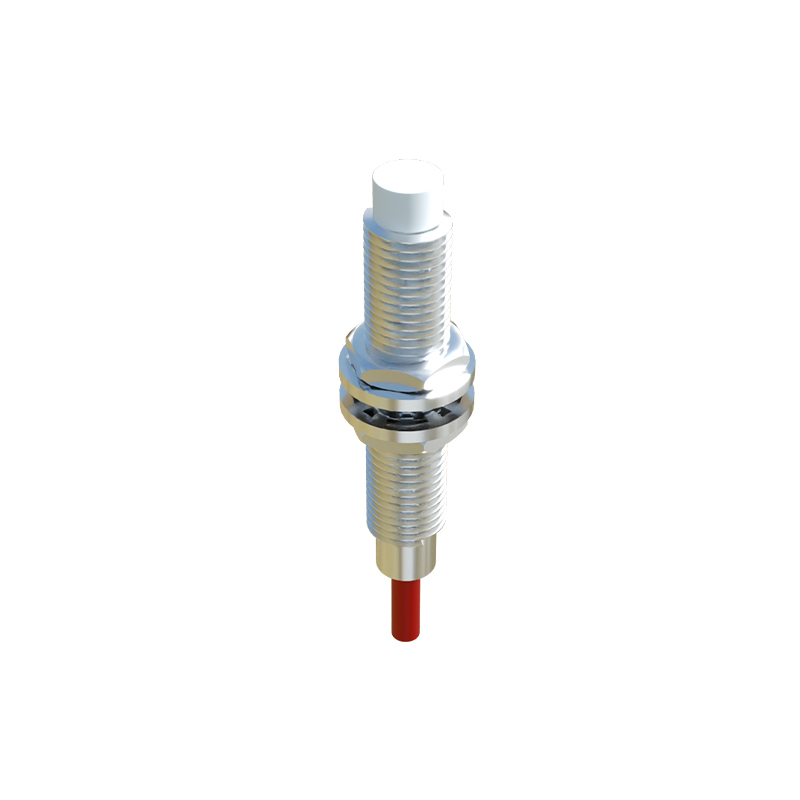
The selection process for a capacitive proximity sensor requires careful consideration of several factors. First, identify the target material. Knowing its dielectric constant is vital for estimating the actual sensing range. Manufacturers provide correction factors for common materials. Second, consider the operating environment. Sensors are available with various housing materials (e.g., PTFE, stainless steel) and ingress protection (IP) ratings (e.g., IP67, IP69K) for harsh conditions involving dust, moisture, washdowns, or chemical exposure. Third, evaluate the required sensing range and mounting. Cylindrical sensors (M8, M12, M18, M30 threads) are common, but rectangular and flat-pack designs exist for flush mounting to avoid mechanical damage. Fourth, define the needed electrical output and connection method (cable or connector). Finally, consider special features like temperature compensation for stable performance in varying ambient temperatures or shielding. Shielded (flush-mountable) sensors have a restricted lateral field, making them ideal for detecting materials through non-metallic container walls without being affected by the container itself. Unshielded sensors have a larger, hemispherical field for longer ranges but require more clearance from surrounding metal.
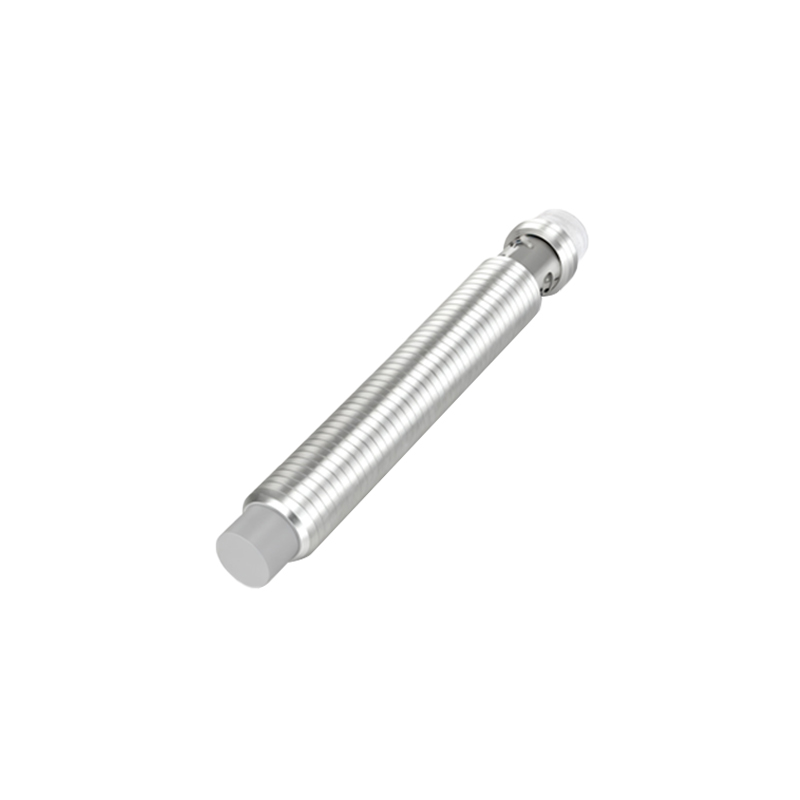
Applications are vast. In packaging, they detect the presence of plastic or glass bottles, cardboard boxes, or foil lids. In food and beverage, they monitor powder levels in hoppers or liquid levels in tanks, even through glass or plastic walls. In woodworking, they sense wood panels or composite boards. In automotive assembly, they verify the presence of plastic components, rubber gaskets, or adhesive beads. Advanced models with analog outputs can perform continuous level monitoring or thickness measurement.
Installation and setup are straightforward but require attention to detail. Ensure the sensor is mounted securely and that the sensing face is clean and free of buildup, as adhesives or dust can cause false triggering. The sensitivity adjustment potentiometer is a critical feature. It allows the user to fine-tune the sensing distance to the specific target and application, setting the trigger point reliably while ignoring background interference. For level detection in containers, it is often necessary to adjust the sensitivity so the sensor triggers on the material (e.g., granules) but not on the empty container wall.
In summary, capacitive proximity sensors offer a reliable and flexible solution for detecting a broad spectrum of materials in challenging industrial environments. A thorough understanding of their operating principle, key specifications, and application requirements is the foundation for selecting the right sensor, ensuring robust performance, reducing downtime, and optimizing automated processes. Their ability to "see through" non-metallic barriers and their insensitivity to color or surface finish solidify their role as a fundamental tool in the engineer's arsenal.