In the realm of industrial automation and electronic control, proximity switches are indispensable components for non-contact detection. Among the various technologies available, Hall Effect proximity switches stand out for their reliability, durability, and precision. This article delves into the working principles, key advantages, common applications, and practical considerations for selecting and implementing these sensors.
The core principle behind a Hall Effect proximity switch is the Hall Effect, discovered by Edwin Hall in 1879. When a current-carrying conductor is placed in a magnetic field, a voltage difference, known as the Hall voltage, is generated perpendicular to both the current and the field. In a Hall Effect sensor, this phenomenon is harnessed using a semiconductor element. When a ferromagnetic or magnetic target (such as a permanent magnet or a gear tooth) approaches the active face of the switch, it disturbs the magnetic field. The integrated circuit within the sensor detects this change in the Hall voltage and triggers a solid-state switching action, typically changing the output state from high to low or vice versa. This entire process occurs without any physical contact, making it wear-free.
Hall Effect proximity switches offer several compelling advantages over other sensing technologies like inductive or capacitive sensors. Firstly, they are capable of detecting both static and dynamic magnetic fields, allowing them to sense the presence of a permanent magnet or the movement of a ferrous object. They exhibit exceptional switching accuracy and repeatability, even at high frequencies, making them ideal for speed and position sensing in rotating machinery. Their operation is largely unaffected by environmental factors such as dust, oil, moisture, or non-conductive contaminants, ensuring stable performance in harsh industrial settings. Furthermore, they are solid-state devices with no moving parts, leading to a virtually infinite mechanical lifespan and high resistance to shock and vibration.
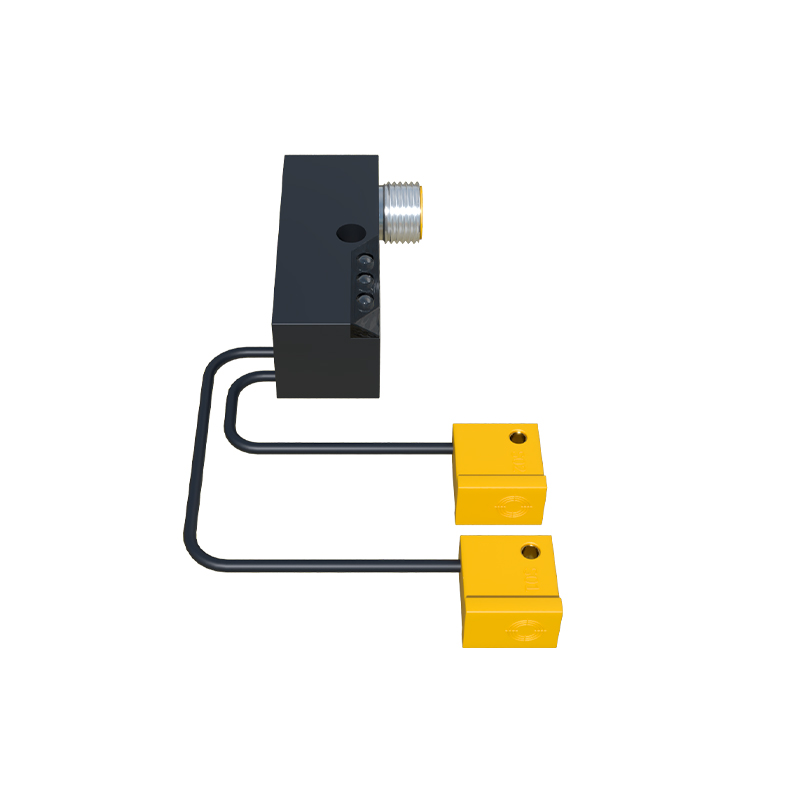
The applications for Hall Effect proximity switches are vast and varied across industries. In the automotive sector, they are ubiquitous in anti-lock braking systems (ABS) for wheel speed sensing, in transmission systems for gear position detection, and in engine management for crankshaft and camshaft positioning. Within industrial automation, they are employed for limit switching, counting objects on conveyors, detecting the position of cylinders, and monitoring rotational speed in motors and fans. Consumer electronics also utilize miniaturized Hall switches for functions like laptop lid closure detection or smartphone flip cover sensing.
Selecting the appropriate Hall Effect proximity switch requires careful consideration of several parameters. The sensing distance, or switch point, must be specified based on the application's requirements, keeping in mind that the effective range can be influenced by the target's size, material, and magnetic strength. The output configuration is critical; options include digital (NPN or PNP transistor outputs) or analog (voltage or current proportional to field strength) types. The supply voltage range (e.g., 5V DC, 12-24V DC) must match the control system's power. Environmental ratings, particularly the Ingress Protection (IP) code, are vital for ensuring reliability in wet or dusty conditions. Package style, such as tubular, rectangular, or ring-shaped, must suit the mechanical mounting constraints. Finally, considering special features like short-circuit protection, reverse polarity protection, and temperature compensation can enhance system robustness.
Installation and wiring are straightforward but crucial for optimal performance. The sensor should be mounted securely to minimize vibration. It is essential to maintain the correct orientation relative to the target's magnetic poles. For sensing ferrous metals, the target should be of sufficient size and quality to adequately perturb the magnetic field. Electrical noise from motors or power lines can sometimes interfere with sensor signals; therefore, using shielded cables and maintaining proper separation from noise sources is recommended. Always consult the manufacturer's datasheet for specific mounting clearances, wiring diagrams, and temperature operating ranges.
In conclusion, Hall Effect proximity switches are versatile, robust, and precise sensing solutions that form the backbone of many modern control systems. Their non-contact nature, immunity to environmental conditions, and long service life make them a superior choice for countless detection and positioning tasks. By understanding their operating principle and carefully matching the sensor specifications to the application needs, engineers can design more reliable, efficient, and maintenance-free automated systems. As technology advances, we continue to see developments in miniaturization, integrated smart features, and enhanced sensitivity, further expanding the potential applications of this fundamental sensing technology.