In the rapidly evolving landscape of industrial automation and smart technology, sensors serve as the critical nerve endings, collecting vital data from the environment. The manufacturing quality of these components directly dictates the performance, longevity, and reliability of entire systems. Among various fabrication techniques, laser welding has emerged as a premier process for sensor assembly, offering unparalleled advantages in precision, speed, and material integrity. This article delves into the core principles, applications, and benefits of laser welding in sensor production, providing insights for engineers and manufacturers aiming to enhance their fabrication capabilities.
The fundamental principle of laser welding involves focusing a high-energy density laser beam onto a minuscule area of the workpiece. This concentrated energy rapidly heats the material, causing it to melt and form a weld pool. As the laser beam moves along the predetermined path, the molten material solidifies, creating a strong, hermetic joint. For sensor components, which often involve delicate parts, dissimilar metals, or thermally sensitive materials, the non-contact nature and highly controllable heat input of laser welding are indispensable. Unlike traditional welding methods such as TIG or resistance welding, laser welding minimizes the Heat-Affected Zone (HAZ), thereby preserving the intrinsic properties of the base materials and preventing thermal distortion.
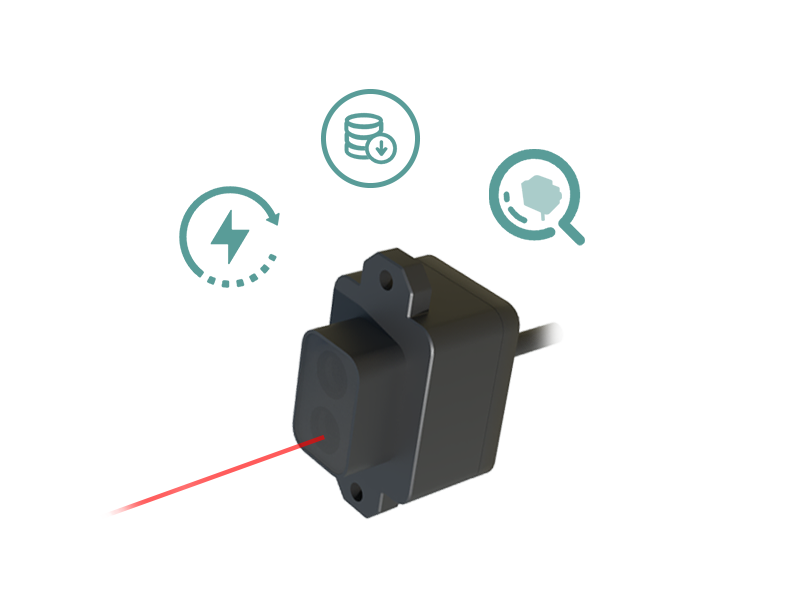
Several laser types are employed in sensor manufacturing, primarily fiber lasers and pulsed Nd:YAG lasers. Fiber lasers, known for their high efficiency and excellent beam quality, are ideal for continuous welding of seams in sensor housings or connectors. Their robustness and low maintenance requirements make them suitable for high-volume production lines. Conversely, pulsed Nd:YAG lasers are preferred for precision spot welding of tiny components, such as strain gauge attachments or diaphragm seals within pressure sensors. The ability to control pulse duration and energy with micron-level accuracy allows for welding in extremely confined spaces without damaging adjacent sensitive elements.
A key application of laser welding in the sensor industry is the hermetic sealing of sensor packages. Sensors deployed in harsh environments—such as automotive engine compartments, aerospace systems, or underwater instrumentation—require absolute protection from moisture, gases, and contaminants. Laser welding achieves leak-tight seals on housings made of stainless steel, titanium, or specialized alloys, ensuring long-term operational integrity. The process is particularly valuable for MEMS (Micro-Electro-Mechanical Systems) sensors, where traditional sealing methods might induce stress or particulate contamination.
Another significant application is the welding of dissimilar materials, a common requirement in sensor design. For instance, connecting a copper terminal to a stainless-steel body for electrical conductivity while maintaining corrosion resistance. Laser welding, with precise parameter control, can create sound metallurgical bonds between such disparate materials, overcoming challenges related to different melting points and thermal expansion coefficients. This capability expands design flexibility, allowing engineers to optimize sensor functionality without being constrained by material joining limitations.
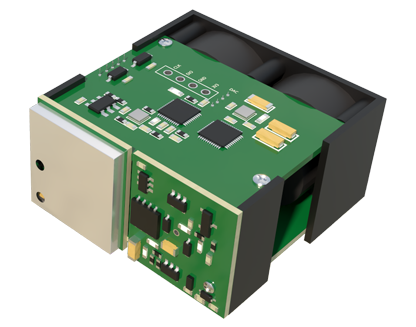
The benefits of integrating laser welding into sensor production lines are multifaceted. First and foremost is precision. Laser beams can be focused to spots as small as a few microns, enabling welding of ultra-fine wires and micro-components without collateral damage. This precision translates to higher product yield and consistency. Secondly, the process is highly automated and programmable, seamlessly integrating with robotics and CNC systems for complex 3D welding paths. This automation enhances throughput and reduces labor costs while ensuring repeatability. Thirdly, laser welding is a clean process, often performed in ambient atmosphere or with simple shielding gas, eliminating the need for consumables like filler wire or electrodes, which reduces operational costs and waste.
However, successful implementation requires careful consideration of several parameters. These include laser power, welding speed, focal point position, and shielding gas type/flow. For example, excessive power or slow speed can lead to overheating and burn-through on thin sensor diaphragms, while insufficient power may result in incomplete penetration. Advanced systems now incorporate real-time monitoring and adaptive control, using sensors (such as photodiodes or cameras) to inspect the weld pool and dynamically adjust parameters, ensuring optimal quality for every single weld.
Looking ahead, trends in laser welding for sensors are leaning towards greater integration with Industry 4.0. Smart laser welding systems equipped with AI-driven process optimization can predict and correct defects, further pushing the boundaries of quality and efficiency. The development of new laser sources, like ultrafast picosecond lasers, promises even colder processing, opening doors for welding extremely heat-sensitive materials used in next-generation bio-sensors or quantum sensing elements.
In conclusion, laser welding stands as a cornerstone technology in advanced sensor manufacturing. Its unique combination of precision, flexibility, and cleanliness addresses the stringent demands of modern sensor applications. For engineering teams, mastering this technology is not merely an operational upgrade but a strategic move towards producing more reliable, high-performance, and innovative sensing solutions that will power the future of automation and IoT. Continuous investment in process understanding and equipment advancement will be paramount to maintaining a competitive edge in this dynamic field.