Photoelectric proximity switch sensors are indispensable components in modern industrial automation, offering non-contact detection capabilities for a wide range of applications. This tutorial provides a comprehensive guide to understanding, selecting, and implementing these sensors effectively in industrial environments.
Photoelectric sensors operate by emitting a beam of light, typically from an LED or laser diode, and detecting changes in the received light intensity. When an object enters the sensing field, it interrupts or reflects the light beam, triggering an output signal. These sensors are categorized into three main types: through-beam, retro-reflective, and diffuse reflective sensors. Through-beam sensors consist of separate emitter and receiver units, offering the longest sensing distances and highest reliability. Retro-reflective sensors use a reflector to bounce light back to the receiver, simplifying installation while maintaining good performance. Diffuse reflective sensors detect objects by measuring the light reflected directly from the target, making them ideal for applications where space is limited.
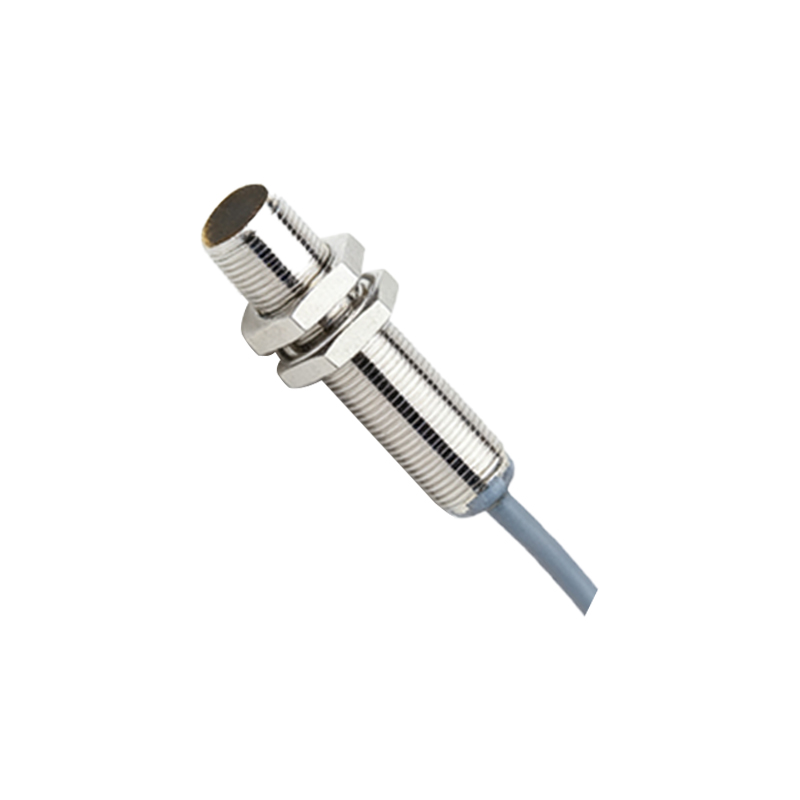
Key specifications to consider when selecting a photoelectric proximity switch include sensing distance, response time, light source type, and environmental ratings. Sensing distance varies from a few centimeters to several meters, depending on the sensor type and model. Response time, typically measured in milliseconds, determines how quickly the sensor can detect objects in high-speed applications. Common light sources include visible red, infrared, and laser light, each with distinct advantages. Infrared sensors provide excellent resistance to ambient light interference, while laser sensors offer precise detection for small objects. Environmental factors such as dust, moisture, and temperature extremes must be accounted for by choosing sensors with appropriate IP (Ingress Protection) ratings and temperature ranges.
Installation and alignment are critical for optimal sensor performance. Proper mounting ensures stable operation and minimizes false triggers. Through-beam sensors require precise alignment between the emitter and receiver, often facilitated by alignment indicators or built-in amplifiers with signal strength displays. Retro-reflective sensors need correct positioning relative to reflectors, avoiding angular misalignment that can reduce sensing reliability. Diffuse sensors should be installed considering the target object's color, material, and surface texture, as these factors influence reflectivity. Regular maintenance, including lens cleaning and periodic functional checks, helps sustain long-term accuracy.
Wiring and electrical connections follow standard practices for industrial sensors. Most photoelectric switches operate on DC or AC power supplies, with output configurations including NPN, PNP, relay, or analog outputs. NPN outputs sink current to ground, commonly used in Asian and European systems, while PNP outputs source current, prevalent in North America. Always refer to the manufacturer's datasheet for voltage requirements and load compatibility. Incorporating protective measures such as surge suppressors and proper grounding shields sensors from electrical noise and voltage spikes in industrial settings.
Applications span diverse industries, from packaging and material handling to automotive assembly and pharmaceutical production. In conveyor systems, photoelectric sensors detect product presence, count items, and monitor positioning. They ensure safety in automated machinery by confirming guard door closures or detecting operator intrusions. Advanced features like background suppression, taught-in settings, and IO-Link communication enhance flexibility. Background suppression sensors ignore distant objects, focusing only on targets within a defined range. Taught-in functionality allows on-site calibration by pressing a button when the target is present. IO-Link enables digital parameter setting, diagnostics, and integration with Industry 4.0 networks.
Troubleshooting common issues involves systematic checks. If a sensor fails to detect objects, verify power supply stability, inspect for lens contamination, and confirm alignment. Erratic behavior may result from electrical interference, requiring shielded cables or ferrite cores. Environmental conditions like heavy dust or fog can scatter light beams, necessitating sensors with polarized filters or higher output power. Understanding these principles empowers engineers to deploy photoelectric proximity switches reliably, enhancing automation system efficiency and reducing downtime.