In the realm of industrial automation and electrical engineering, proximity sensors are indispensable components. They provide non-contact detection of objects, enabling precise control, safety, and efficiency in countless applications. Understanding the various types and models is crucial for selecting the right sensor for a specific task. This guide delves into the core technologies, common models, and selection criteria for proximity sensors.
The fundamental principle behind proximity sensors is the detection of an object's presence or absence within a defined sensing range without physical contact. This is achieved through various technologies, each with distinct characteristics. The primary categories include Inductive, Capacitive, Ultrasonic, Photoelectric, and Magnetic sensors.
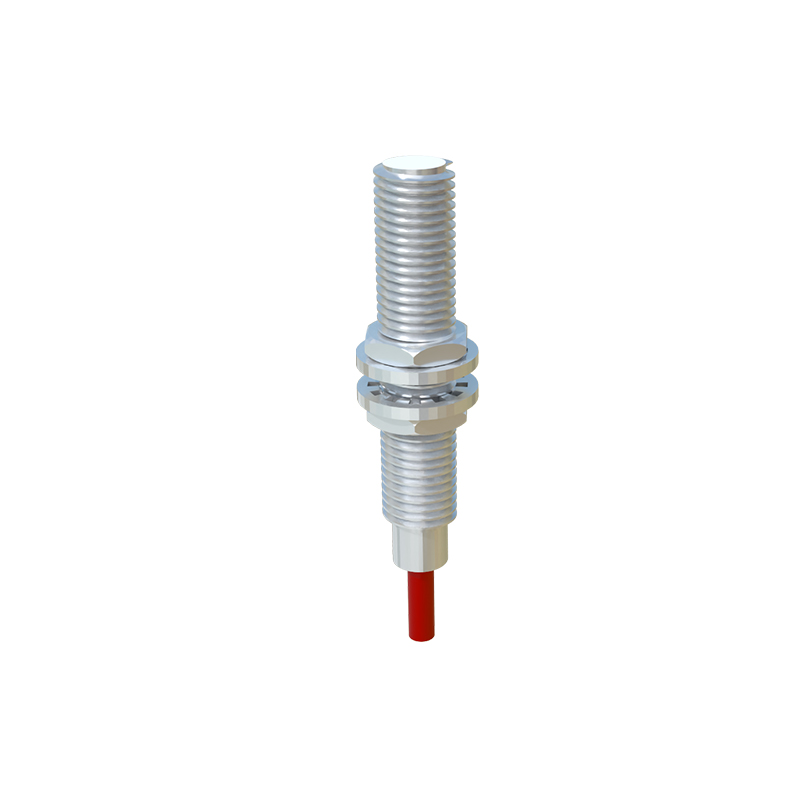
Inductive proximity sensors are the workhorses of metal detection. They generate an electromagnetic field. When a metallic object enters this field, it induces eddy currents within the object, causing a change in the sensor's oscillation amplitude. This change is detected and triggers an output switch. Common models are categorized by their housing shape (e.g., cylindrical, rectangular), sensing distance (from 1mm to 60mm+), output type (NPN/PNP, NO/NC), and connection style (pre-wired, connector). Key specifications include nominal sensing distance (Sn), repeatability, hysteresis, and switching frequency. They are ideal for detecting metal parts on assembly lines, in machine tools, or for position verification.
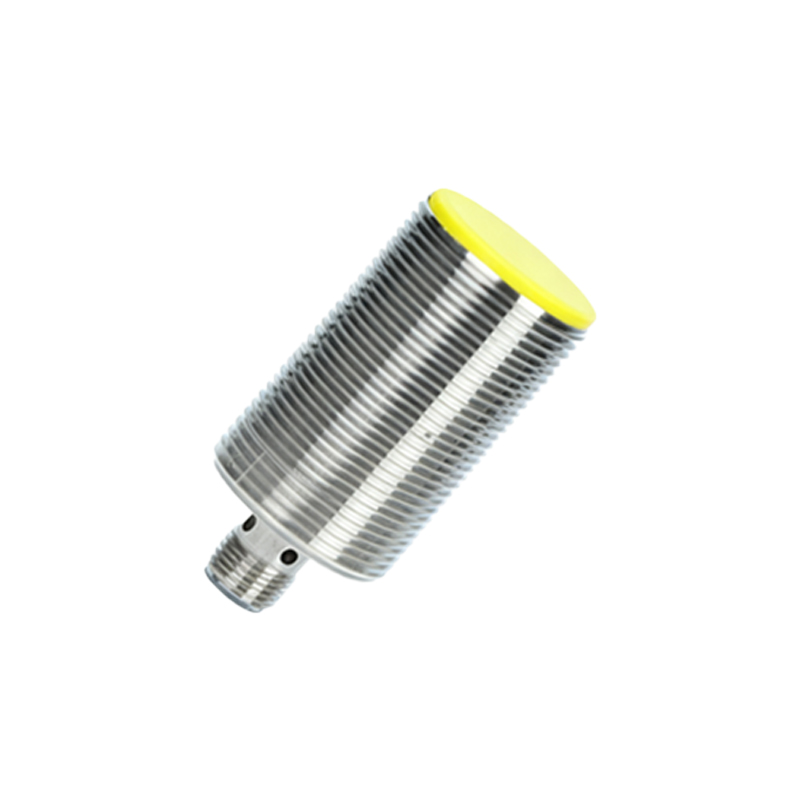
Capacitive proximity sensors can detect both metallic and non-metallic materials, such as liquids, plastics, wood, and granules. They function by generating an electrostatic field. Any object with a dielectric constant different from air will alter the capacitance of the sensor's circuit, triggering the output. Models vary in sensing range (typically up to 25mm for standard versions), and many feature sensitivity adjustment potentiometers to ignore certain materials (like a container wall) and detect the target material inside. Common applications include level detection of liquids or powders, and detecting non-metallic objects on conveyor belts.
Ultrasonic sensors operate by emitting high-frequency sound waves and evaluating the reflected echo. They measure the time interval between sending the signal and receiving the echo to calculate the distance to an object. This technology is excellent for detecting objects of virtually any material, shape, or color, and is less affected by dust, smoke, or light. Models are available as analog (providing a continuous distance signal) or with discrete switching outputs. Key parameters are the sensing range (which can be several meters), beam angle, and response time. They are widely used for distance measurement, pallet detection, and liquid level sensing in challenging environments.
Photoelectric sensors use light beams to detect objects. They consist of an emitter (light source, often LED) and a receiver. There are three main operating modes: Through-beam (separate emitter and receiver), Retro-reflective (uses a reflector), and Diffuse (reflective), where the emitter and receiver are in the same housing. Diffuse models are common for proximity sensing. They detect an object when the emitted light is reflected back to the receiver. Advanced models feature background suppression or fixed-field background suppression to ignore objects beyond a set distance. Models are chosen based on sensing range, light source (red, laser, infrared), and output configuration. They are versatile for detecting small parts, transparent objects, or for color differentiation.
Magnetic proximity sensors, often called reed switches or solid-state Hall effect sensors, detect the presence of a permanent magnet. They are simple, reliable, and often used for position detection of cylinders (with a magnet embedded in the piston) or door/window status monitoring. Models are characterized by their switching distance relative to the magnet's strength and their robust, often sealed, design for harsh environments.
When selecting a model, engineers must consider several factors beyond just the technology. The sensing distance required, factoring in a safety margin, is paramount. The target material dictates the sensor type (inductive for metals, capacitive for others, etc.). Environmental conditions such as temperature, humidity, presence of chemicals, washdown requirements, and electrical noise influence the housing material (e.g., stainless steel, PBT plastic) and protection rating (IP67, IP69K). Electrical characteristics like supply voltage (10-30V DC, 90-250V AC), output type (2-wire, 3-wire NPN/PNP), and current rating must match the control system. Finally, physical constraints like housing shape (threaded barrel, block-style) and size determine the mounting feasibility.
Leading manufacturers like Siemens, Omron, Schneider Electric, Pepperl+Fuchs, and Balluff offer extensive catalogs with thousands of models tailored to these variables. For instance, a typical part number might be "BNS816-2Z" for an inductive sensor or "E2E-X5ME1" for a capacitive model, each encoding information about size, sensing