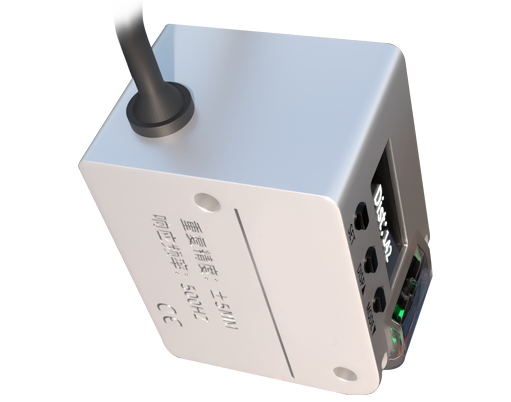
In the realm of industrial automation and process control, precision measurement is not merely a convenience—it is a fundamental necessity. Among the myriad of sensing technologies available, laser-based sensors for distance and temperature measurement have emerged as pivotal tools, driving efficiency, safety, and quality across diverse sectors. These sensors operate on sophisticated optical principles, offering non-contact, high-accuracy solutions that are indispensable in modern manufacturing, logistics, and research environments.
Laser distance sensors, often utilizing time-of-flight or triangulation methods, provide rapid and reliable measurements of position, thickness, or presence. In automotive assembly lines, for instance, they ensure precise component alignment and gap inspection. The non-contact nature eliminates mechanical wear and allows measurements on delicate or moving surfaces, such as in semiconductor wafer handling or robotic guidance systems. Meanwhile, laser temperature sensors, primarily infrared pyrometers, measure thermal radiation emitted by objects. They are crucial in metallurgy for monitoring molten metal temperatures, in food processing for ensuring proper cooking or cooling, and in energy sectors for assessing turbine blade conditions without intrusive probes.
The core advantage of laser sensors lies in their combination of speed, accuracy, and versatility. Modern units can achieve sub-millimeter resolution for distance and within ±1°C accuracy for temperature, even in challenging conditions involving dust, vibration, or extreme temperatures. Integration with industrial networks like PROFINET or EtherNet/IP enables real-time data acquisition, facilitating predictive maintenance and process optimization. For example, in logistics, laser distance sensors automate warehouse inventory management by scanning pallet dimensions, while temperature sensors monitor cold chain integrity during storage and transport.

However, selecting the appropriate sensor requires careful consideration of application-specific factors. For distance measurement, reflectivity of the target surface—whether shiny, dark, or transparent—can affect laser absorption and reflection, necessitating sensor calibration or specialized models. Environmental interferences like ambient light or steam may also impact performance. Similarly, for temperature measurement, emissivity of the material must be accounted for, as it influences infrared radiation detection. Sensors with adjustable emissivity settings or multi-wavelength technology are often employed to mitigate errors in varying industrial settings.
Looking ahead, advancements in laser diode miniaturization, enhanced signal processing algorithms, and the integration of artificial intelligence are pushing the boundaries of these sensors. Smart sensors with embedded diagnostics can now self-calibrate or alert operators to potential drifts, reducing downtime. Furthermore, the rise of Industry 4.0 and the Industrial Internet of Things (IIoT) is fostering interconnected systems where laser sensors contribute vast datasets to digital twins, enabling holistic process control and energy efficiency improvements.
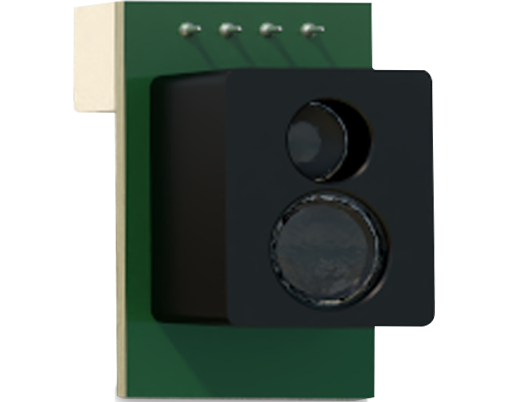
In conclusion, laser distance and temperature sensors represent a cornerstone of industrial innovation. Their ability to deliver precise, non-invasive measurements underpins quality assurance and operational excellence. As industries evolve toward greater automation and sustainability, these sensors will continue to play an essential role, transforming raw data into actionable insights that propel productivity and safety forward. Engineers and technicians must stay abreast of technological trends to leverage these tools effectively, ensuring they meet the ever-growing demands of precision-driven applications.