In the realm of industrial automation and precision measurement, the 5V laser sensor stands as a cornerstone technology. Operating on a standard 5-volt DC power supply—commonly aligned with the logic levels of many digital systems and microcontrollers—these sensors offer a blend of accessibility, efficiency, and high performance. Their fundamental principle involves emitting a focused laser beam towards a target; the reflected light is then analyzed to determine distance, displacement, presence, or profile with exceptional accuracy.
The advantages of utilizing a 5V laser sensor are multifaceted. Firstly, their low-voltage operation makes them inherently safer and more energy-efficient compared to higher-voltage alternatives, reducing thermal output and simplifying power management within compact electronic assemblies. Secondly, seamless integration is a key strength. The 5V output signal typically interfaces directly with programmable logic controllers (PLCs), Arduino boards, Raspberry Pi, and other common control units without requiring additional signal conditioning or complex level-shifting circuits. This plug-and-play compatibility accelerates development cycles and reduces system complexity.

Precision is paramount. Modern 5V laser sensors can achieve micrometer-level resolution, making them indispensable in applications demanding exacting tolerances. For instance, in semiconductor manufacturing, they are deployed for wafer alignment and thickness verification. In automated assembly lines, they perform critical tasks such as part positioning, gap inspection, and height detection of components on conveyor belts. The non-contact nature of laser measurement eliminates the risk of damaging delicate surfaces, a significant advantage over mechanical probes.

Furthermore, the robustness of these sensors in challenging environments cannot be overstated. Many models are designed with IP67 or higher ingress protection ratings, allowing reliable operation amidst dust, moisture, and ambient light interference. Advanced models incorporate background suppression technology, which intelligently filters out reflections from objects beyond the defined sensing range, ensuring stable and reliable detection of the intended target.
The application spectrum of 5V laser sensors is vast and continuously expanding. Beyond traditional industrial settings, they are pivotal in robotics for obstacle avoidance and navigation, in consumer electronics for touchless interfaces, and in logistics for dimensioning packages. The emergence of Industry 4.0 and the Internet of Things (IoT) further amplifies their role. Equipped with digital communication protocols like I2C, UART, or IO-Link, these sensors can transmit rich diagnostic data and measurement values directly to networked systems, enabling predictive maintenance and real-time process optimization.
When selecting a 5V laser sensor, engineers must consider several parameters: sensing range, spot size, response time, output type (digital switch or analog voltage), and environmental specifications. A sensor with a shorter range and finer spot size is ideal for precise dimensional gauging, while a longer-range variant with a faster response suits high-speed object counting. The output type should align with the controller's input requirements—a digital on/off signal for simple detection or an analog voltage proportional to distance for continuous monitoring.
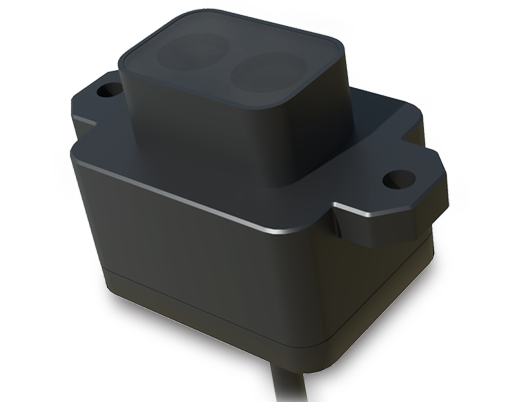
In conclusion, the 5V laser sensor is more than just a component; it is an enabler of precision and intelligence in automated systems. Its low-power design, ease of integration, and formidable accuracy make it a versatile and essential tool for engineers across diverse sectors. As technology advances, we can anticipate even smaller form factors, enhanced communication capabilities, and smarter embedded algorithms, solidifying the 5V laser sensor's position at the forefront of sensing innovation.