In the intricate world of industrial automation and process control, the precise measurement of temperature without physical contact is a critical capability. Temperature proximity sensors, a specialized subset of non-contact temperature sensors, fulfill this role by detecting the infrared radiation emitted by an object and converting it into an accurate temperature reading. Their ability to provide rapid, reliable, and non-invasive measurements makes them indispensable across a vast spectrum of modern engineering applications, from manufacturing lines to energy management systems.
The fundamental principle underpinning most temperature proximity sensors is the detection of infrared (IR) energy. All objects with a temperature above absolute zero emit infrared radiation. The intensity and spectral distribution of this radiation are directly related to the object's surface temperature, as described by Planck's law and the Stefan-Boltzmann law. A typical sensor comprises an optical system to collect the IR energy, a detector (often a thermopile, pyroelectric, or photonic detector) to convert the radiation into an electrical signal, and sophisticated signal processing electronics to compensate for ambient conditions and emissivity, ultimately outputting a temperature value. Key specifications include measurement range, which can span from cryogenic levels to several thousand degrees Celsius; optical resolution (determined by the distance-to-spot ratio); response time; and spectral response. Accuracy is heavily influenced by the target's emissivity—a measure of how efficiently it emits IR energy compared to a perfect blackbody. Engineers must correctly set this parameter, often found in reference tables or determined through calibration, to avoid significant measurement errors.
The industrial applications for these sensors are diverse and impactful. In manufacturing, they are crucial for monitoring and controlling processes such as plastic injection molding, metal heat treating, glass forming, and semiconductor wafer processing, where precise temperature profiles are essential for product quality. Predictive maintenance programs rely on them to detect abnormal heating in electrical panels, motor bearings, transformers, and conveyor rollers, allowing for intervention before catastrophic failure. Within the energy sector, they monitor furnace refractory linings, boiler tubes, and solar thermal installations. In food and pharmaceutical production, they ensure proper cooking, sterilization, and packaging temperatures without contaminating the product. The automotive industry uses them for testing engine components, brake systems, and exhaust treatments. Their non-contact nature is particularly valuable for measuring moving objects (like on a conveyor), delicate materials, or objects in hazardous environments.
Selecting the appropriate temperature proximity sensor requires a careful analysis of the application's specific demands. The primary decision point often lies in choosing between a fixed-installation sensor for continuous process monitoring and a portable handheld unit for spot-checking and maintenance diagnostics. For fixed installations, considerations include the required measurement range and the necessary stand-off distance, which dictates the sensor's field of view and spot size. A sensor with a high distance-to-spot ratio (e.g., 50:1) is needed for measuring small targets from afar. Response time is critical for high-speed processes, while robust housing with appropriate ingress protection (IP) ratings is mandatory for harsh environments with dust, moisture, or extreme ambient temperatures. Connectivity options, such as analog outputs (4-20 mA, 0-10 V), digital interfaces (IO-Link, RS-485), or industrial Ethernet protocols, must align with the existing control architecture. For challenging scenarios involving low-emissivity surfaces (like polished metals), through-transparent-window measurements, or applications with significant background thermal radiation, specialized sensors with advanced features like dual-wavelength (ratio) technology may be required to provide accurate readings despite these interferences.
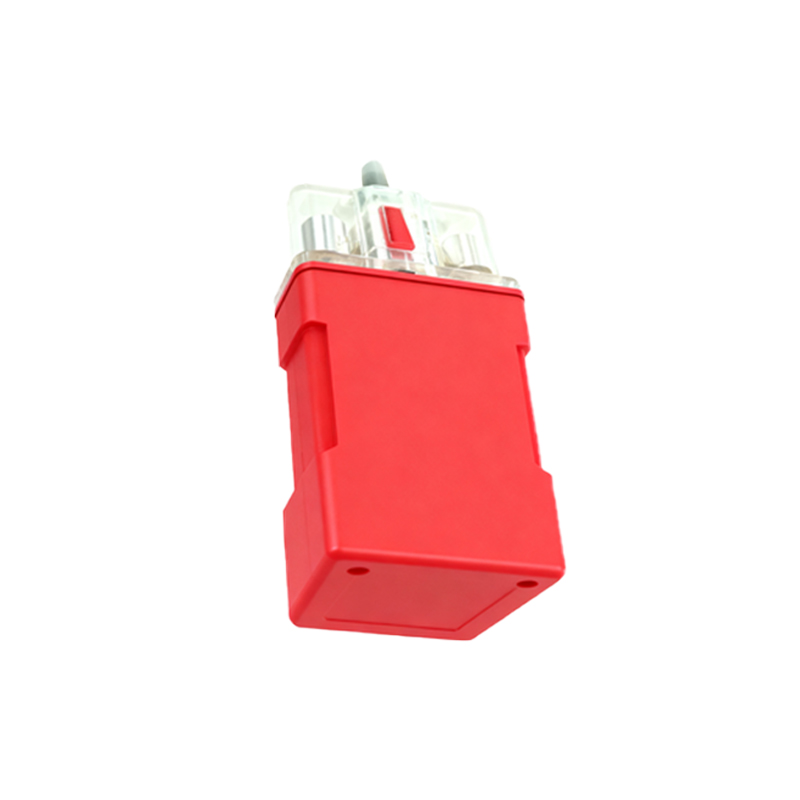
Installation and operation are as crucial as the initial selection. Proper mounting ensures the sensor's optics have an unobstructed view of the target. It is vital to avoid measuring through dirty or scratched sight windows, as they attenuate the IR signal. The sensor should be shielded from sources of radiant heat reflection and kept within its specified ambient operating temperature range, sometimes requiring air or water cooling. Regular maintenance, primarily keeping the lens clean, is essential for sustained accuracy. Furthermore, integrating the sensor's output into a supervisory control and data acquisition (SCADA) or programmable logic controller (PLC) system enables not just monitoring but also closed-loop control, triggering alarms or adjusting process parameters automatically when temperatures deviate from setpoints.
The evolution of temperature proximity sensing continues, driven by the demands of Industry 4.0. Modern sensors are becoming smarter, with embedded intelligence for advanced diagnostics, data logging, and wireless connectivity. The integration of thermal imaging capabilities with single-point sensors provides richer contextual data for complex analyses. As industrial processes strive for greater efficiency, quality, and safety, the role of the temperature proximity sensor as a key enabler of precise thermal management will only become more pronounced. For the practicing engineer, a deep understanding of their operating principles, a methodical approach to selection, and diligent attention to installation practices are the cornerstones of leveraging this powerful technology