Automatic laser sensors have become indispensable components in modern industrial automation, offering unparalleled precision, speed, and reliability for tasks ranging from object detection and positioning to measurement and quality control. However, their price points can vary significantly, often causing confusion for engineers and procurement specialists. Understanding the key factors that influence the cost of these sophisticated devices is crucial for making informed purchasing decisions that balance performance with budget.
The core technology and performance specifications are the primary drivers of cost. The type of laser source is a fundamental differentiator. Standard visible red laser diodes are generally the most economical, suitable for basic presence detection. As requirements for precision increase, so does the cost. Sensors utilizing Class 2M or Class 3R lasers for higher visibility or longer ranges command a higher price. The most advanced and expensive category often involves specialized lasers, such as blue lasers for superior performance on shiny or transparent materials, or ultrafast pulsed lasers for high-precision distance measurement and 3D profiling.
Resolution, accuracy, and measurement range are directly tied to cost. A sensor with a resolution of 0.1 mm will be less expensive than one capable of 1-micron resolution. Similarly, a sensor designed for a 10-meter range with high accuracy incorporates more complex optics and electronics than a short-range model, increasing its price. The sensing principle also plays a major role. While time-of-flight (ToF) sensors offer good range at a moderate cost, triangulation-based sensors provide higher accuracy at shorter distances but are more complex. Phase-shift and interferometric laser sensors, used for nanometer-level measurements, represent the high-end of the price spectrum due to their extreme precision and sophisticated components.
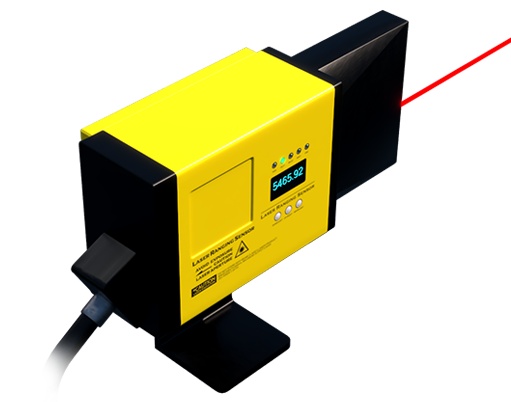
The housing and build quality significantly impact both cost and longevity. A basic plastic housing is sufficient for benign environments, but industrial settings demand robust designs. Sensors with IP67, IP69K, or higher ingress protection ratings, featuring stainless steel or hardened aluminum housings, are engineered to withstand dust, water jets, washdowns, and mechanical impacts. These ruggedized models, often with specialized coatings for chemical resistance, come at a premium but are essential for reliability in harsh conditions like food processing, automotive welding, or outdoor applications.
Integrated functionality and connectivity options add layers of cost and value. A basic sensor with a simple digital (PNP/NPN) output is the entry point. Modern automatic laser sensors, however, are increasingly intelligent. Models with advanced onboard processors offer features like programmable logic, multi-point teaching, background suppression, and sophisticated analog output scaling. Connectivity has evolved beyond discrete I/O to include IO-Link, which provides detailed parameterization and diagnostic data, and industrial Ethernet protocols like EtherNet/IP, PROFINET, or Modbus TCP. Sensors with these smart, Industry 4.0-ready capabilities naturally carry a higher price tag due to the additional hardware and software development.

Finally, brand reputation, certification, and support contribute to the overall cost structure. Established manufacturers with a proven track record in industrial sensing often price their products higher, reflecting years of R&D, rigorous quality control, and global support networks. Certifications for use in hazardous areas (ATEX, IECEx) or specific industries (FDA compliance for food contact) involve additional testing and documentation, adding to the unit cost. Conversely, generic or lesser-known brands may offer lower initial prices but could pose risks regarding long-term reliability, consistency, and technical support.

In conclusion, the price of an automatic laser sensor is not arbitrary but a reflection of its technological sophistication, performance envelope, durability, intelligence, and brand assurance. A thorough analysis of the application requirements—environmental conditions, required precision, necessary features, and communication needs—is essential. Investing in a sensor with appropriately matched specifications, rather than simply opting for the least expensive model, ensures optimal performance, reduces downtime, and delivers a better total cost of ownership over the asset's lifecycle. The goal is to find the precise point where capability meets necessity without over-engineering or under-specifying the solution.