In the field of industrial automation and sensing technology, laser sensors are widely recognized for their precision and versatility in applications such as object detection, positioning, and quality inspection. However, a common misconception persists among engineers and technicians: the belief that all laser sensors are inherently capable of measuring distance. This article aims to clarify this misunderstanding by explaining the fundamental principles of laser sensors, distinguishing between different types, and detailing why certain laser sensors cannot perform distance measurement.
First, it is essential to understand the basic operation of laser sensors. These devices emit a focused beam of light, typically in the visible or infrared spectrum, and detect changes in the reflected signal. The key distinction lies in how they process this reflected light. There are two primary categories: through-beam sensors and reflective sensors. Through-beam sensors consist of separate emitter and receiver units; they detect objects when the laser beam is interrupted. Reflective sensors, including diffuse and retro-reflective types, have the emitter and receiver in one housing and rely on the reflection of light from a target. Neither of these types measures distance directly. Instead, they function as presence sensors, providing binary output (on/off) based on whether an object is detected within a specified range.
The inability to measure distance stems from their design and operational principles. Through-beam and reflective laser sensors lack the internal components necessary for calculating distance, such as time-of-flight (ToF) modules or triangulation systems. They are optimized for high-speed, reliable detection in environments where precise distance data is not required. For example, in conveyor belt systems, these sensors excel at counting items or triggering actions when an object passes, but they cannot determine how far the object is from the sensor. Attempting to use them for distance measurement would yield inaccurate or meaningless results, as they do not capture spatial data beyond presence or absence.
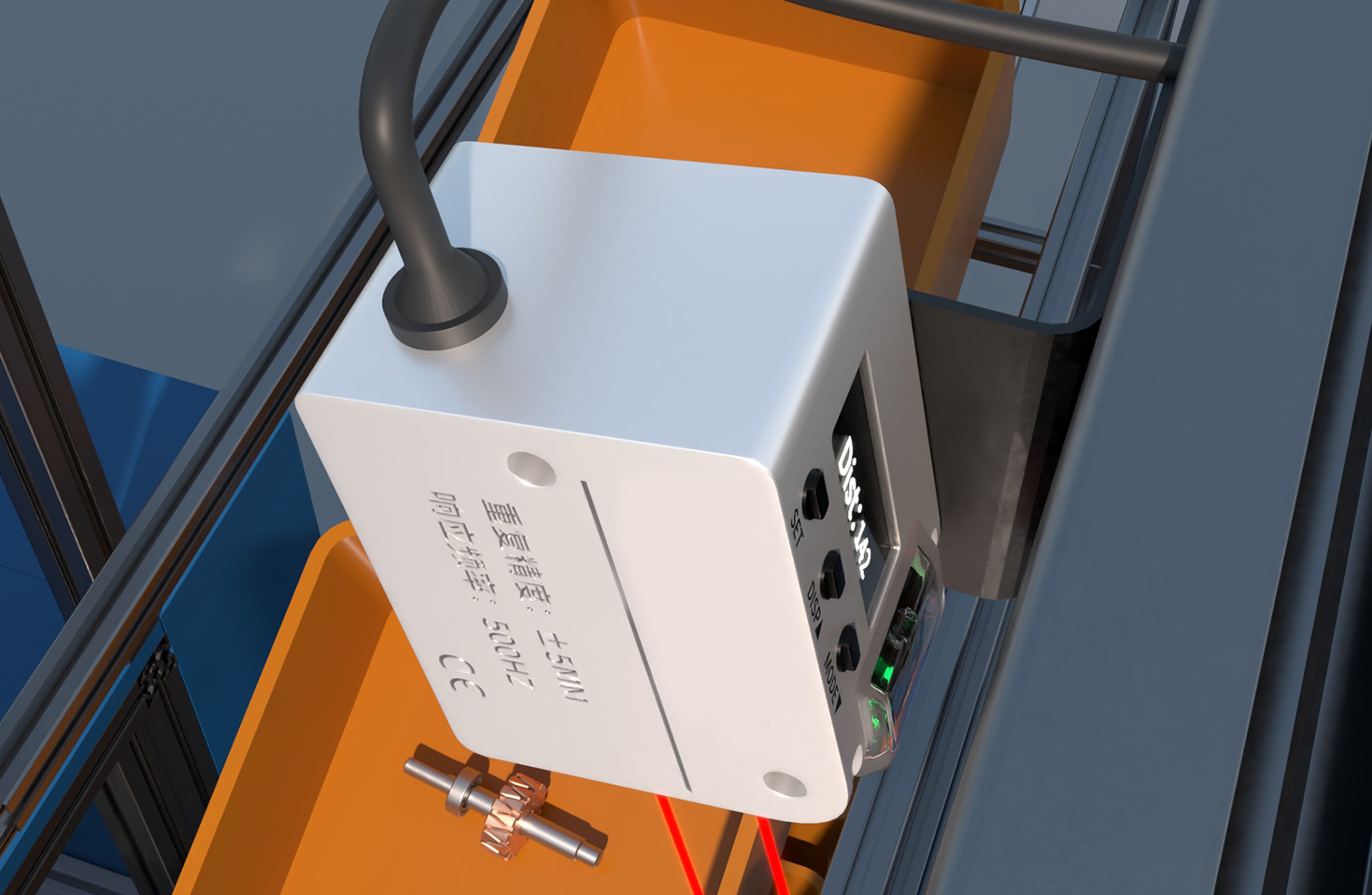
In contrast, laser distance sensors, often referred to as laser rangefinders or ToF sensors, are specifically engineered for measuring distance. They operate by emitting a laser pulse and measuring the time it takes for the reflection to return. This time-of-flight data is then converted into a distance value using the speed of light. Alternatively, some use triangulation methods, where the angle of reflected light is analyzed to compute distance. These sensors incorporate advanced optics, high-speed processors, and calibration algorithms to achieve accuracy, often within millimeters. Common applications include robotics navigation, construction surveying, and automotive safety systems.
Another factor contributing to the misconception is the ambiguous terminology in the industry. Manufacturers may label products broadly as "laser sensors" without specifying their functionality, leading to confusion. Engineers should carefully review datasheets to identify whether a sensor is designed for detection or distance measurement. Key specifications to look for include measurement range, resolution, and output type (e.g., analog voltage, digital signal). For instance, a sensor listed as a "laser photoelectric sensor" typically indicates a presence-detection device, not a distance-measuring one.
Environmental conditions also play a role in limiting the capabilities of standard laser sensors. Factors like target surface reflectivity, ambient light interference, and dust can affect performance. While distance-measuring lasers often include compensation features for such variables, detection-focused sensors are more susceptible to errors if used beyond their intended scope. In industrial settings, this can result in operational failures or safety hazards. Therefore, selecting the right sensor type based on application requirements is critical.
In summary, not all laser sensors can measure distance. Through-beam and reflective laser sensors are designed for object detection and presence sensing, lacking the technological framework for accurate distance calculation. To perform distance measurement, specialized laser rangefinders with time-of-flight or triangulation mechanisms must be employed. By understanding these distinctions, professionals can avoid common pitfalls, optimize system designs, and ensure reliable performance in their projects. Always consult technical documentation and consider environmental factors when integrating laser sensors into industrial applications.