In the realm of industrial automation and precision measurement, Japan stands as a global leader, renowned for its meticulous engineering and innovative spirit. The customization of laser sensors within this ecosystem represents a pinnacle of technological adaptation, where standard solutions are meticulously tailored to meet the exacting demands of diverse applications. From semiconductor fabrication and automotive assembly to advanced robotics and biomedical instrumentation, Japanese-engineered custom laser sensors are integral to achieving unparalleled accuracy, reliability, and efficiency.
The drive for customization stems from the complex challenges faced by modern industry. A standard off-the-shelf laser sensor, while competent for general purposes, often falls short when confronted with unique environmental conditions, specific material properties, or extraordinary precision requirements. Japanese manufacturers excel in collaborating closely with clients to dissect these challenges. The process begins with a profound analysis of the application: the target object's size, surface texture, reflectivity, required measurement range, resolution, response speed, and the ambient operating environment—be it extreme temperatures, vacuum, or exposure to vibrations and contaminants.
Engineering teams in Japan leverage a deep foundational knowledge of photonics, optoelectronics, and signal processing. Customization can involve modifying the laser's wavelength—selecting from visible red, infrared, or even specialized blue lasers for specific material interactions. The optical system, including lenses and apertures, is calibrated to achieve the desired spot size and depth of field. For instance, in measuring translucent films or uneven surfaces, diffuse reflection or through-beam configurations might be specifically engineered to eliminate error. The core sensor circuitry is another focal point. Custom algorithms for signal filtering, noise reduction, and data output (analog, digital, or serial communication protocols like EtherCAT or IO-Link) are developed to ensure stable performance amidst electrical interference common in factory settings.
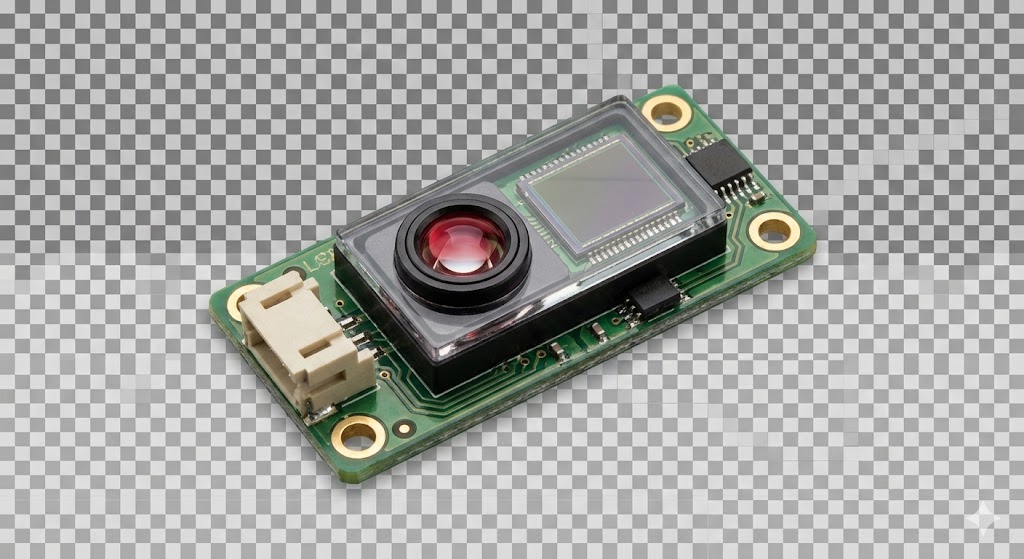
A hallmark of the Japanese approach is the seamless integration of hardware and software. The sensor is not viewed as an isolated component but as a critical node within a larger automated system. Therefore, customization extends to communication interfaces and programmability, allowing the sensor to provide not just raw data but actionable intelligence. Features like multi-point measurement, edge detection, and profile analysis can be embedded based on client needs. Furthermore, robustness is never an afterthought. Housings are designed to specific IP ratings for dust and water resistance, and components are selected or coated to withstand corrosive atmospheres or frequent sterilization cycles in food and pharmaceutical applications.
The material science expertise in Japan further enables unique solutions. Sensors are developed for applications involving high-temperature glass manufacturing, where they must perform reliably near molten materials, or in cleanrooms where outgassing and particle generation are strictly prohibited. The result is a sensor that feels purpose-built, because it is. This meticulous customization process, while potentially involving longer development lead times and higher initial costs, delivers immense long-term value through reduced downtime, higher yield rates, and superior product quality.

Ultimately, the pursuit of custom laser sensors in Japan is a testament to the philosophy of *monozukuri*—the art of making things. It embodies a commitment to continuous improvement (*kaizen*) and an unwavering focus on solving the customer's most intricate problems. For global industries where precision is not just a goal but a necessity, partnering with Japanese engineering firms for sensor customization offers a pathway to achieving operational excellence and maintaining a competitive edge in an increasingly demanding technological landscape. The fusion of advanced photonics, precision mechanics, and systems engineering ensures that these tailored sensors become silent, reliable partners in innovation.