In the realm of industrial automation, process control, and advanced robotics, one question frequently arises among engineers and system designers: "Is there a laser sensor?" The answer is a definitive yes. Laser sensors are not only prevalent but are fundamental components driving precision, efficiency, and innovation across countless applications. This article delves into the core principles, diverse types, and practical industrial uses of these sophisticated devices, providing a comprehensive overview for professionals in the electrical and automation fields.
At its essence, a laser sensor is a device that utilizes laser light to detect, measure, or identify objects or conditions. The term "laser" stands for Light Amplification by Stimulated Emission of Radiation. Unlike ordinary light, laser light is coherent, monochromatic, and highly directional. These unique properties make it an ideal medium for sensing applications where accuracy, reliability, and non-contact operation are paramount. The basic operating principle involves emitting a focused laser beam towards a target. The interaction of this beam with the target—whether through reflection, interruption, scattering, or time-of-flight measurement—is then analyzed by a receiver within the sensor. The resulting signal is processed to yield precise data about the target's presence, distance, dimensions, speed, or surface characteristics.
The landscape of laser sensors is rich and varied, each type engineered for specific tasks and environmental challenges. A primary categorization is based on the sensing method. Laser Triangulation Sensors are renowned for high-resolution distance and displacement measurement. They work by projecting a laser spot onto the target; the reflected light is focused onto a position-sensitive detector (like a CCD or CMOS array). As the target's distance changes, the position of the spot on the detector shifts, allowing for micron-level accuracy. They are indispensable in quality control for measuring thickness, warp, or vibration.
Laser Time-of-Flight (ToF) Sensors, including LiDAR systems, measure the time it takes for a laser pulse to travel to a target and back. This method is excellent for longer-range measurements, from a few meters to hundreds of meters, and is widely used in autonomous vehicles, warehouse robotics for navigation, and bulk level monitoring in silos. Laser Contrast Sensors are designed to detect marks, labels, or color differences on surfaces by analyzing the contrast in reflected light intensity. They are staples in packaging and printing industries. Laser Micrometer Sensors utilize parallel laser beams to gauge the diameter or edge position of objects like wires, cables, or mechanical parts with exceptional precision. Furthermore, Laser Safety Scanners create a two-dimensional protective field around hazardous machinery, instantly halting operation if the invisible laser plane is breached, ensuring worker safety.
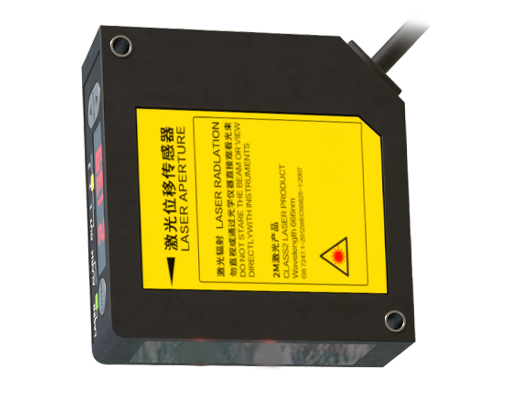
The industrial applications of laser sensors are vast and critical. In Manufacturing and Assembly, they provide precise positioning for robotic arms, verify part presence or orientation, and conduct 100% inline inspection for defects. The automotive industry relies on them for weld seam tracking, gap measurement, and paint quality inspection. In Logistics and Material Handling, laser sensors control conveyor systems, sort packages by size, and guide automated guided vehicles (AGVs) through dynamic environments. The Electronics and Semiconductor sector depends on ultra-precise laser sensors for wafer alignment, component placement, and solder paste inspection. Process Industries utilize them for monitoring fill levels, detecting sediment, or controlling web tension in continuous production lines.
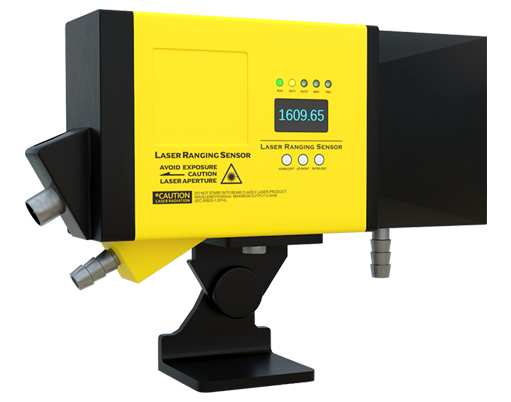
Selecting the appropriate laser sensor requires careful consideration of several parameters. The measuring range and standoff distance must suit the application. Resolution and accuracy specifications are vital for precision tasks. The response time or sampling rate determines how quickly the sensor can react in high-speed processes. Environmental factors such as ambient light, dust, fog, or temperature extremes necessitate sensors with robust housing ratings (e.g., IP67) and possibly specialized laser wavelengths (e.g., red visible, blue, or infrared) to penetrate challenging conditions. Finally, the output signal (analog, digital, IO-Link, Ethernet/IP) must be compatible with the existing control system, such as a PLC.
In conclusion, the question "Is there a laser sensor?" opens the door to a world of advanced technology that is integral to modern industry. From ensuring micrometer-level quality checks to safeguarding human workers and enabling autonomous systems, laser sensors are versatile, reliable, and powerful tools. Their continued evolution, with trends pointing towards miniaturization, increased intelligence through integrated analytics, and enhanced connectivity for Industry 4.0, promises to further expand their role. For engineers and technicians, a solid understanding of these devices is not just beneficial—it is essential for designing and maintaining the efficient, smart, and competitive industrial operations of today and tomorrow.