In the rapidly evolving landscape of industrial automation and robotics, laser sensors have emerged as a cornerstone technology for precise and reliable obstacle avoidance. Unlike traditional mechanical or ultrasonic methods, laser-based systems, particularly LiDAR (Light Detection and Ranging), offer unparalleled accuracy, speed, and adaptability. This article delves into the operational principles, key advantages, and practical applications of laser sensors in creating safer and more efficient automated environments.
At its core, a laser sensor for obstacle avoidance operates by emitting pulsed or continuous laser beams toward a target area. These beams reflect off objects and return to the sensor's receiver. By calculating the time-of-flight (ToF) or phase shift of the reflected light, the sensor precisely determines the distance, size, and even the contour of obstacles. This data is processed in real-time by integrated algorithms, enabling a machine—whether an autonomous mobile robot (AMR), a drone, or a conveyor system—to map its surroundings and navigate dynamically. The typical scanning range varies from a few centimeters to several hundred meters, with high-end models achieving millimeter-level accuracy.
The superiority of laser sensors lies in several distinct advantages. First, their high resolution and precision minimize false detections, crucial in complex environments with multiple moving parts. Second, laser beams are less susceptible to environmental interference such as dust, temperature fluctuations, or ambient noise, which often plague ultrasonic or infrared sensors. Third, modern solid-state LiDAR systems are compact, durable, and energy-efficient, facilitating integration into diverse platforms without significant design overhauls. Moreover, the ability to generate detailed 3D point clouds allows for advanced functions like predictive analytics and adaptive path planning, going beyond mere collision prevention.
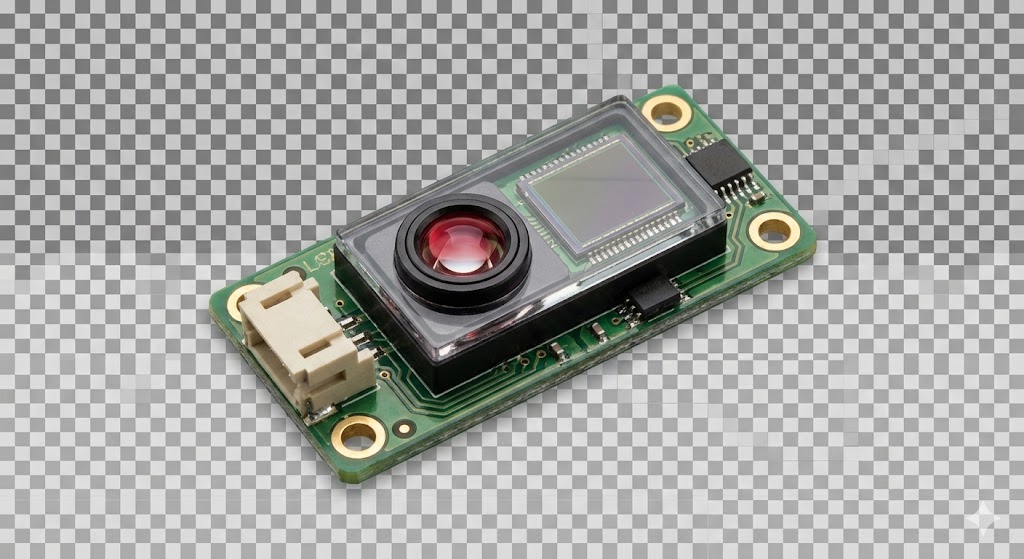
In practical terms, laser obstacle avoidance sensors are transforming industries. In warehouse logistics, AMRs equipped with 360-degree LiDAR navigate narrow aisles, avoid human workers, and optimize picking routes without manual guidance. In automotive manufacturing, robotic arms with laser scanners ensure safe collaboration with human operators on assembly lines. Agricultural drones use laser sensors to map terrain and avoid trees or structures during automated spraying. Even in consumer electronics, robotic vacuums leverage laser navigation to clean efficiently without bumping into furniture.
However, implementing these systems requires careful consideration. Factors like reflectivity of surfaces (dark or absorbent materials may weaken signals), extreme weather conditions for outdoor use, and sensor placement for optimal field-of-view must be addressed. Regular maintenance, such as lens cleaning and software updates, ensures long-term reliability. As technology advances, trends like AI-enhanced sensor fusion—combining laser data with camera and radar inputs—are pushing the boundaries toward fully autonomous decision-making.
In conclusion, laser sensors represent a paradigm shift in obstacle avoidance, offering a blend of precision, robustness, and intelligence that is indispensable for next-generation automation. By enabling machines to perceive and interact with their environment intelligently, they not only enhance safety and productivity but also pave the way for innovations in smart factories, autonomous vehicles, and beyond. Engineers and integrators must continue to leverage these capabilities to build resilient and adaptive systems for the future.