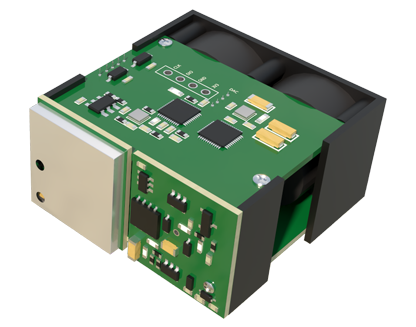
In the realm of industrial automation, reliable object detection is paramount. Among the diverse array of sensing technologies, through-beam photoelectric sensors stand out for their exceptional performance in long-range and demanding applications. This article delves into the operational principles, key advantages, common applications, and critical selection criteria for through-beam sensors, providing a comprehensive guide for engineers and system integrators.
At its core, a through-beam sensor, also known as a opposed-mode sensor, consists of two separate units: a transmitter (emitter) and a receiver. The transmitter projects a beam of light—typically infrared, visible red, or laser—directly toward the receiver. The receiver's sole function is to detect this incoming light beam. An object is detected when it physically interrupts the beam path between the two units, causing the receiver's output state to change. This simple "light on / light off" principle is remarkably robust.
The primary advantage of this configuration is its high sensing reliability and long operating range. Because the receiver detects only the dedicated light from its paired transmitter, it is largely immune to ambient light interference, dust, dirt on lenses, or color variations on the target object. This makes through-beam sensors ideal for applications requiring detection over distances from a few centimeters up to several tens of meters, especially with laser light sources. Their consistent performance is crucial in harsh environments found in manufacturing, packaging, and material handling.
Common industrial applications are numerous. They are extensively used for object counting on high-speed conveyor lines, where precise detection of small gaps between products is essential. In automated assembly, they verify the presence or absence of components. They serve as safety curtains or light guards at the perimeters of robotic work cells, ensuring personnel safety by halting machine operation when the beam is broken. Furthermore, they are employed in warehouse automation for pallet detection, in the printing industry for web break detection, and in elevator systems for door control.
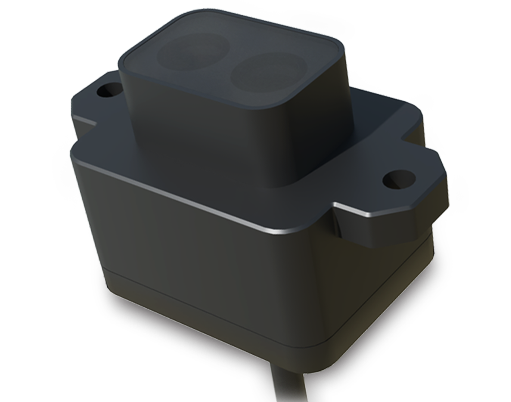
When selecting a through-beam photoelectric sensor for a specific application, several factors must be carefully considered. First is the sensing distance. Engineers must choose a model with a rated operating distance that exceeds the actual installation distance, accounting for potential misalignment. Second is the light source. Infrared LEDs offer good range and are discreet; visible red LEDs aid in alignment; laser diodes provide extremely precise, small beam spots for detecting very small objects or for extreme distances. Third is the housing and environmental rating. Sensors for washdown areas require high IP67, IP68, or IP69K ratings, while those in explosive atmospheres need appropriate certifications. Fourth is the output type (e.g., NPN, PNP, relay) and connection method (pre-wired cable or quick-disconnect), which must match the control system's input requirements. Finally, features like sensitivity adjustment or built-in timers can add valuable functionality for complex tasks.
Alignment, while straightforward, is critical for optimal operation. Many sensors incorporate alignment indicators, such as LEDs on the receiver that change state when optimal light intensity is received. For long-range or laser-based sensors, the use of alignment tools or visible light beams is highly recommended to ensure the beam is perfectly centered on the receiver's detection element.
In comparison to other sensing modes like retro-reflective or diffuse-reflective, through-beam sensors offer the highest possible sensing distance and consistency. However, their main drawback is the need to install and wire two separate units, which can increase initial setup time and cost. Despite this, for applications where reliability, range, and environmental immunity are non-negotiable, the through-beam photoelectric sensor remains an indispensable tool in the automation engineer's arsenal. Its fundamental principle ensures that when the beam is broken, the signal is clear, providing the dependable data that modern automated systems rely upon for efficiency, safety, and precision.