In the rapidly evolving landscape of industrial automation, unmanned laser detection sensors have emerged as a cornerstone technology, driving unprecedented levels of precision, safety, and efficiency. These sophisticated devices operate on the fundamental principle of emitting laser beams and analyzing the reflected signals to measure distance, detect presence, identify objects, and map environments with exceptional accuracy. Unlike traditional mechanical or ultrasonic sensors, laser sensors offer non-contact measurement, high resolution, and remarkable speed, making them indispensable in environments where human intervention is hazardous, impractical, or a bottleneck to productivity.
The core technology behind these sensors often involves Time-of-Flight (ToF), triangulation, or phase-shift measurement methods. ToF sensors, for instance, calculate distance by measuring the time it takes for a laser pulse to travel to a target and back. This technology is pivotal in autonomous guided vehicles (AGVs) and drones for obstacle avoidance and navigation in complex warehouses. In high-precision manufacturing, laser triangulation sensors provide micron-level accuracy for quality control, inspecting component dimensions, and ensuring assembly tolerances. The robustness of laser signals allows them to perform reliably in challenging conditions, including low visibility, extreme temperatures, and environments with significant vibration or electromagnetic interference.
A primary application domain is industrial safety. Laser scanners create two-dimensional or three-dimensional protective fields around dangerous machinery, such as robotic arms, press brakes, or conveyor systems. If any object breaches this invisible safety curtain, the system triggers an immediate shutdown, preventing accidents. This application aligns perfectly with global safety standards like ISO 13849 and ensures a safe coexistence between human workers and automated systems. Furthermore, in the realm of logistics and smart warehouses, networks of laser sensors enable real-time inventory tracking, palletizing, and sortation, optimizing supply chain workflows without manual counting or scanning.
The integration of these sensors with the Industrial Internet of Things (IIoT) and data analytics platforms unlocks even greater potential. Sensor data on equipment performance, environmental conditions, and process variables can be aggregated and analyzed to predict maintenance needs, reduce downtime, and facilitate lean manufacturing practices. For example, a laser sensor monitoring the wear on a cutting tool can signal the need for replacement before it fails, preventing costly production halts and material waste.
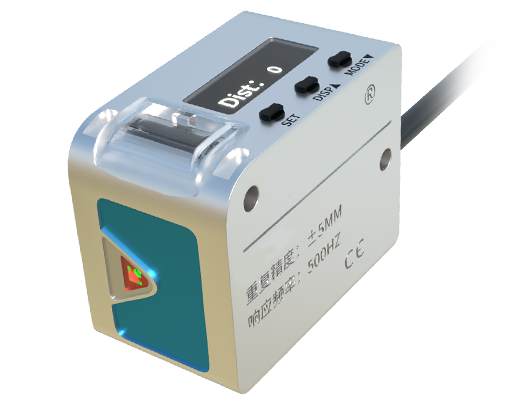
Despite their advantages, the deployment of unmanned laser detection sensors requires careful consideration. Factors such as the reflectivity of target surfaces, ambient light interference, and the required range and field of view must be evaluated during selection. Ongoing advancements are addressing these challenges. The development of eye-safe laser classes, multi-echo technology that can see through obscurants like dust or fog, and the miniaturization of components are making these sensors more versatile and accessible.
Looking ahead, the convergence of laser sensing with artificial intelligence and edge computing promises a new wave of intelligent perception. Sensors will not only collect raw distance data but also interpret scenes, classify objects, and make autonomous decisions at the network edge. This evolution will be critical for the next generation of fully autonomous industrial robots and smart infrastructure. In conclusion, unmanned laser detection sensors are far more than mere measurement tools; they are the enabling eyes of modern industry, fostering safer workplaces, driving operational excellence, and paving the way for the fully automated factories of the future. Their role is set to expand as industries continue to pursue greater autonomy, resilience, and intelligence in their operations.
